Dates: 09-19 February 2025.
I’d been fascinated by Colombia for as long as I can remember. Well, possibly since watching the 1984 film, “Romancing The Stone”, whose storyline was set in the country!
That was followed-up by watching the wonderous Carlos Valderrama and René Higuita on telly during the 1990 and 1994 World Cups, and then learning of the horrific murder of Andrés Escobar after that second tournament.
In more recent years, the narco history with its cartels, corruption, assassinations and anti-hero, Pablo Escobar, left me wanting to spend some time in the country. Oh, and the coffee…
I planned eleven days away with the following itinerary:
- three nights in Bogotá
- two nights in Salento, near Pereira
- three nights in Medellín
- three nights in Cartagena
There was an inauspicious start to my trip as every westward train from Paddington to Heathrow was delayed or cancelled just minutes after arriving. An expensive taxi was the only option…
It was an eleven hour direct flight, so I grabbed a couple of hours of sleep on arrival before heading out to explore the city.
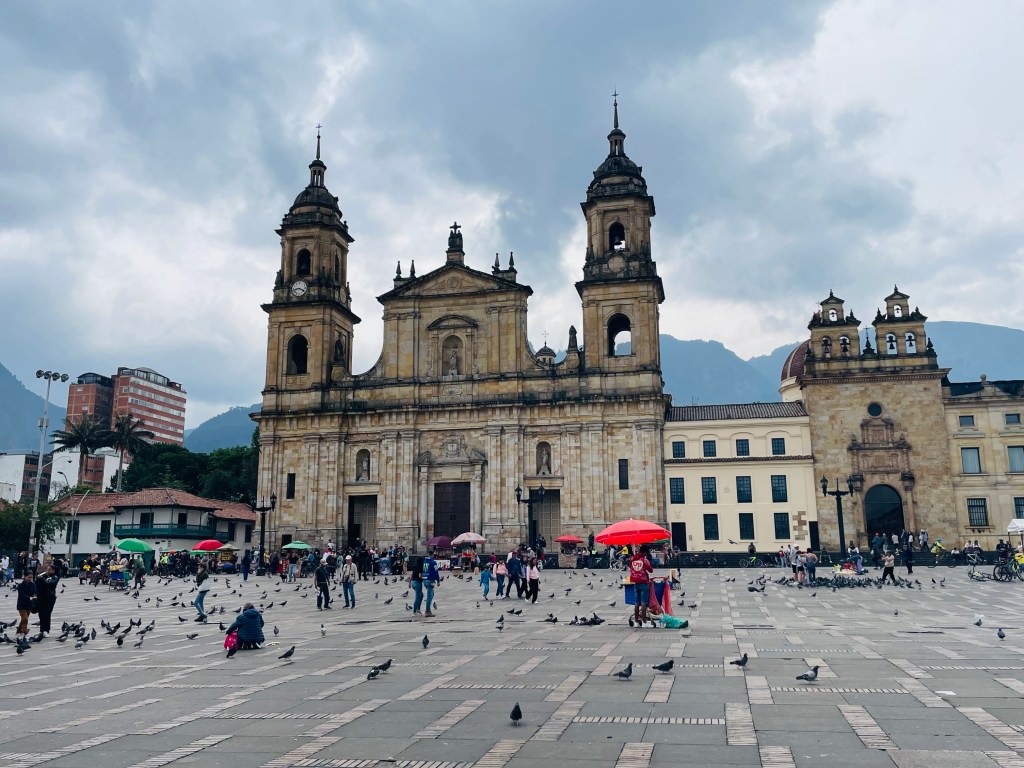
Plaza de Bolívar and the city cathederal:
Getting my bearings around the grid-like La Candelaria neighbourhood:
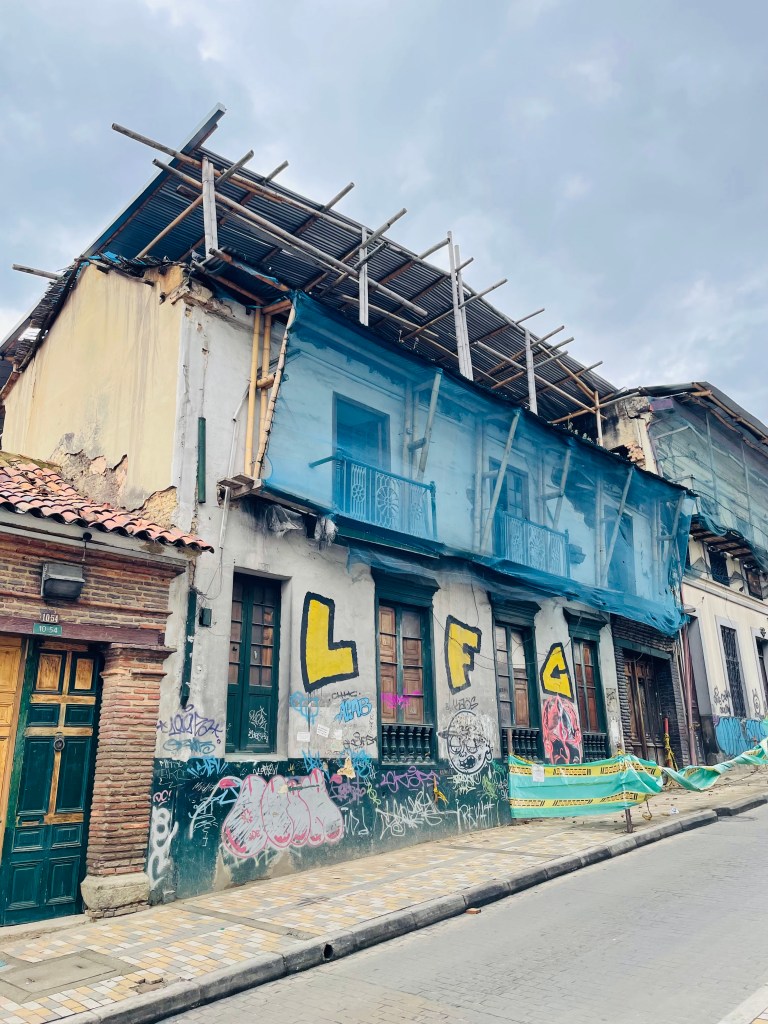
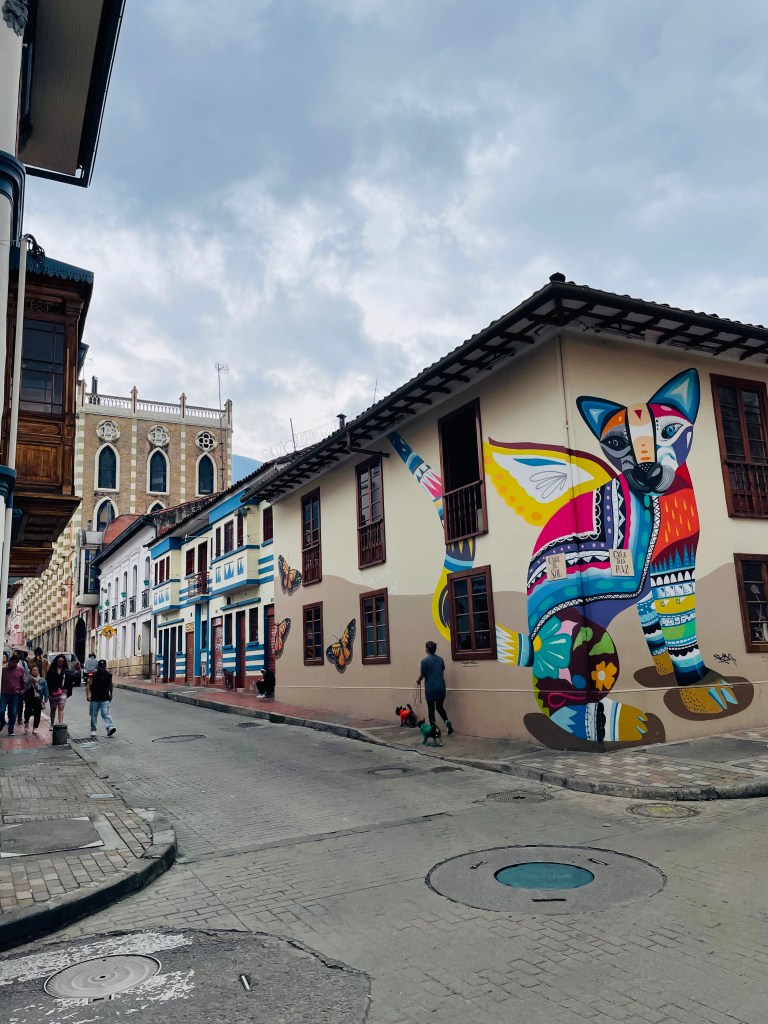
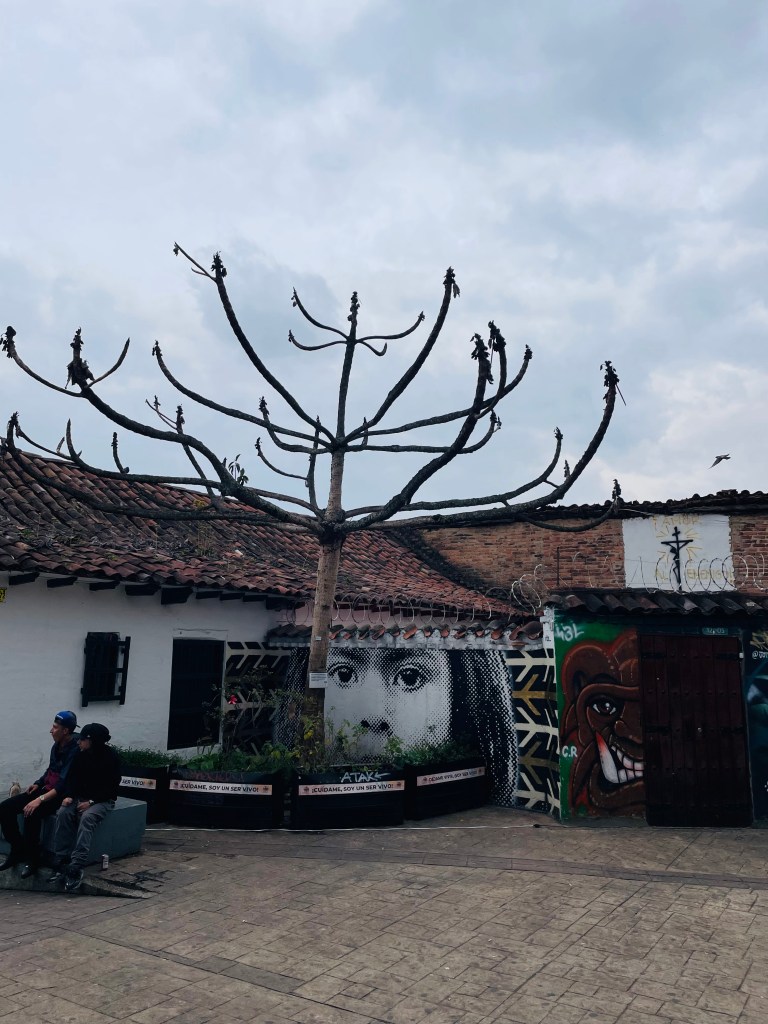
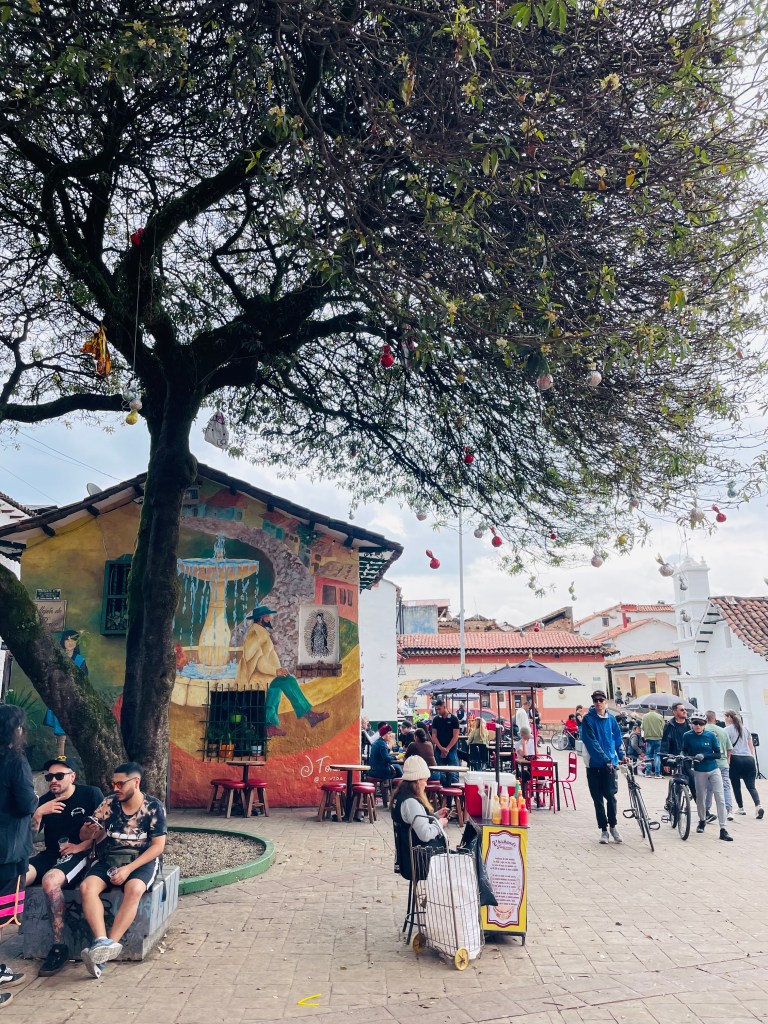
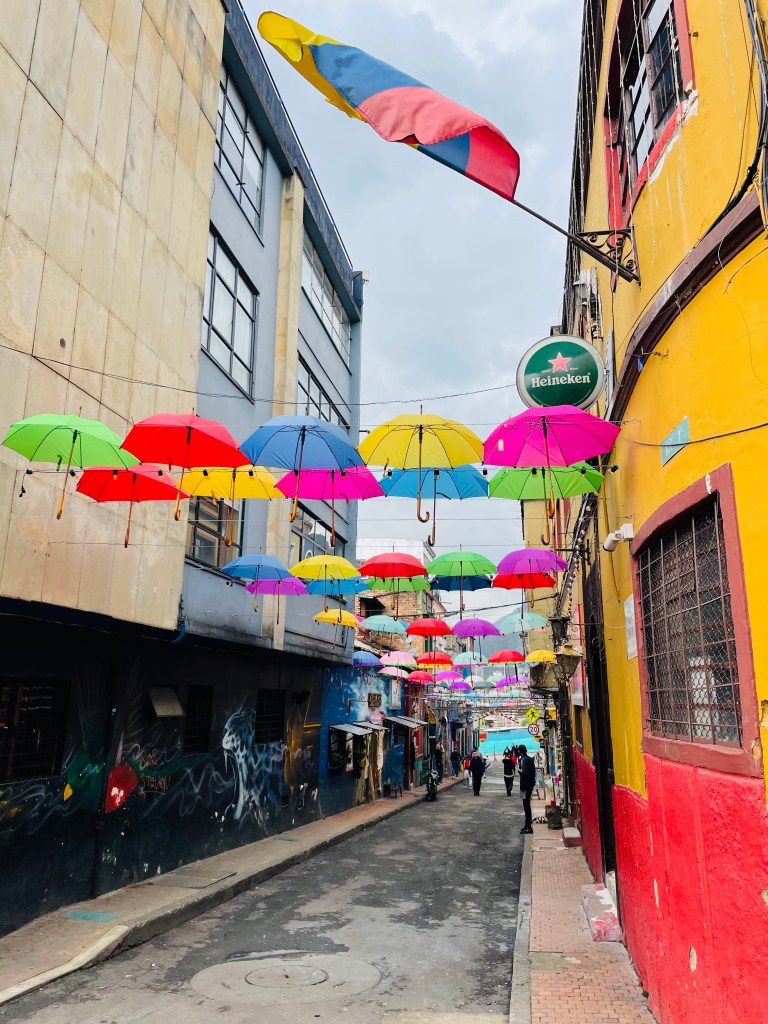
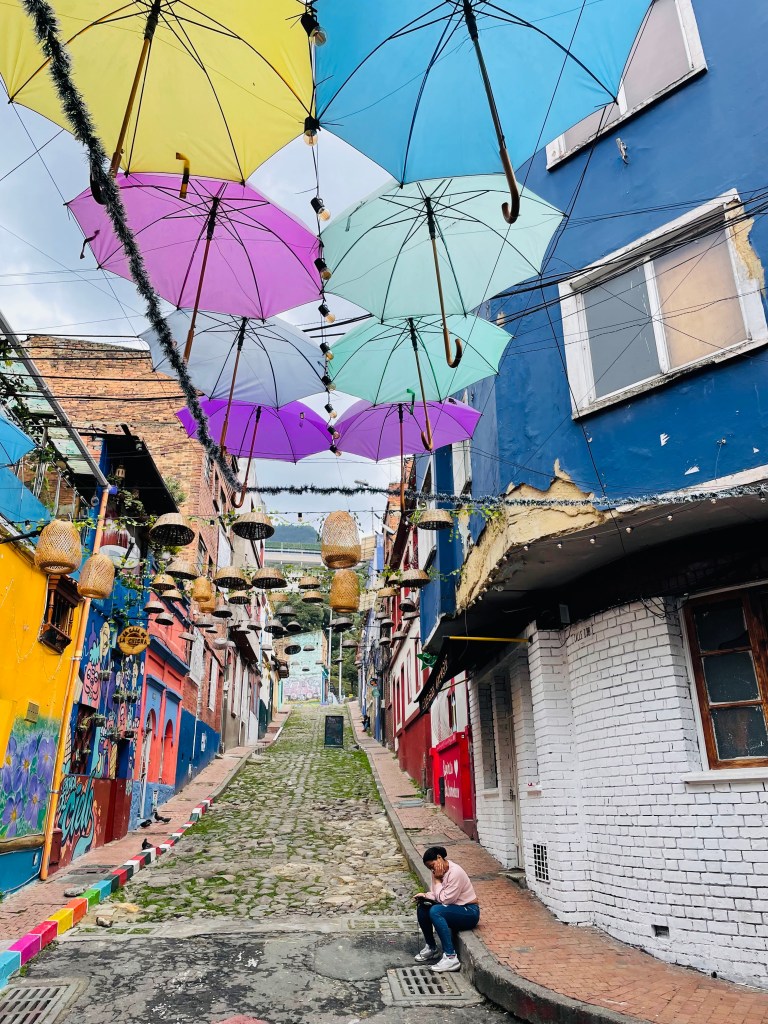
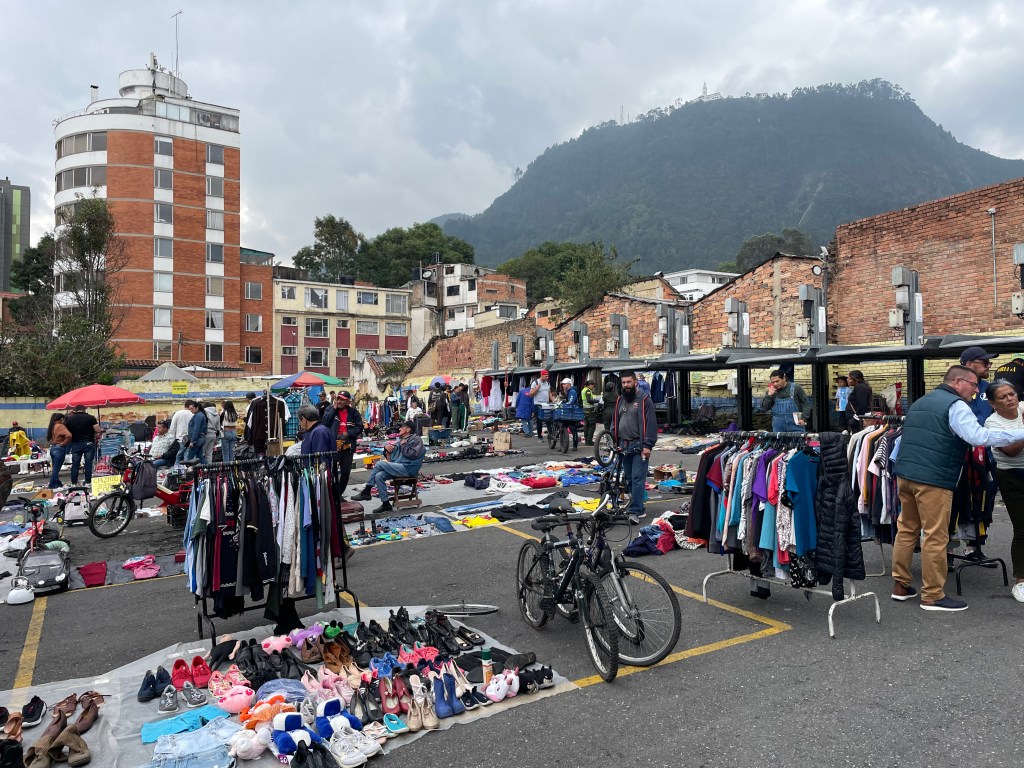
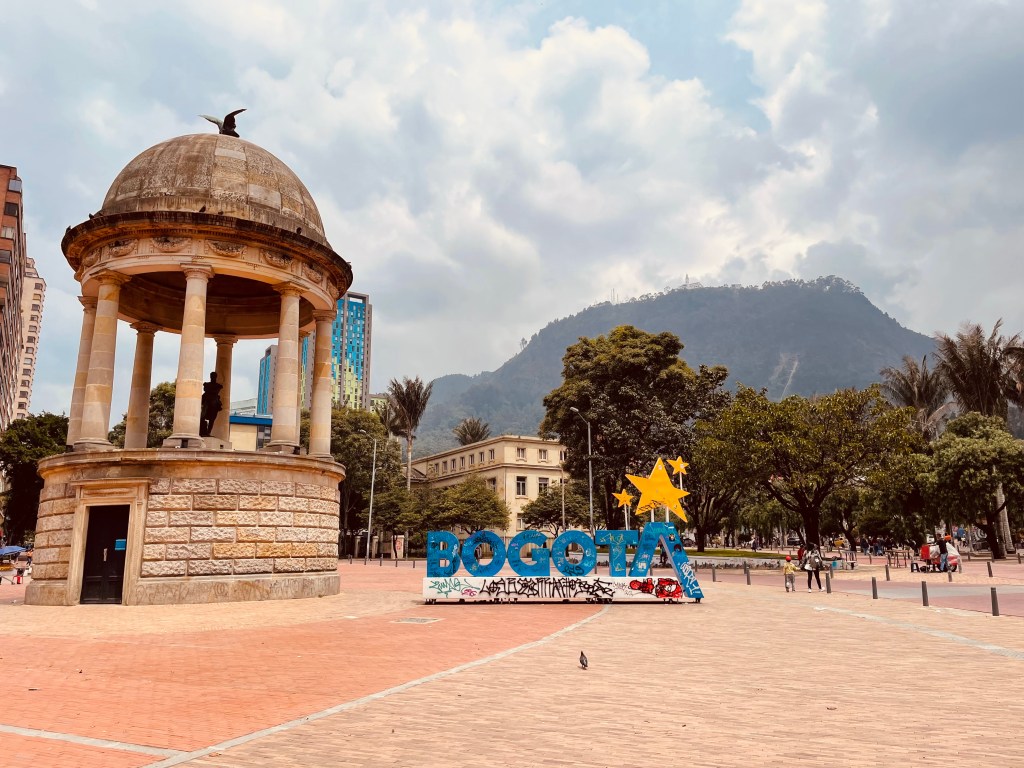
Cardiff Market it wasn’t, with Mount Monserrate in the distance:
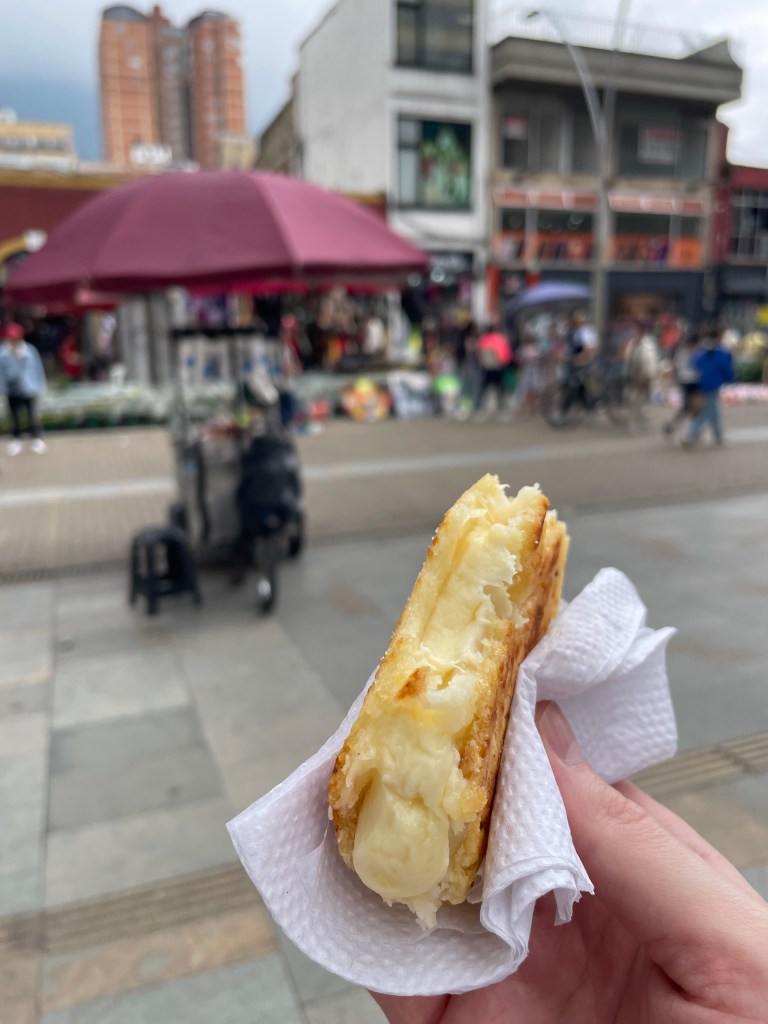
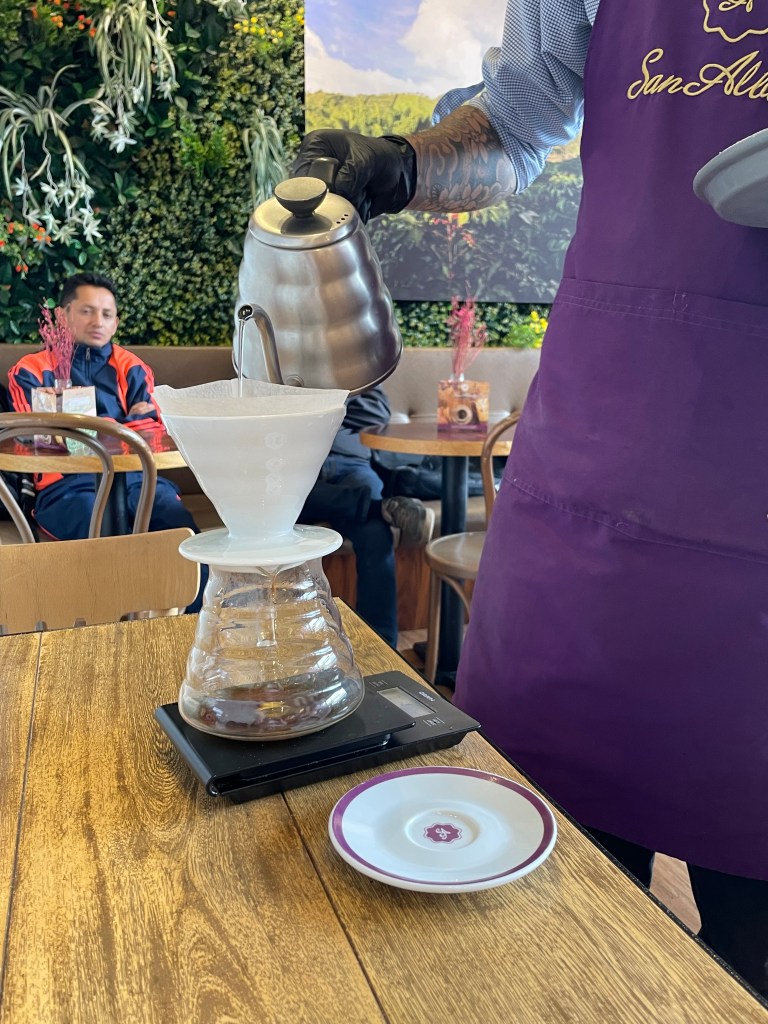
Before joining a walking tour I grabbed a traditional cheese-filled arepa and an excellent pour-over coffee where they let me smell the ground beans before proceeding!:
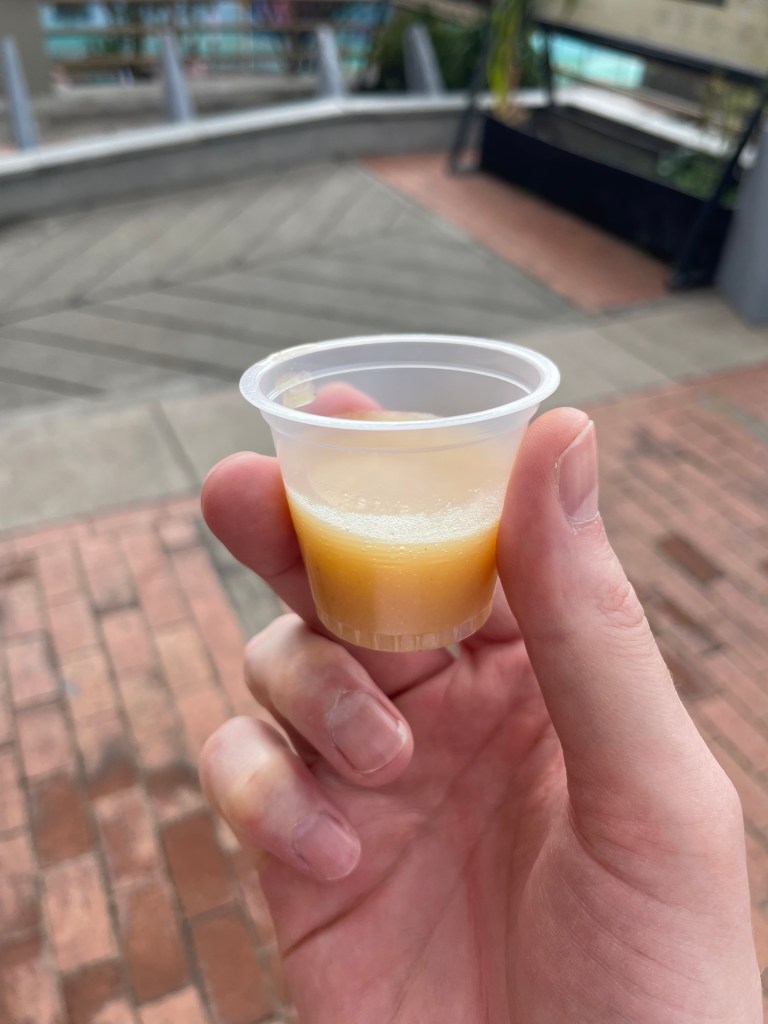
This particular alleyway connected two small squares that were always busy with locals and tourists alike. We received a shot of Chicha (a surprisingly tasty fermented corn drink) as part of the walking tour:
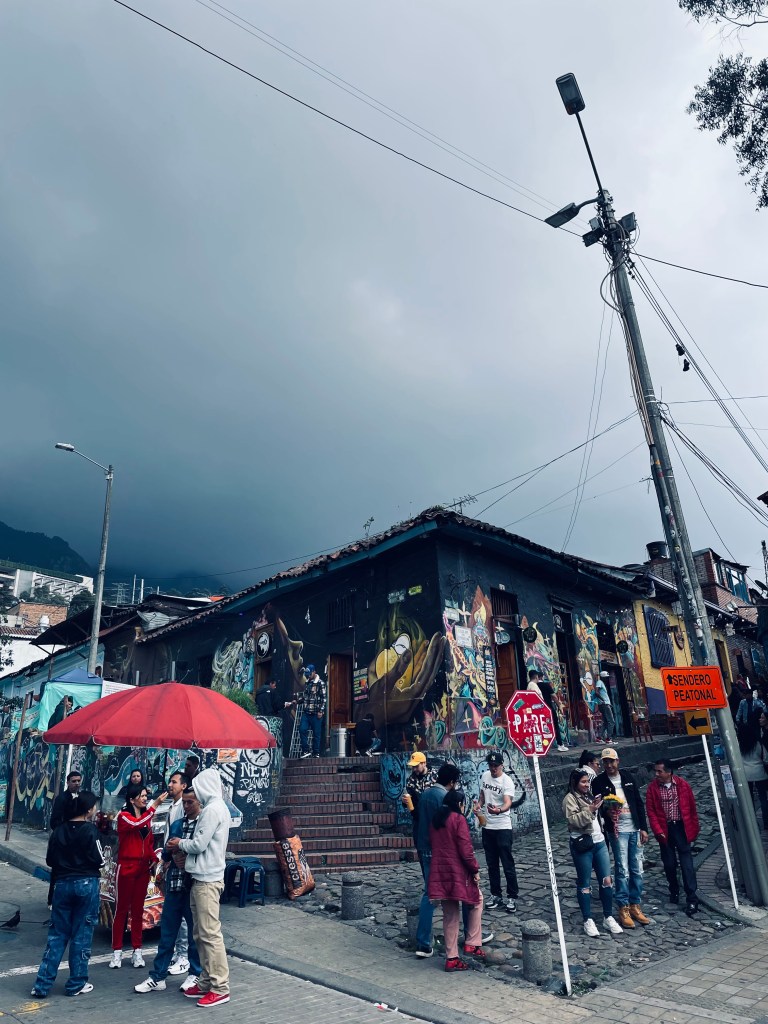
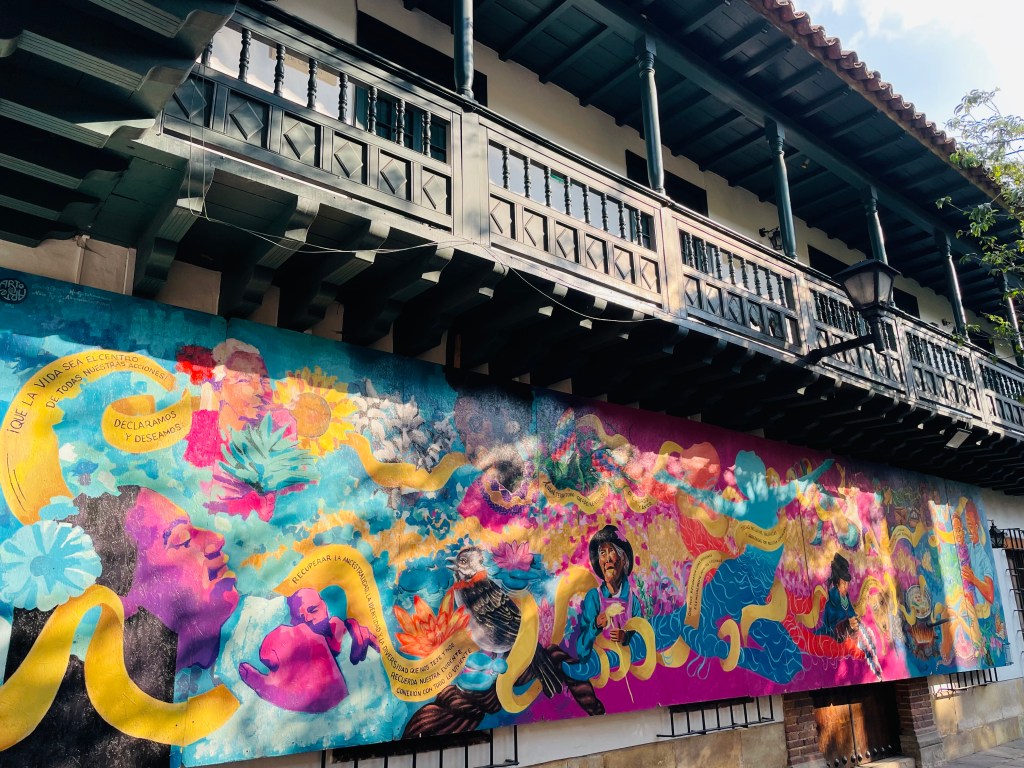
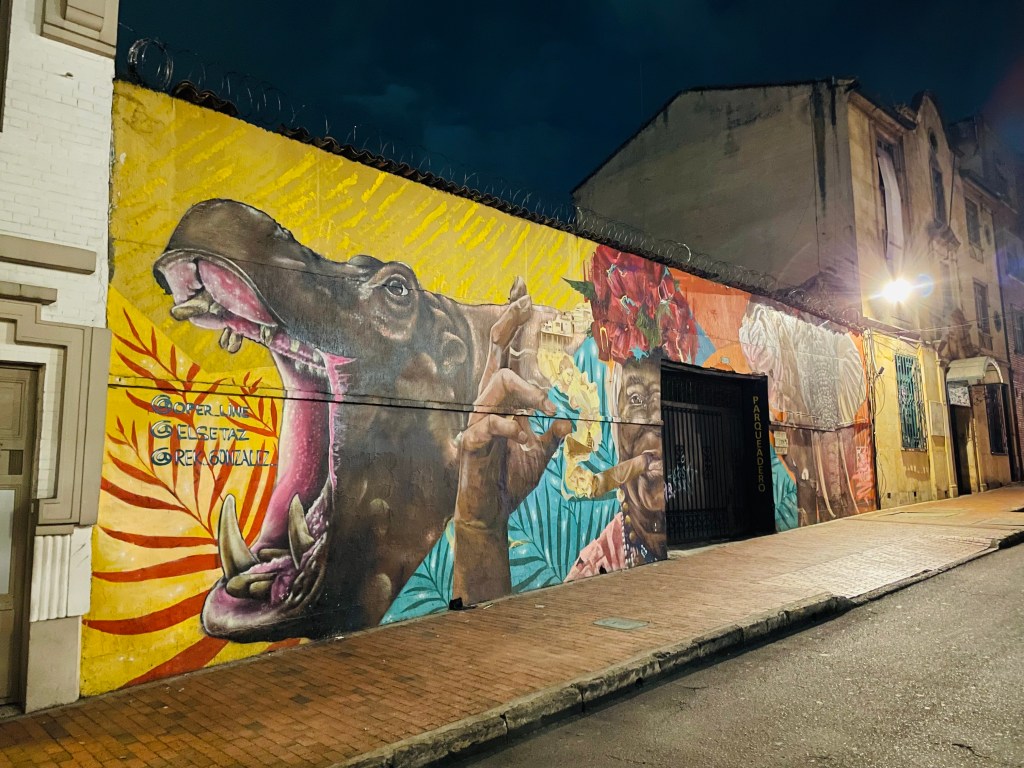
The La Candelaria neighbourhood where I was staying is set-up in a grid, and almost each street has some form of artwork adorning it:
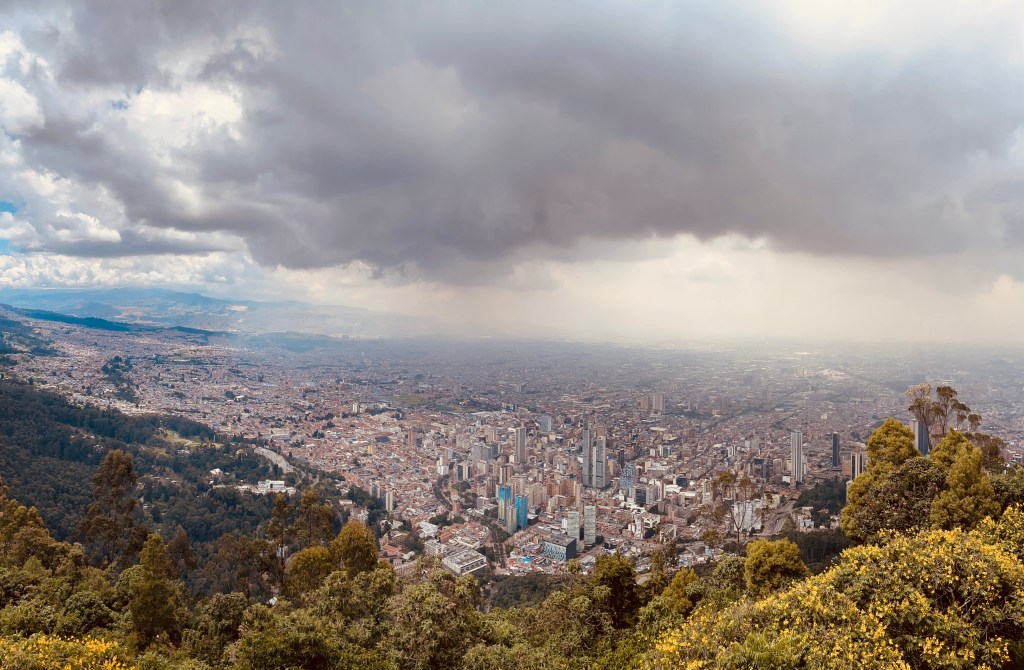
Bogotá is 2000 metres above sea level and I did occasionally find myself feeling a bit short of breath and having to take some deep breaths, but by the second day I seemed to be fine so it made to sense to get up early to beat the queues and get the cable car up another 1000 metres to the top of Mount Monserrate.
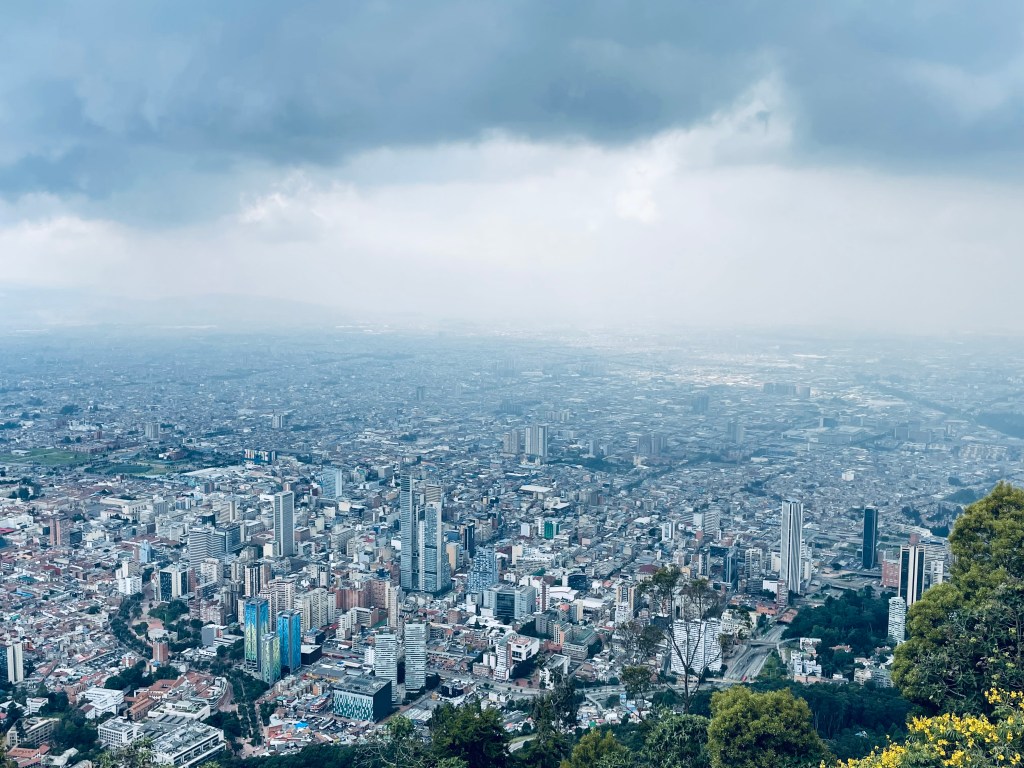
The tour guide the previous day kept insisting that Bogotá is a flat city as it’s at the bottom of a valley, and I guess you can sort of see that from the Basílica del Seño at the peak on Monserrate:
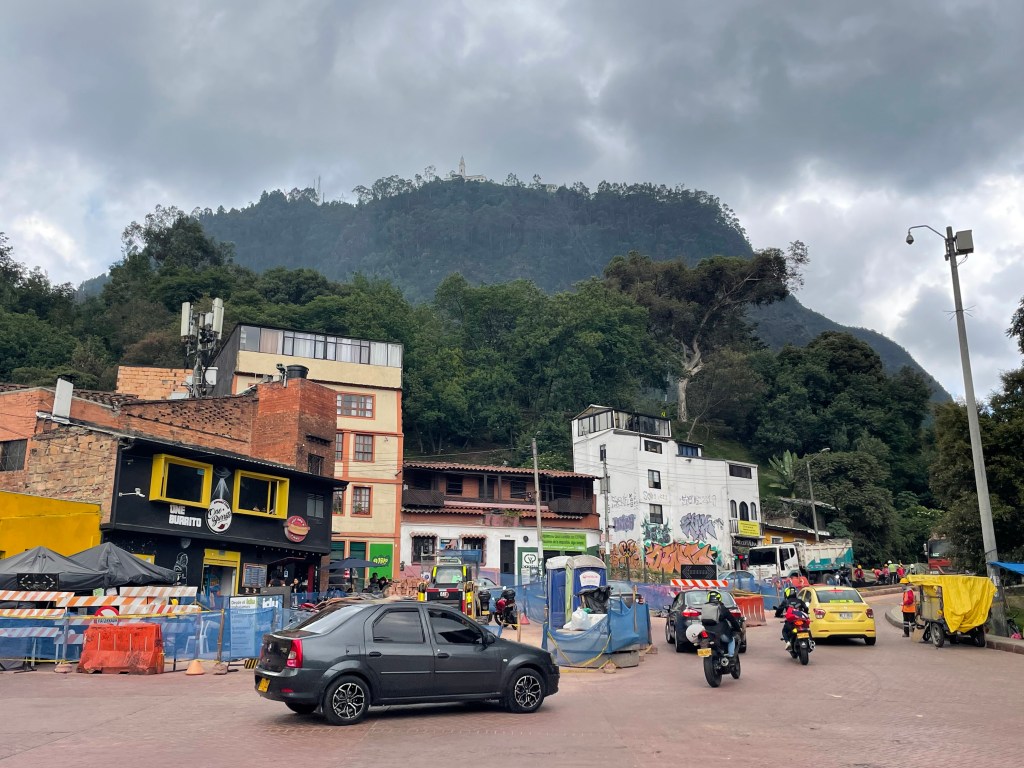
From below:
With Bogotá having no under or over ground metro system (yet) the only other option were unwieldy-looking double bendy buses. The drivers deserve medals for threading these three-carriage bending road-trains around a busy city centre!
However, Uber taxis were so cheap it made more sense to traverse the neighbourhoods using these. As the heavens opened not long after descending Monserrate, I ordered a taxi to the Chapinero neighbourhood and began with an excellent coffee and cheese toasty:
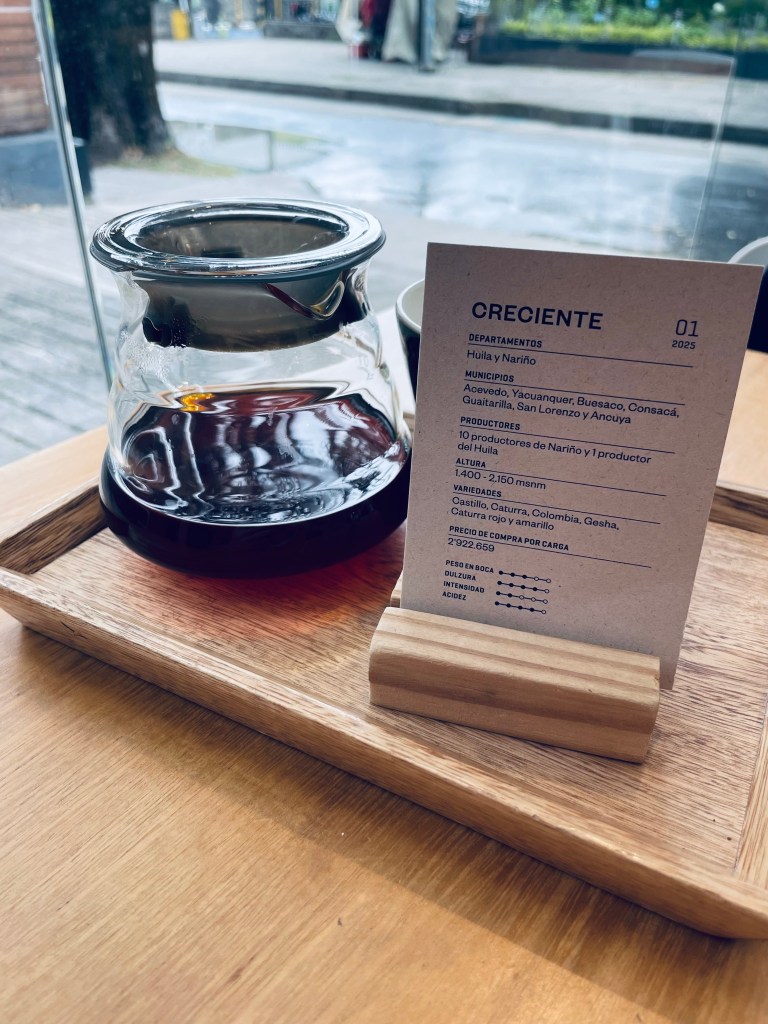
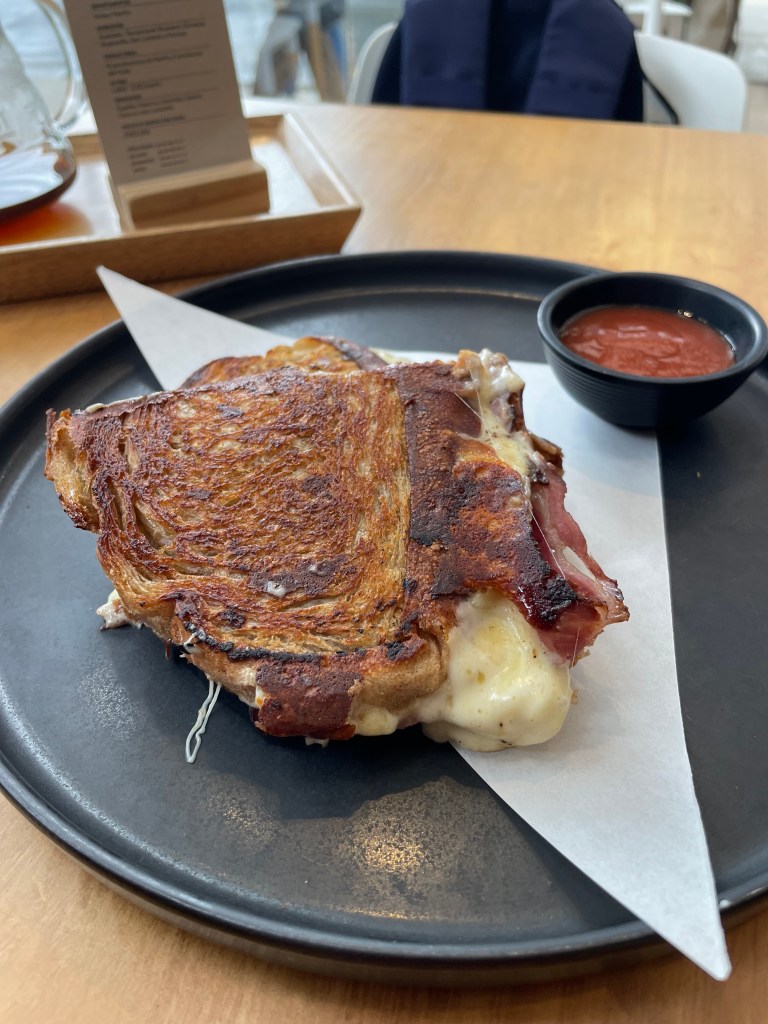
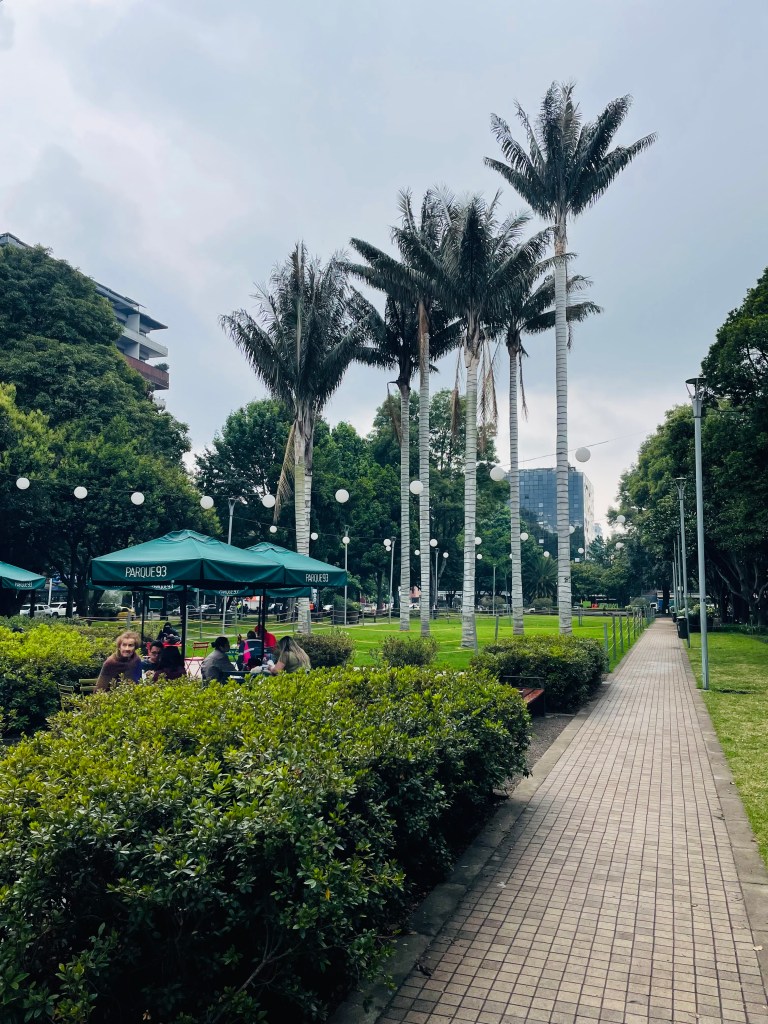
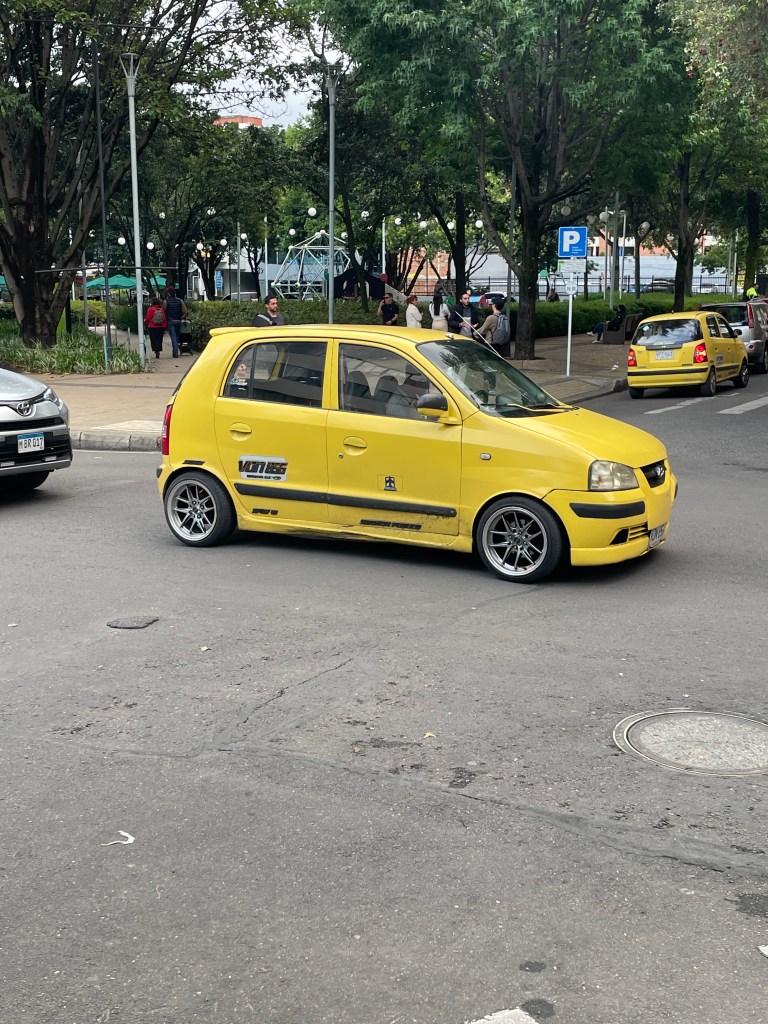
Parque de la 93 and a pimped-up local taxi:
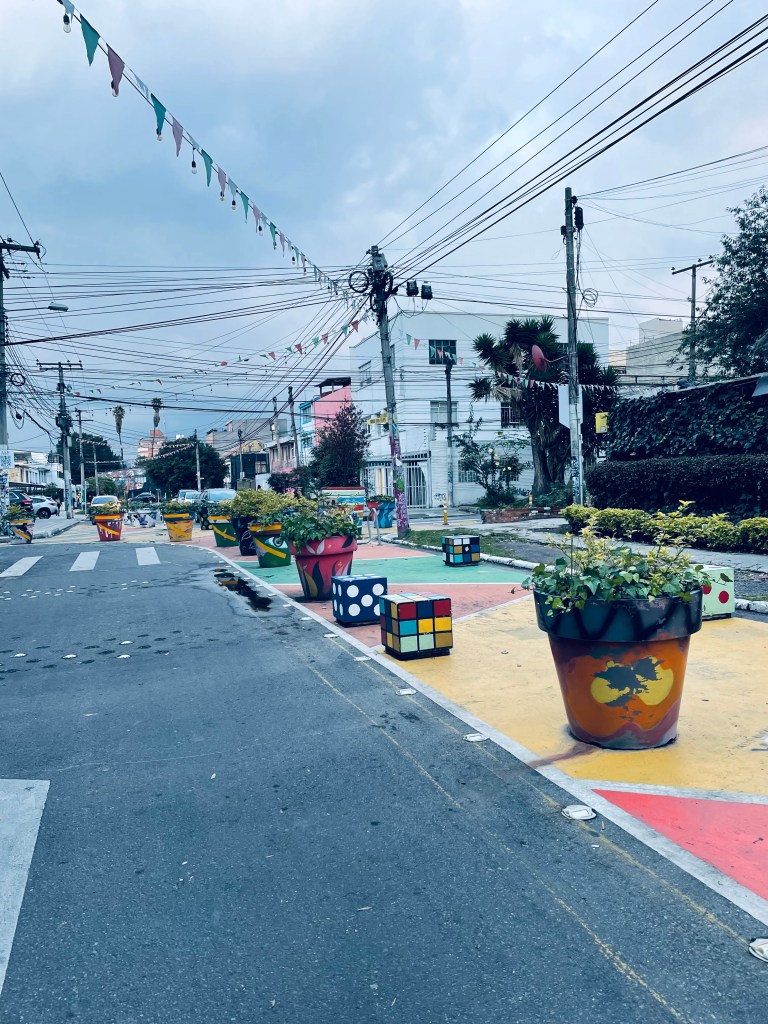
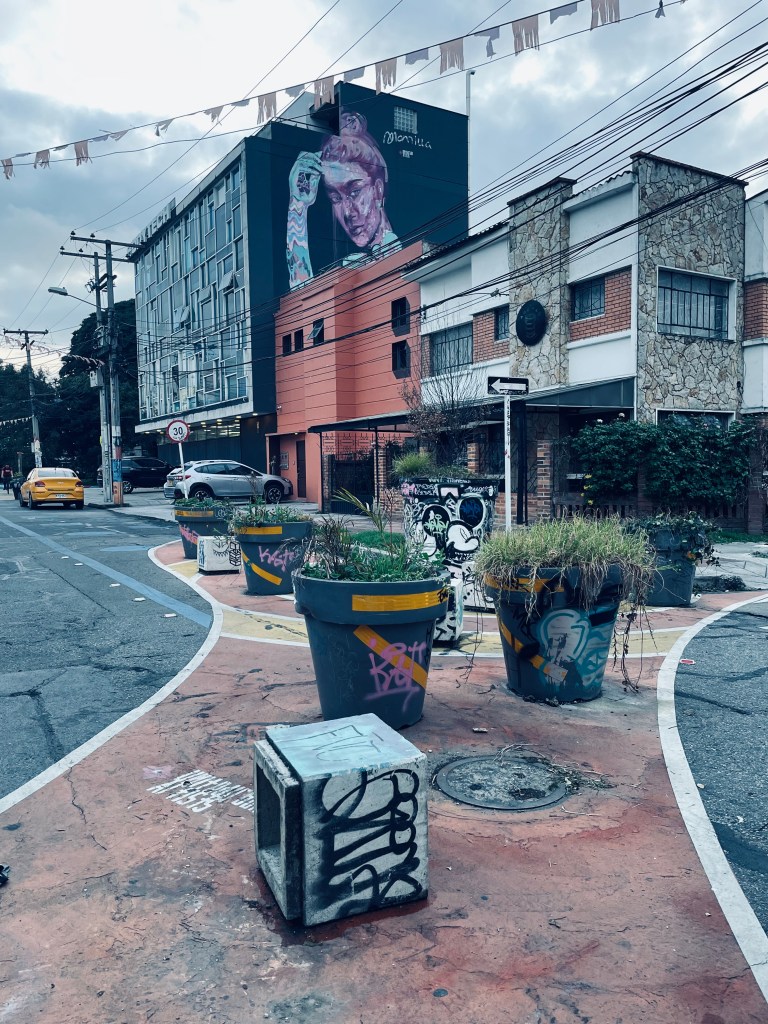
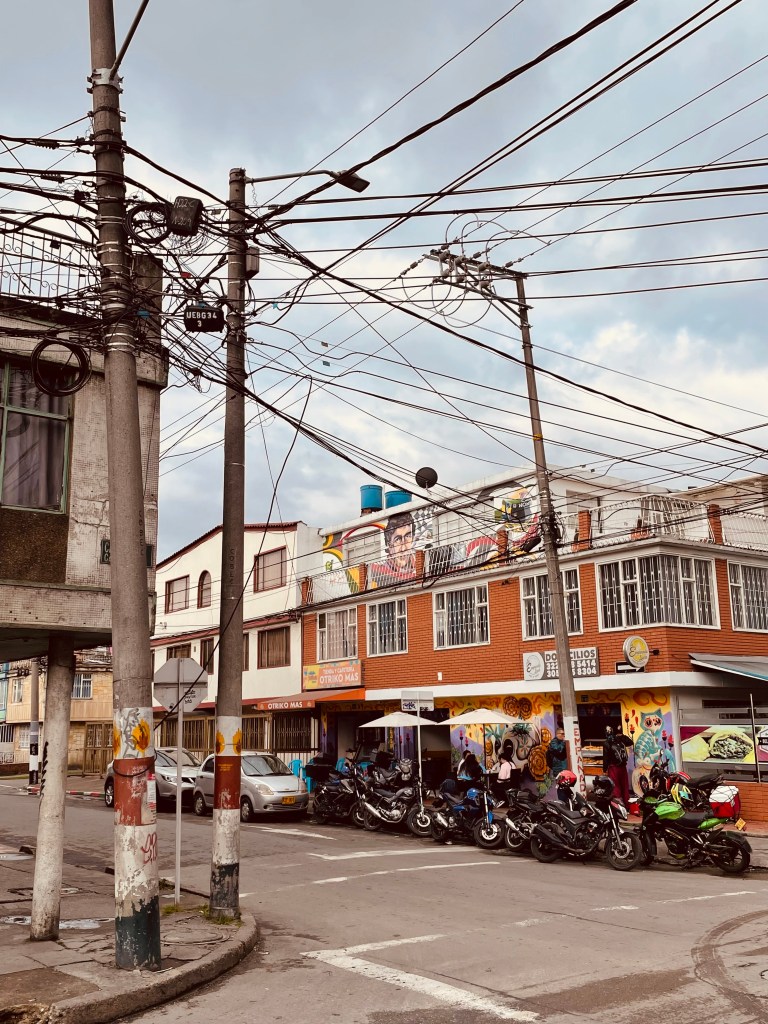
Wondering the wonderfully graffitied streets:
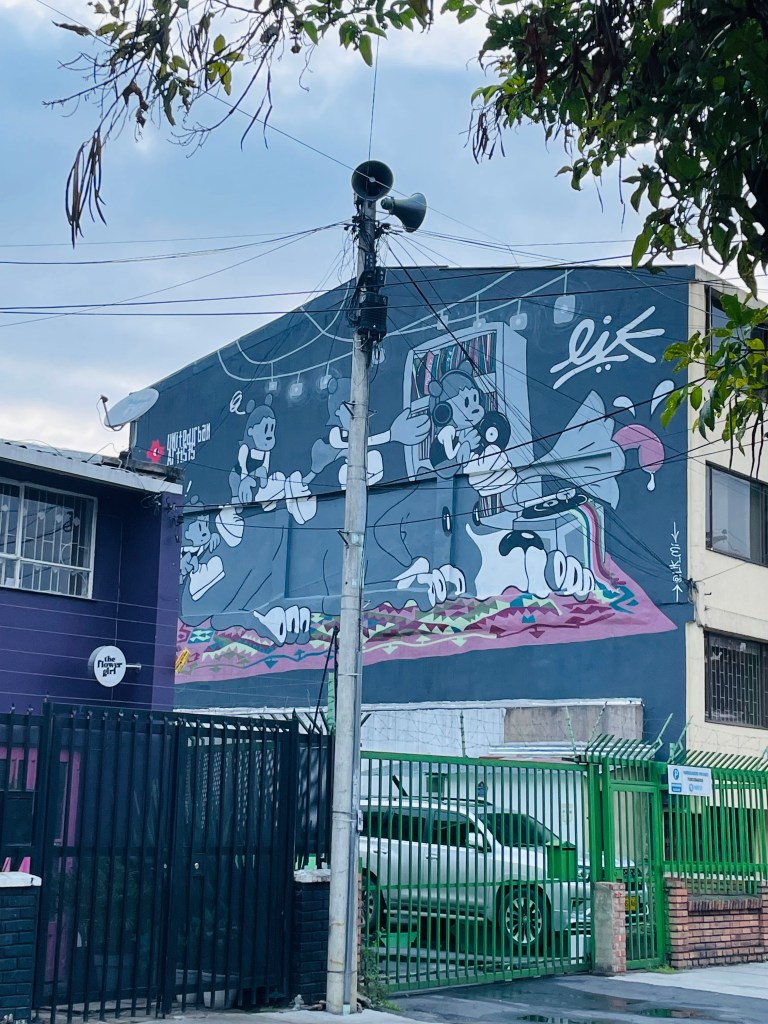
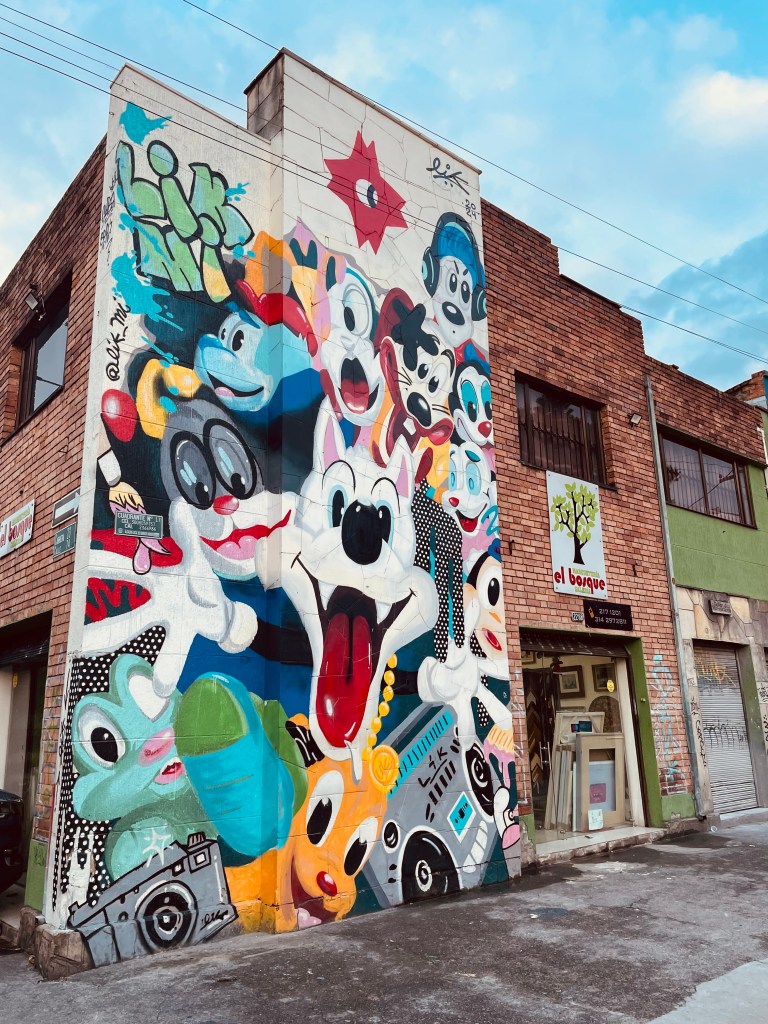
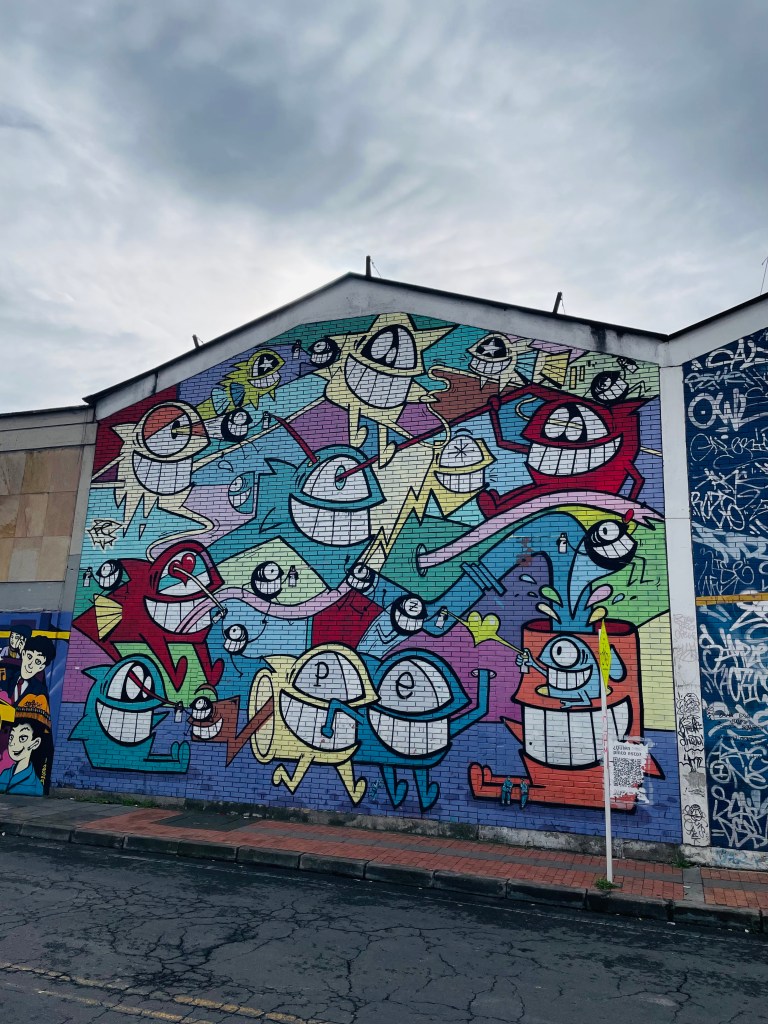
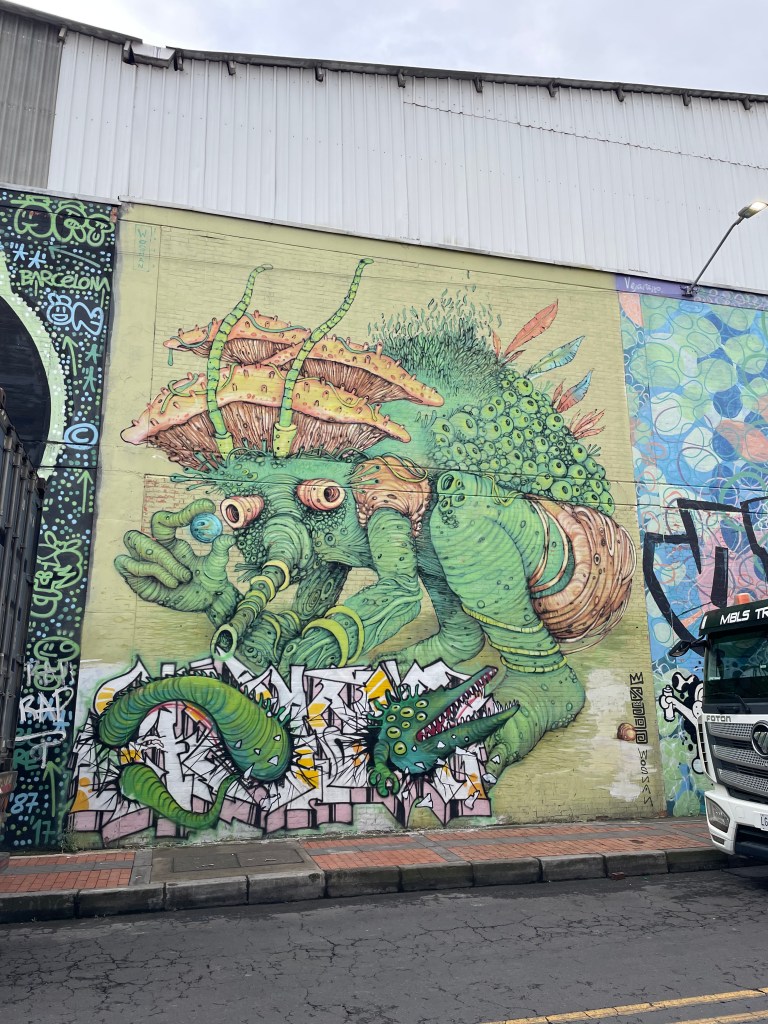
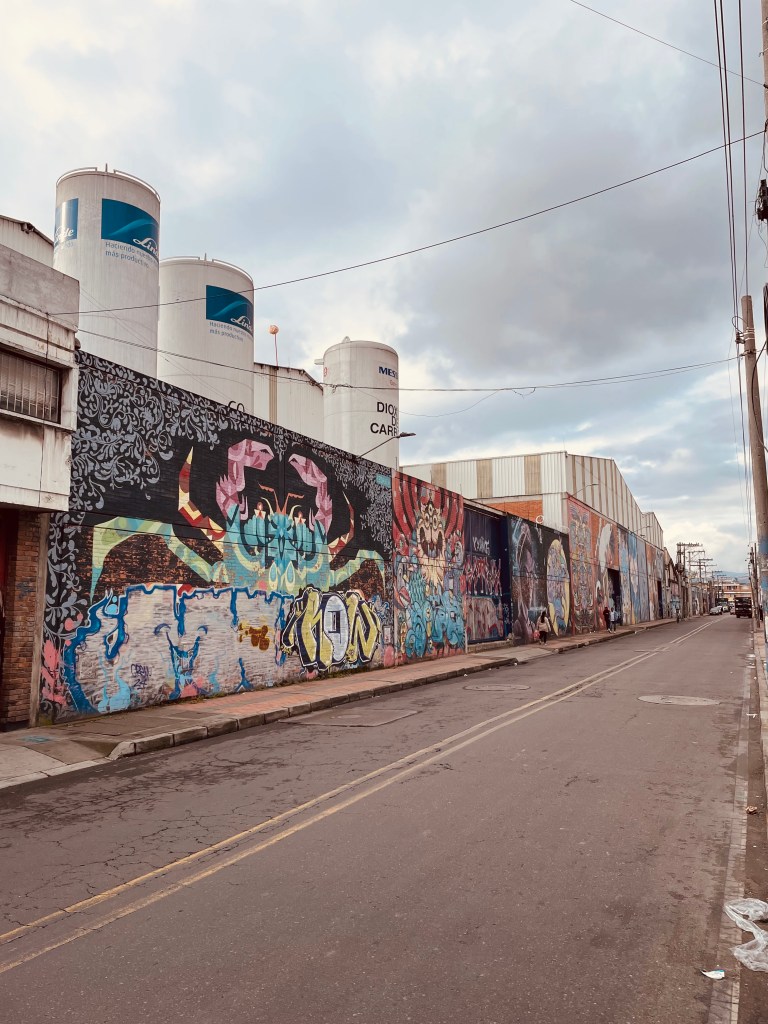
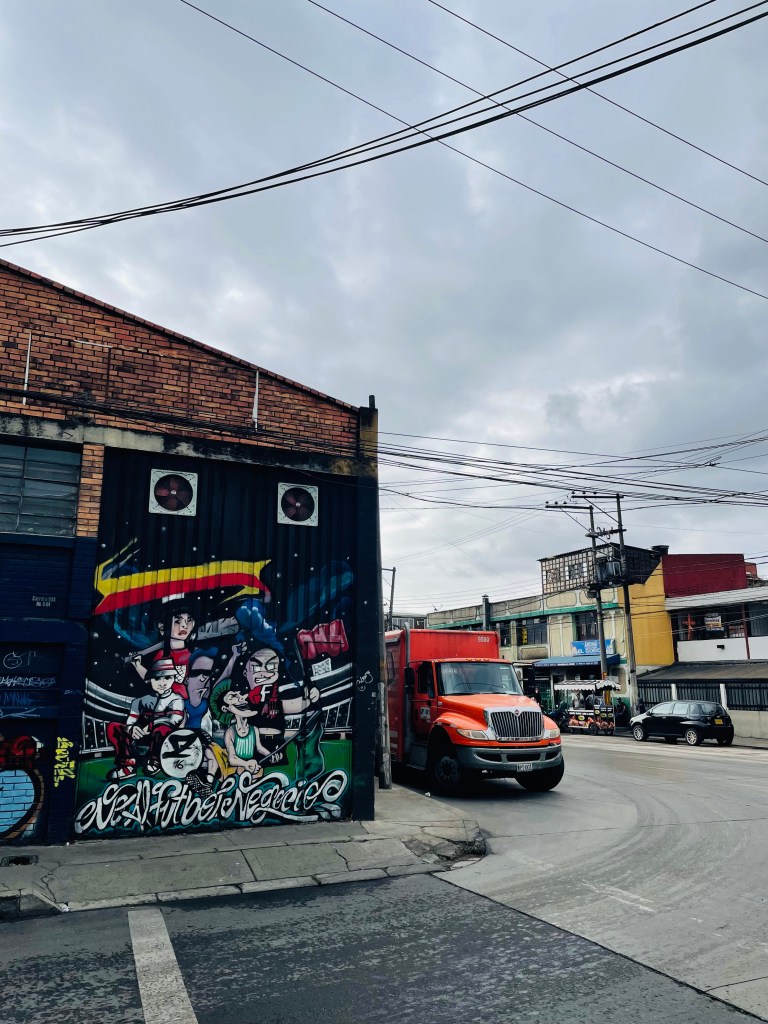
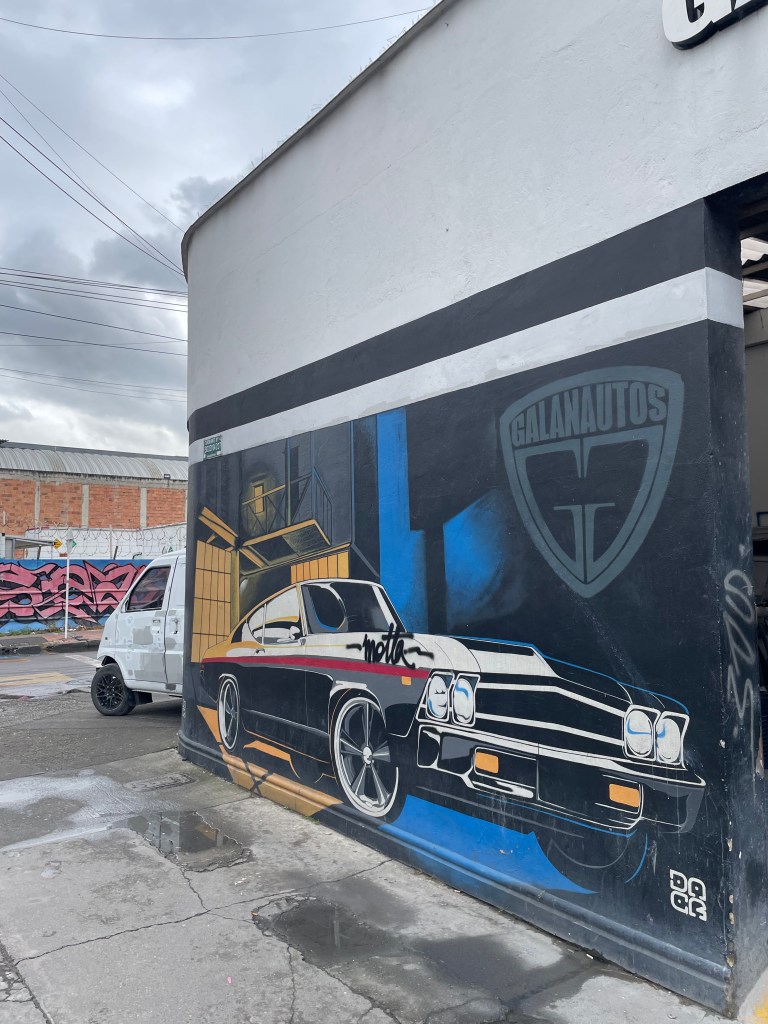
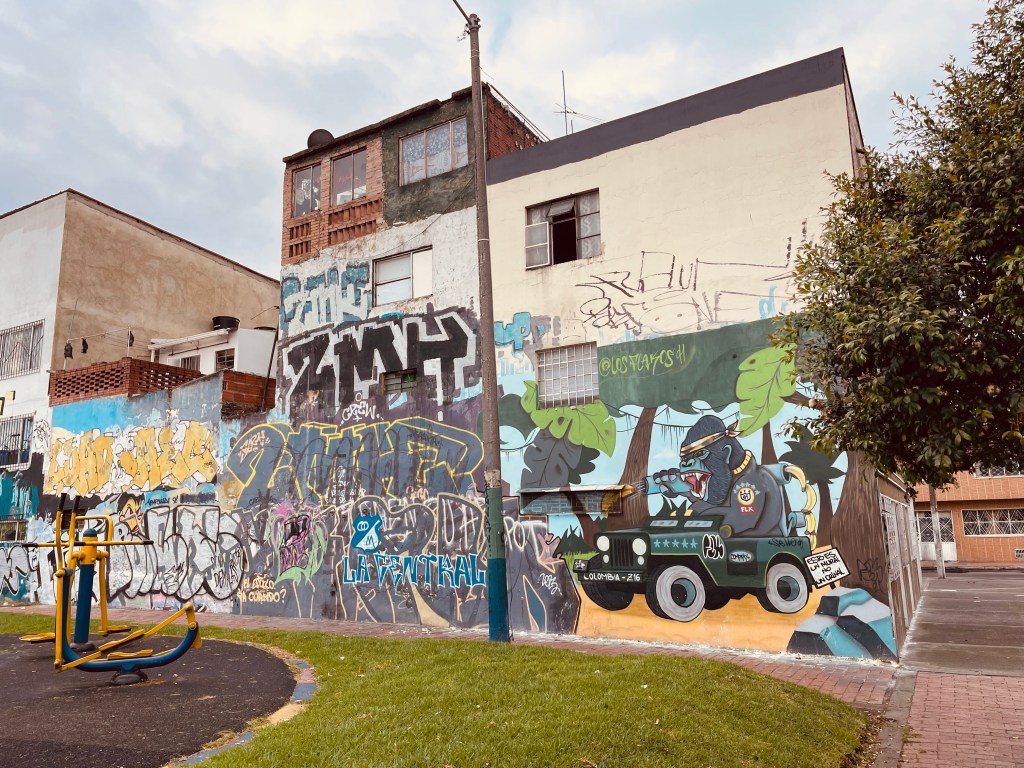
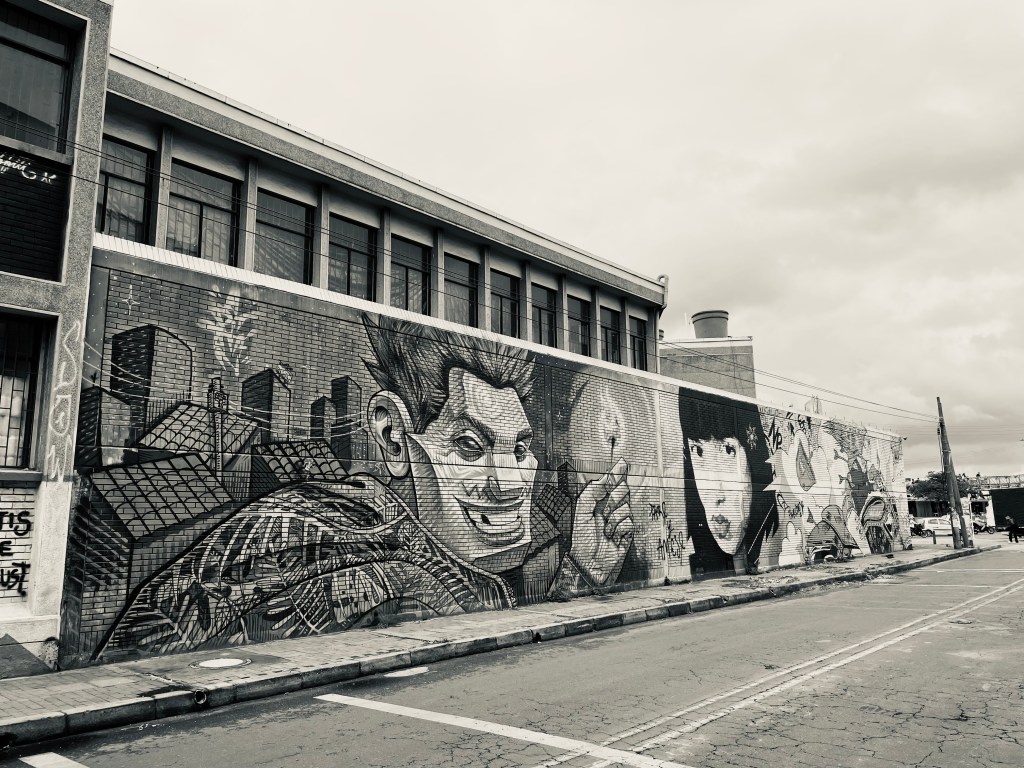
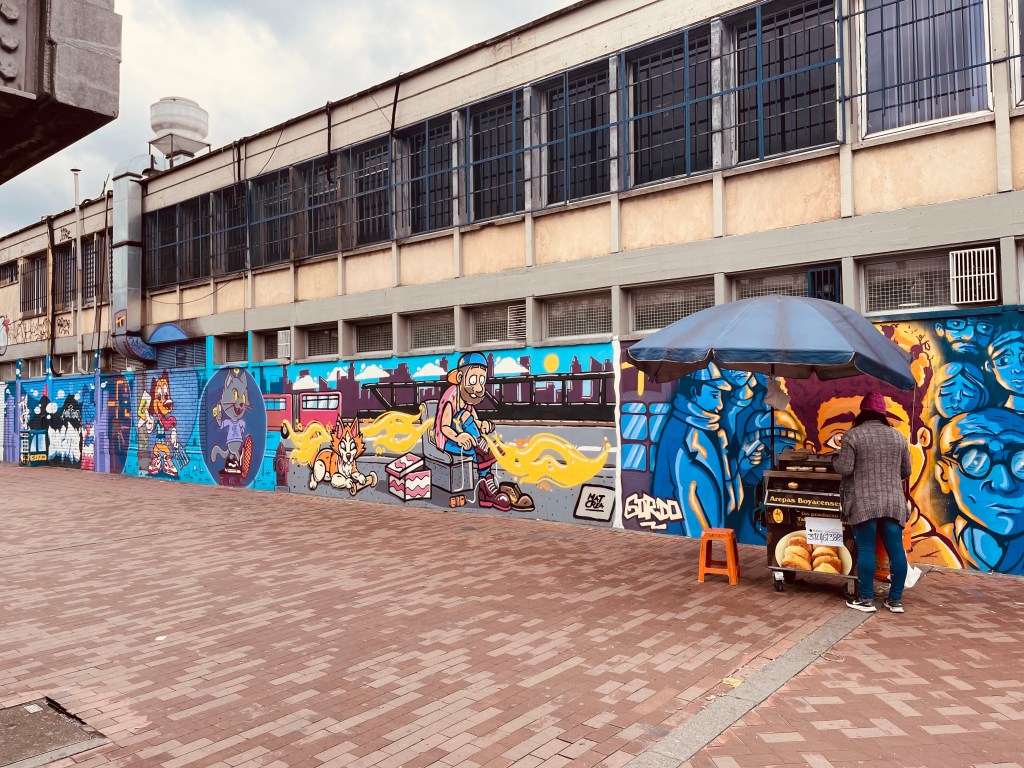
Before flying to Perreira airport the next day I grabbed a taxi to ‘Distrito Grafiti’, basically a cluster of warehouses decorated with colourful murals by different artists. I got some breakfast and strolled the slightly eerie streets trying not to photograph everything:
Pereira airport is about an hour’s taxi ride from the small town of Salento, which is a bit of a tourist trap in the “zona cafetera” of Colombia. It’s proximity to the Valle de Cocora and scores of coffee farms being the key attractions.
My accommodation (a double-balcony room on a farm) was on the edge of the town, a mere five minutes walk from the town centre.
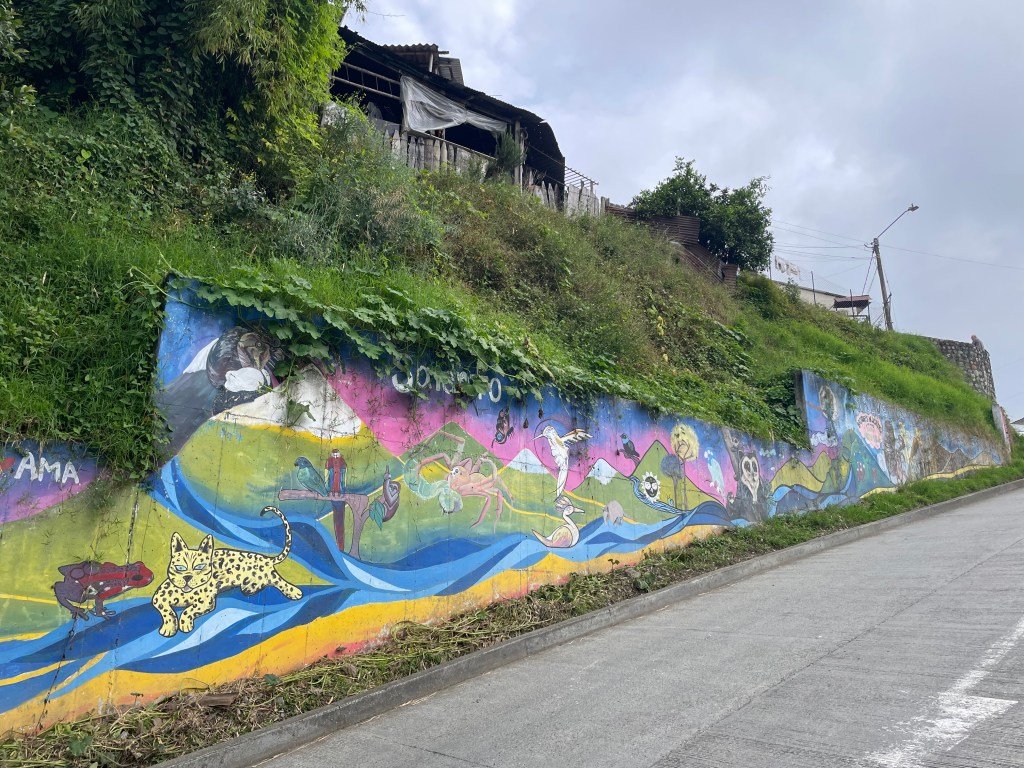
More graffiti welcomes you to the town:
The town is full of pretty shops and restaurants all surrounding a small but bustling town square, Plaza de Bolívar Salento.
Colourful:
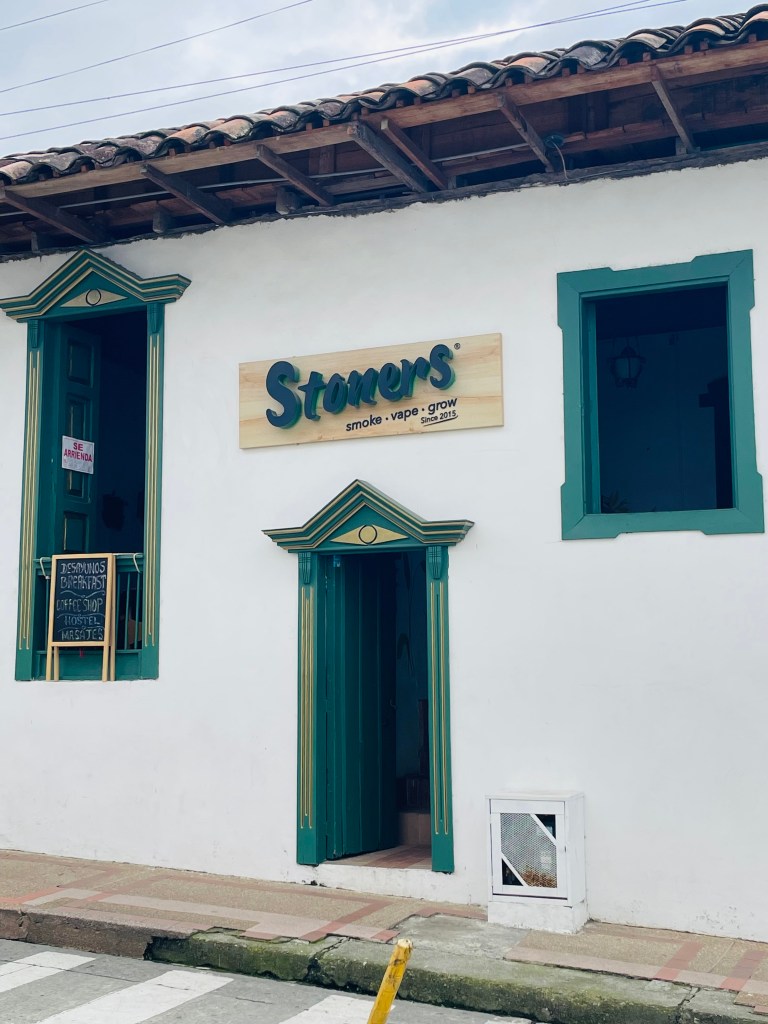
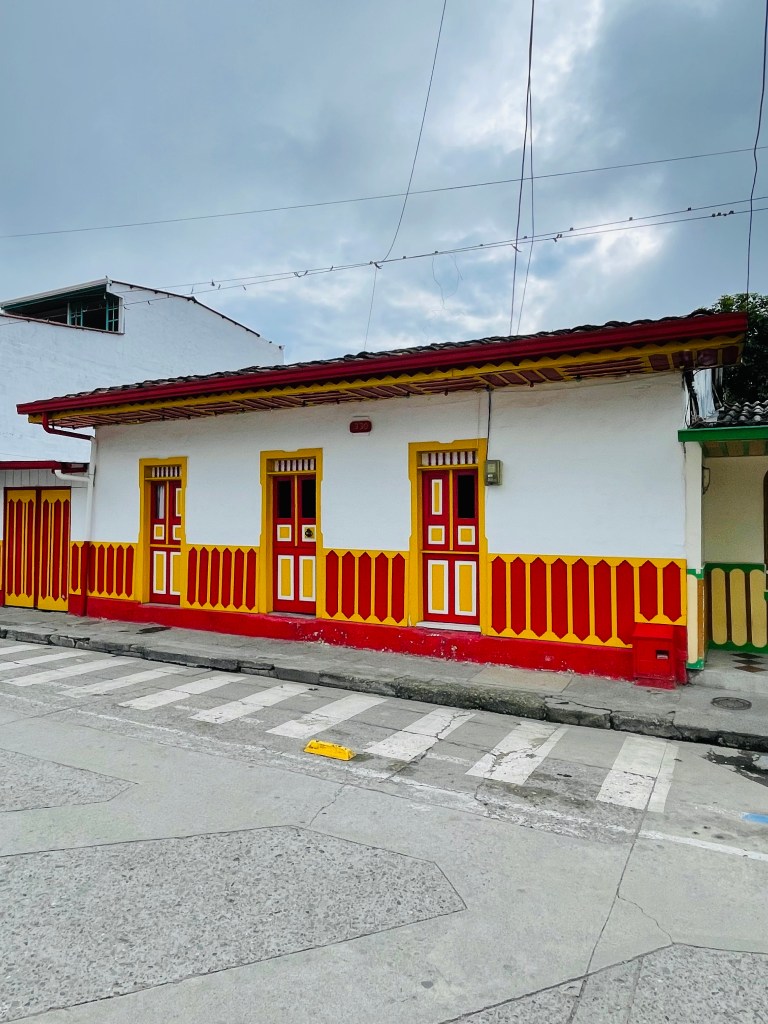
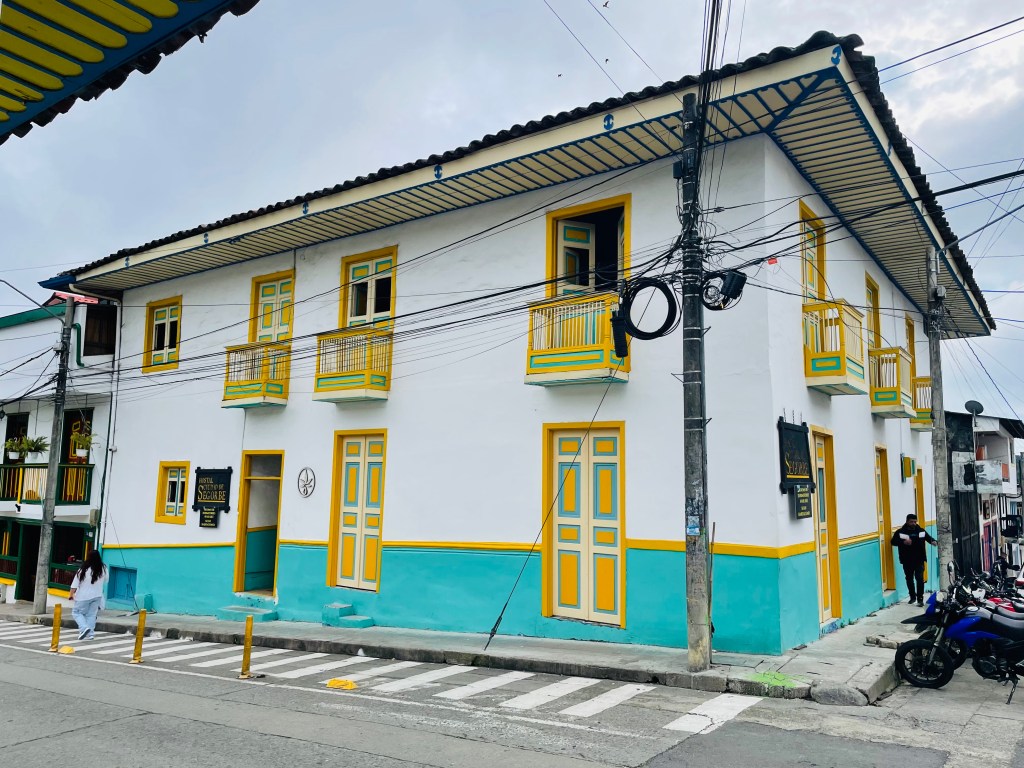
The hill up to Plaza de Bolívar:
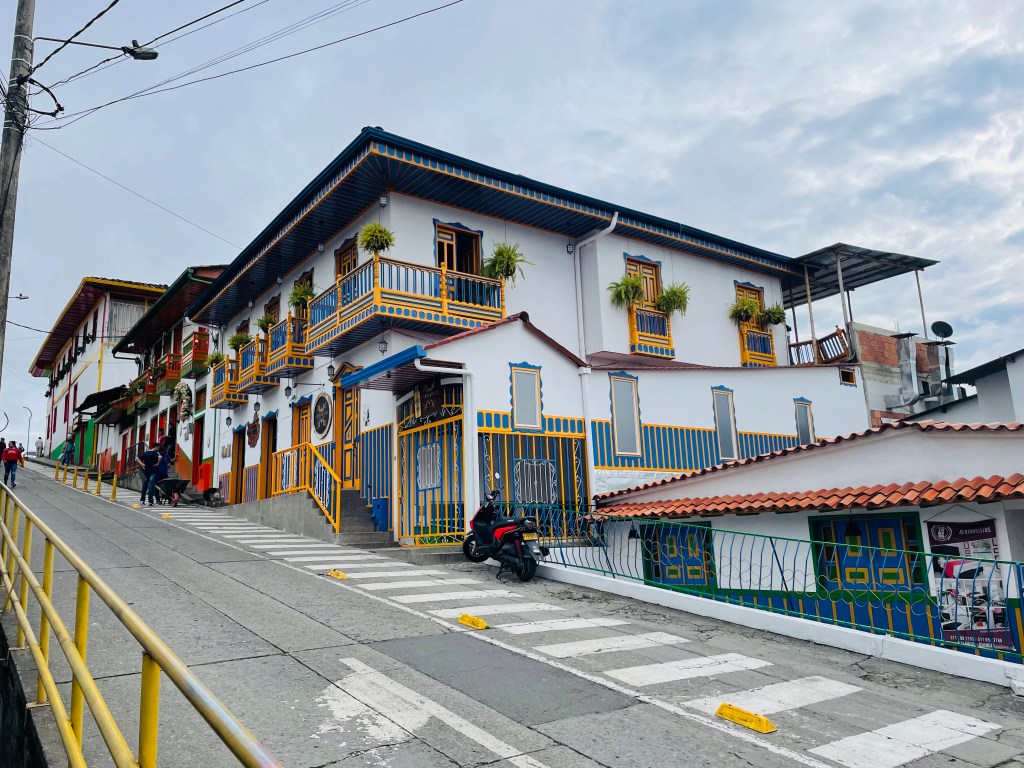
All roads lead to Plaza de Bolívar:
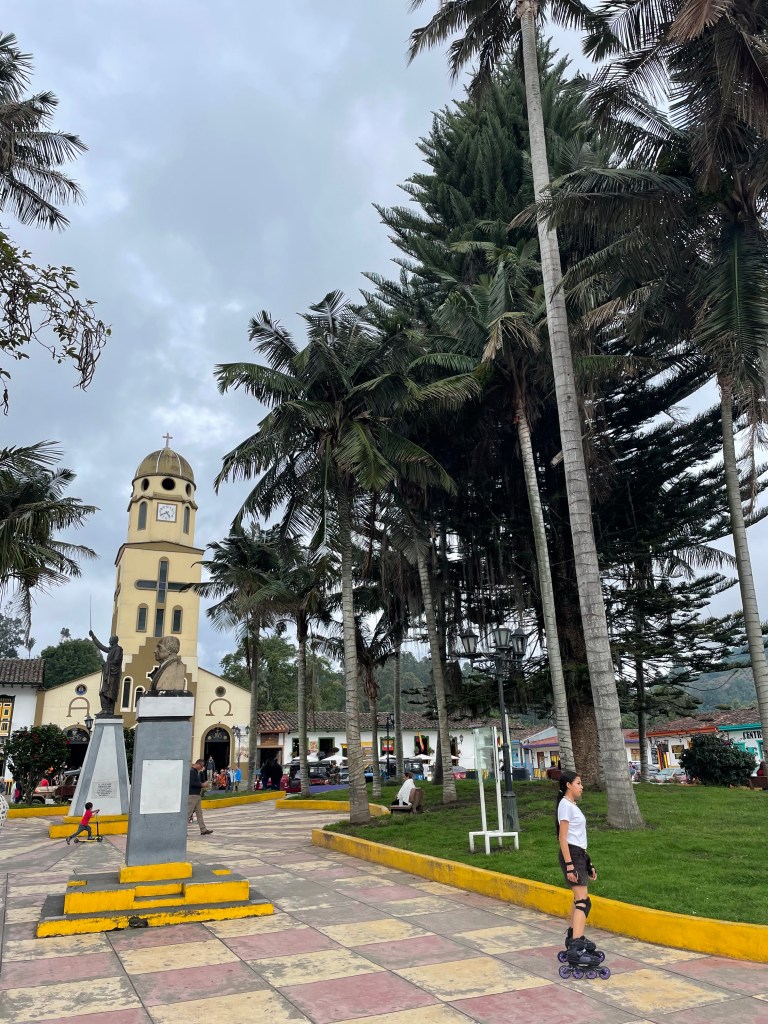
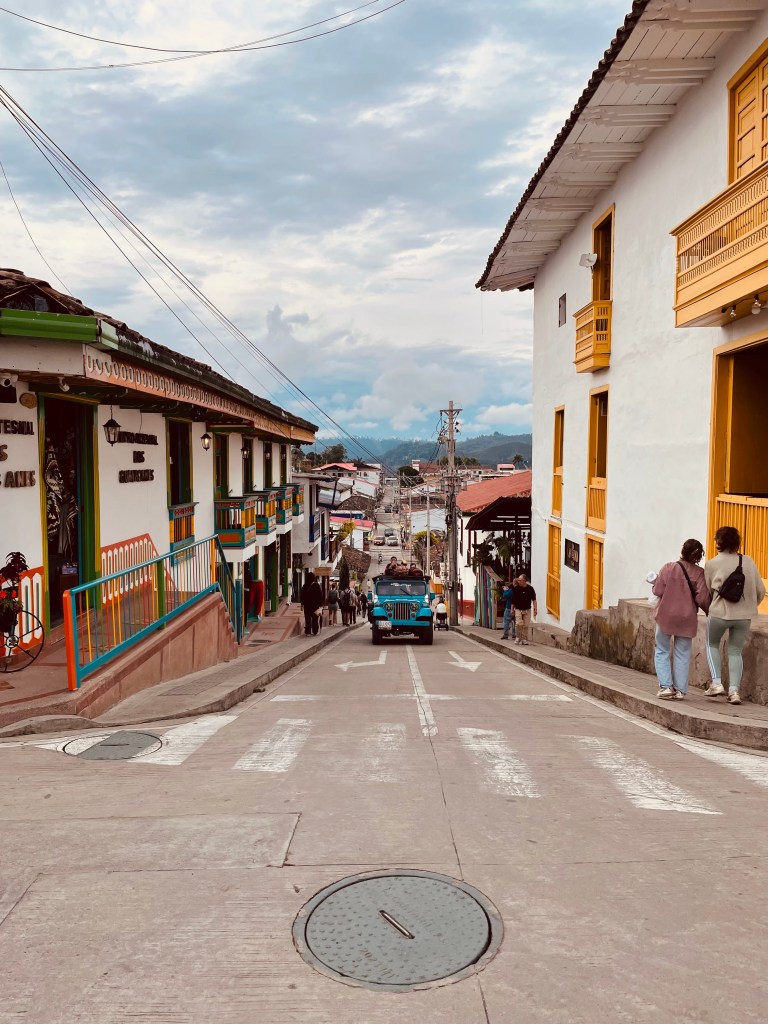
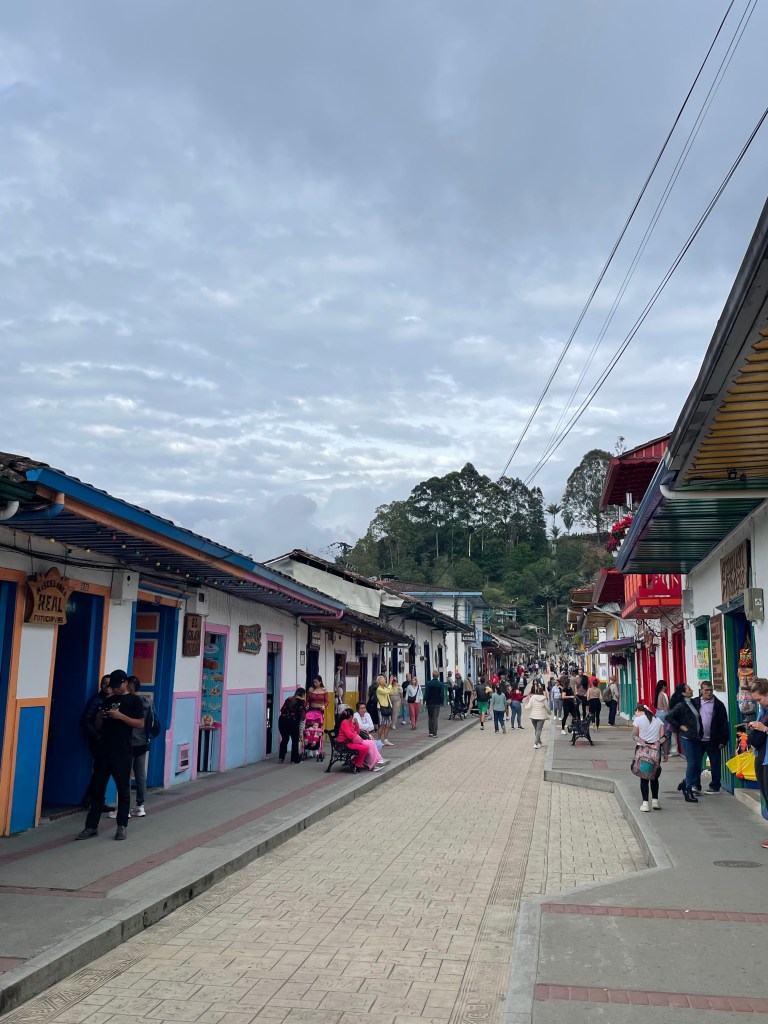
At the end of Calle Real (top right) is a seemingly endless staircase up to the Alto de la Cruz viewpoint. It’s worth the effort:
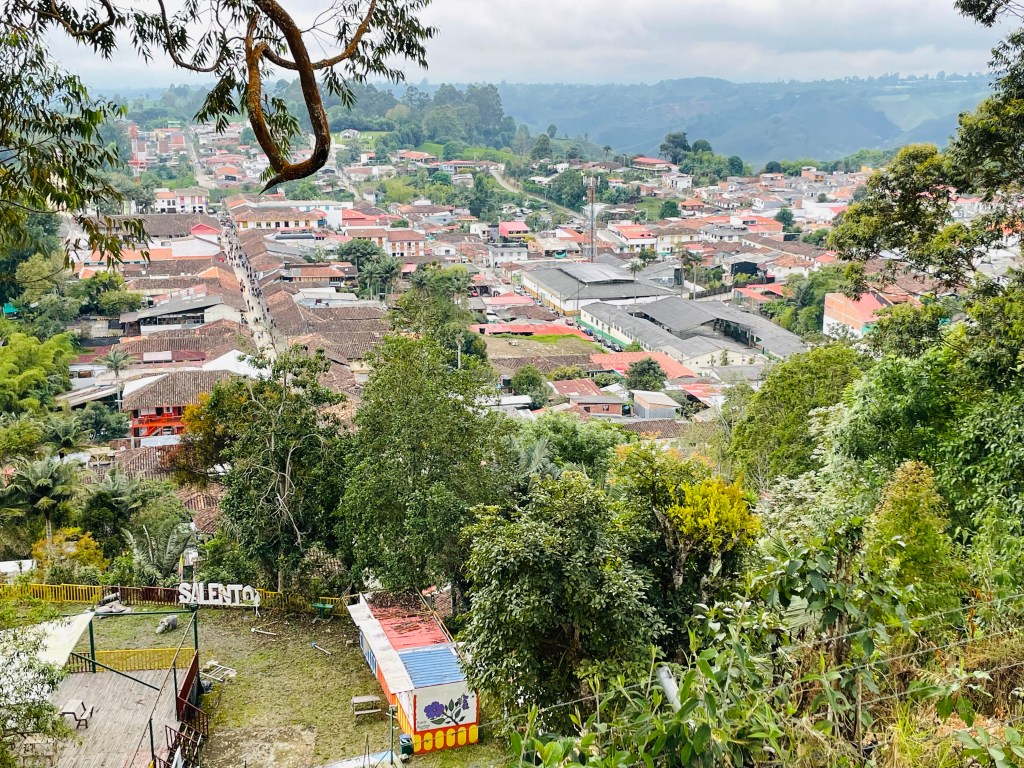
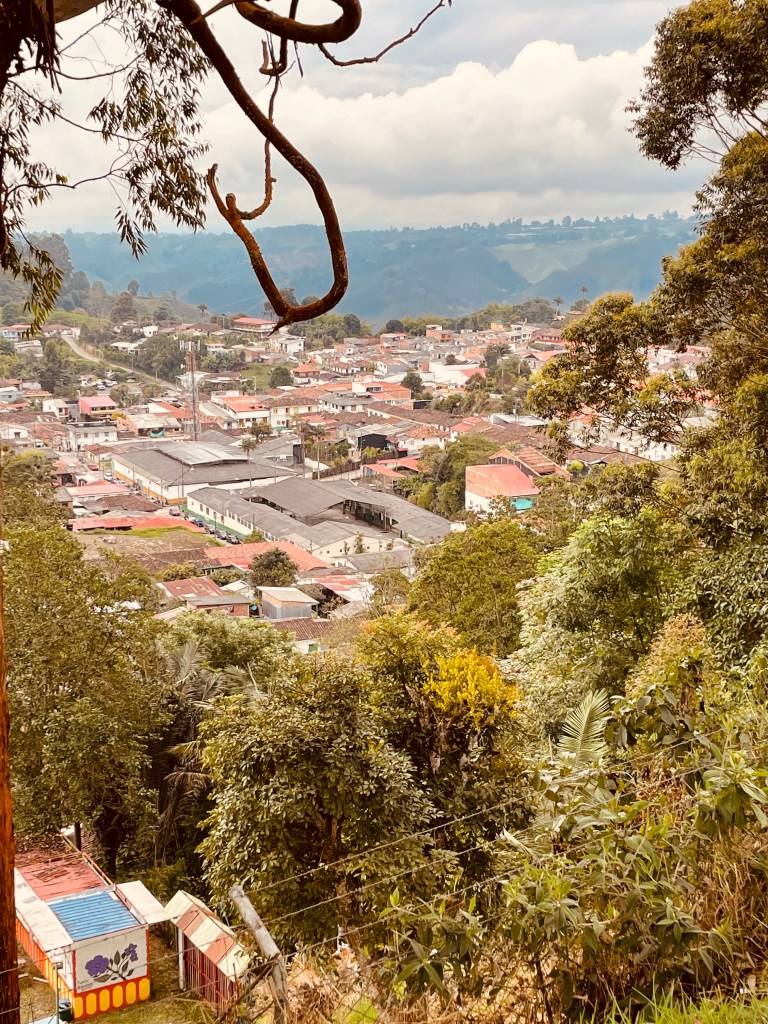
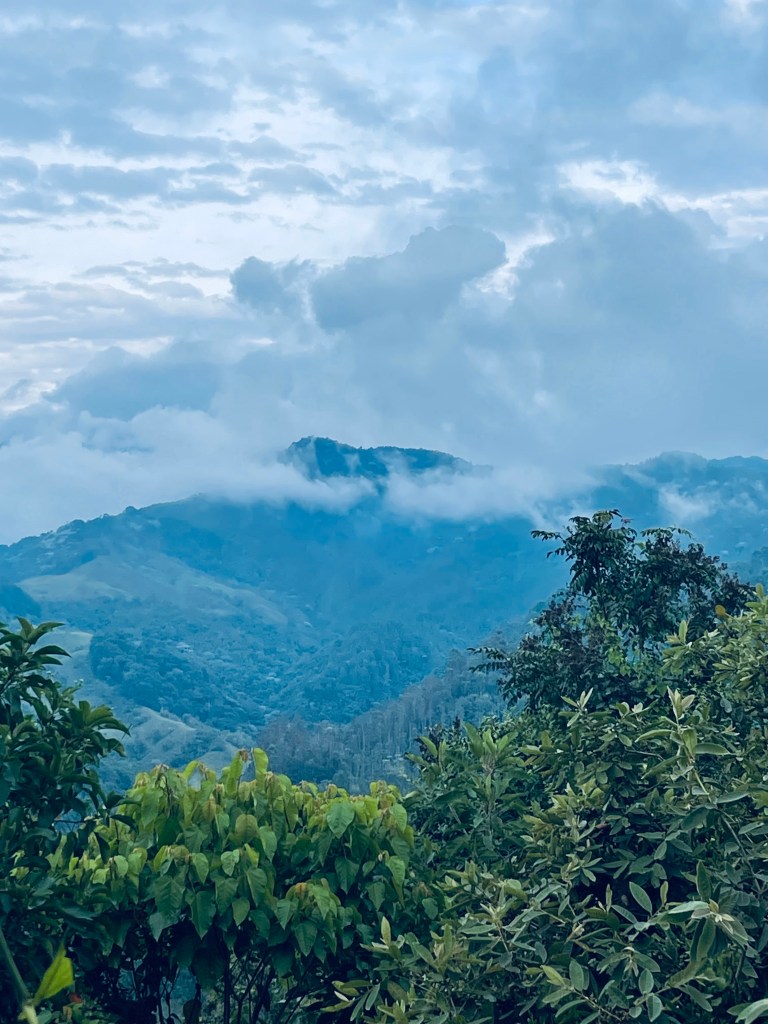
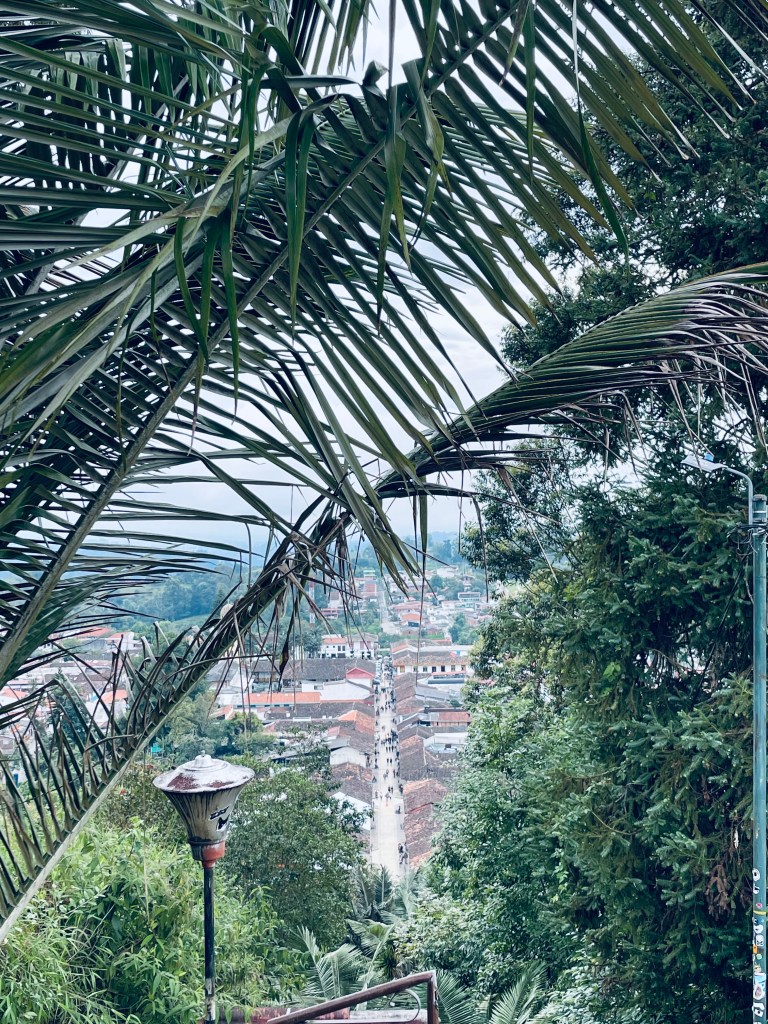
As the sun began to set I grabbed a couple of beers outside a bar on the square which had started pumping out some decent Latin dance tunes.
The next morning I was woken by the local cockerel and headed to Plaza de Bolívar to join the half-day tour of the Corcora valley (Valle de Corcora).
Transport for the day, the ubiquitous US Army Willys Jeep:
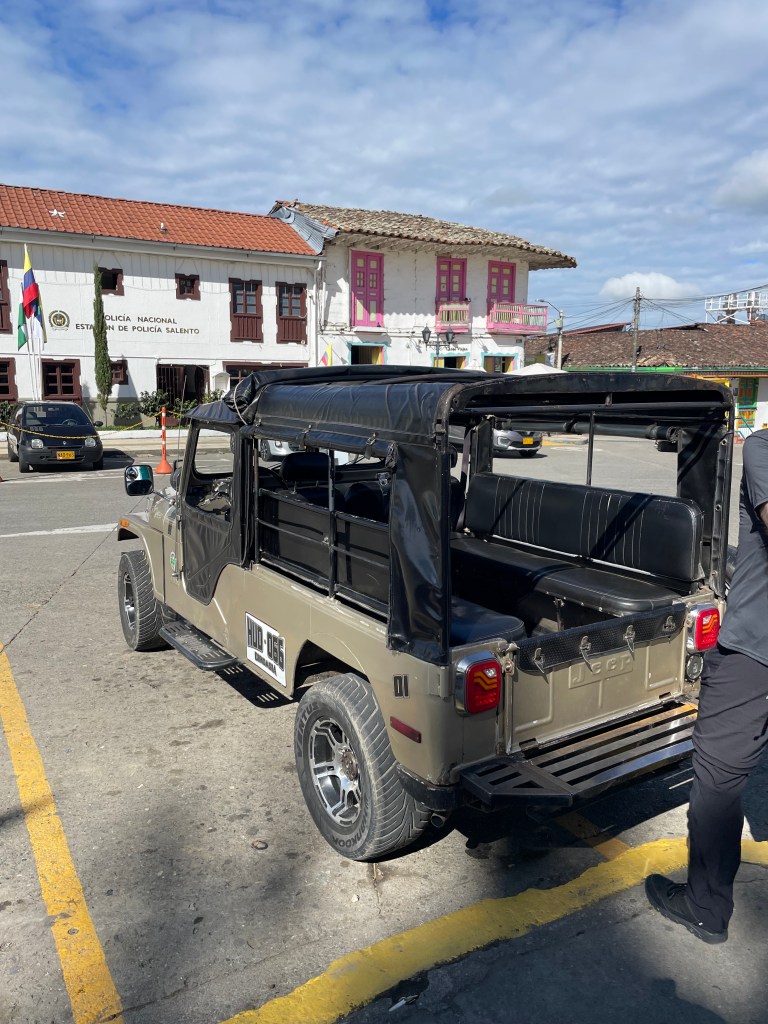
There was a good group of people on the tour and I got chatting to two funny Swiss girls, a Slovak guy who stirred my interest in perhaps climbing Machu Picchu sometime soon, and the very knowledgeable guide.
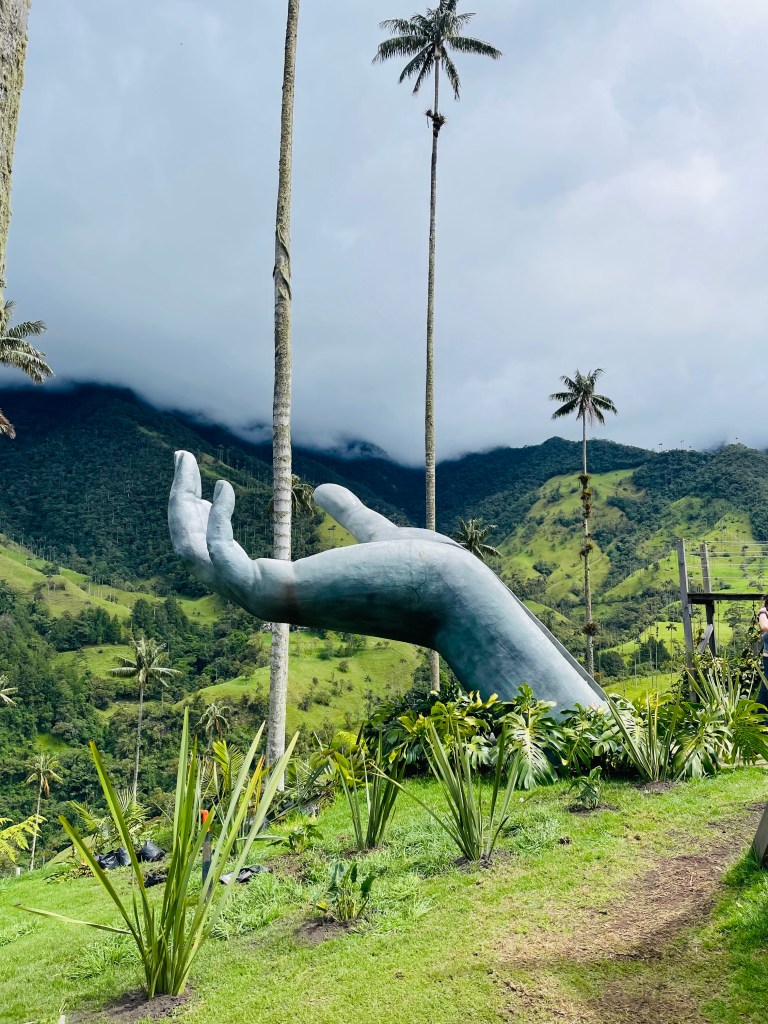
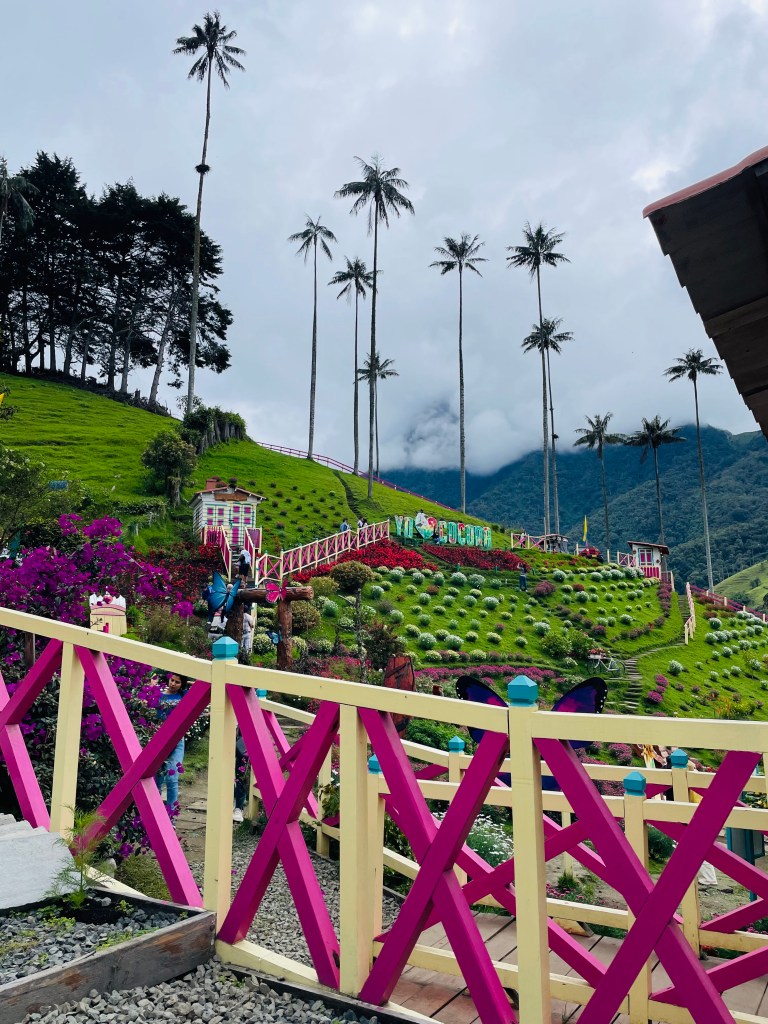
The Cocora Valley is famous for its wax palms, the tallest palm trees in the world, which grow on the slopes of the lush green mountains. They’re very much protected now.
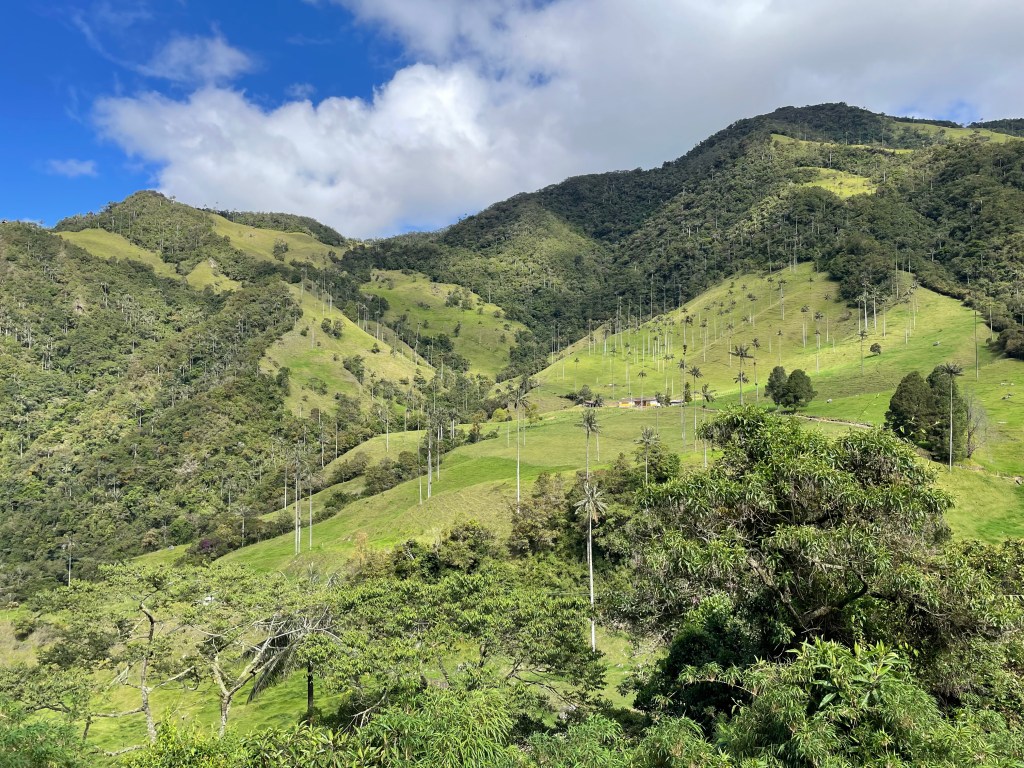
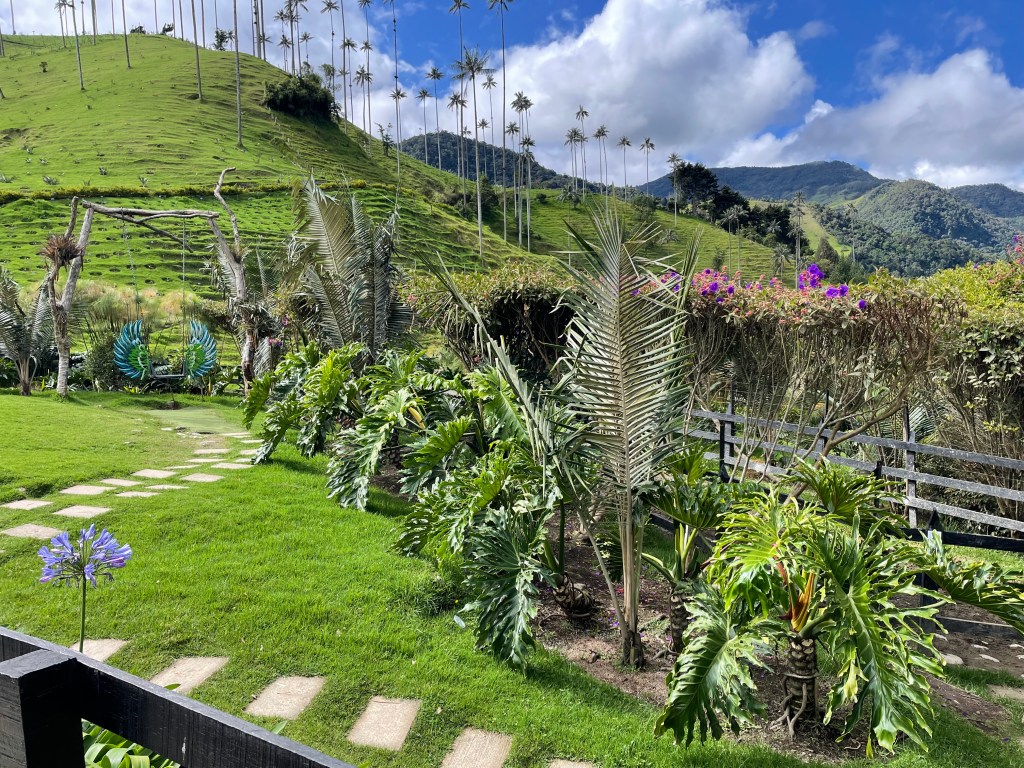
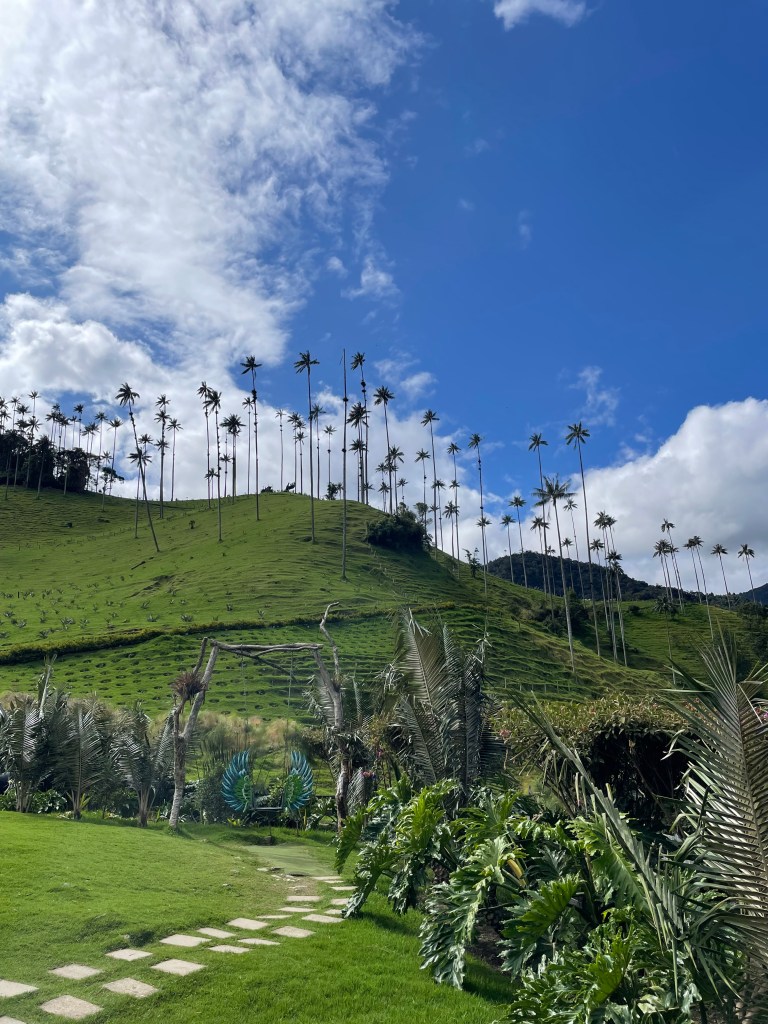
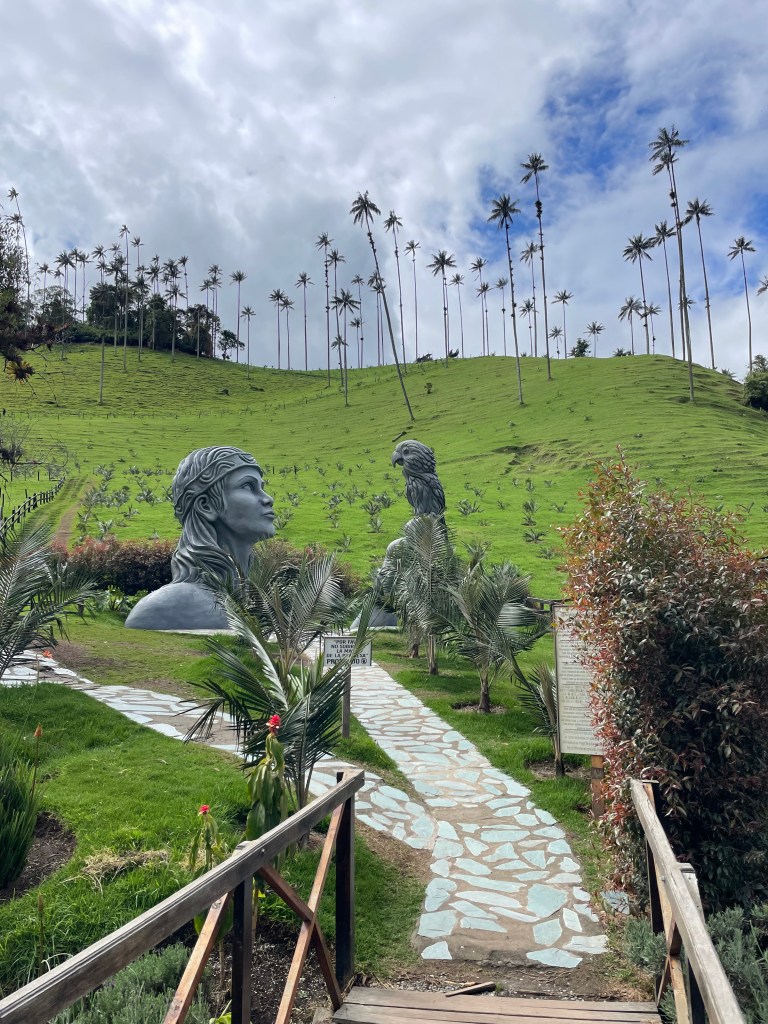
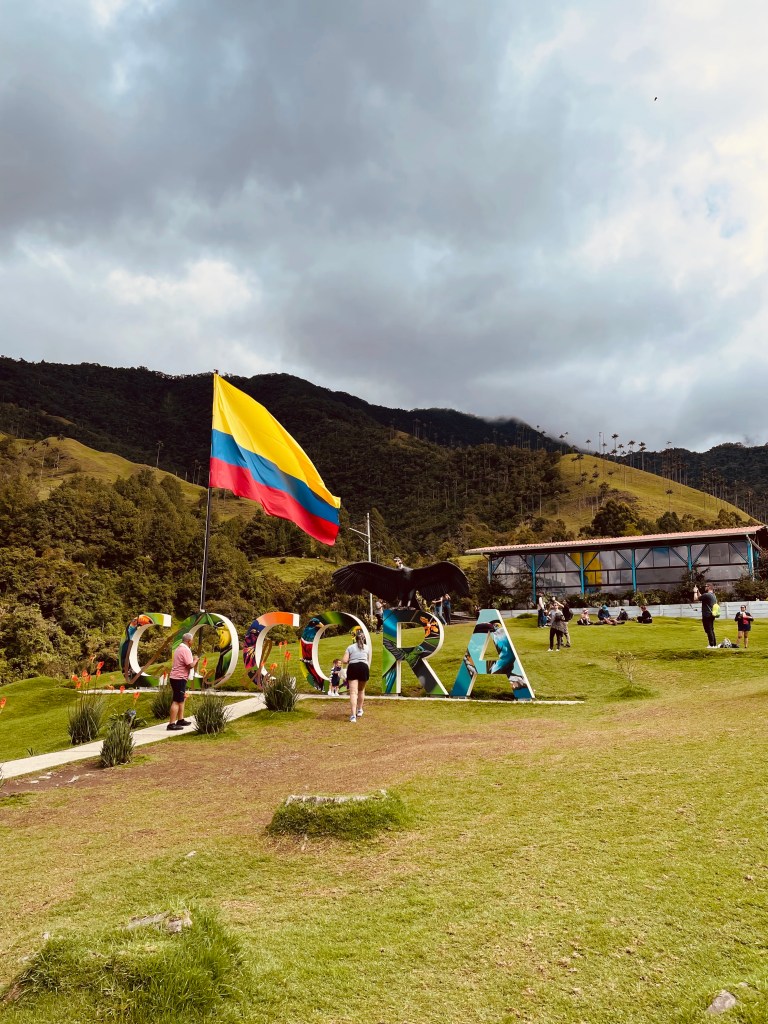
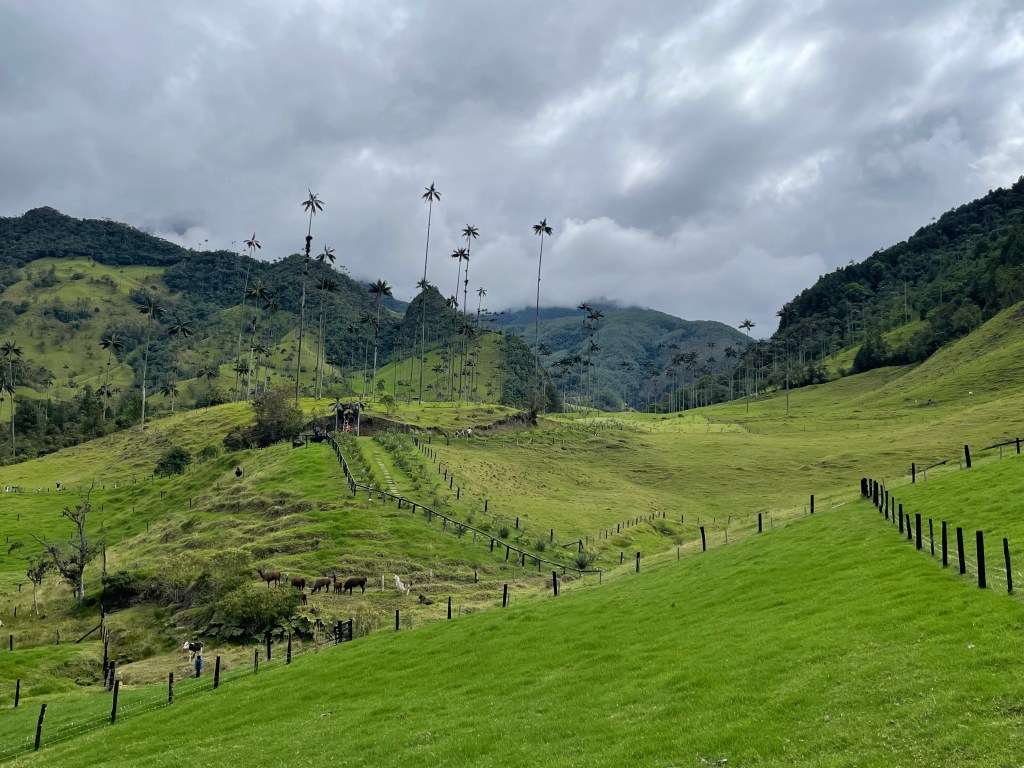
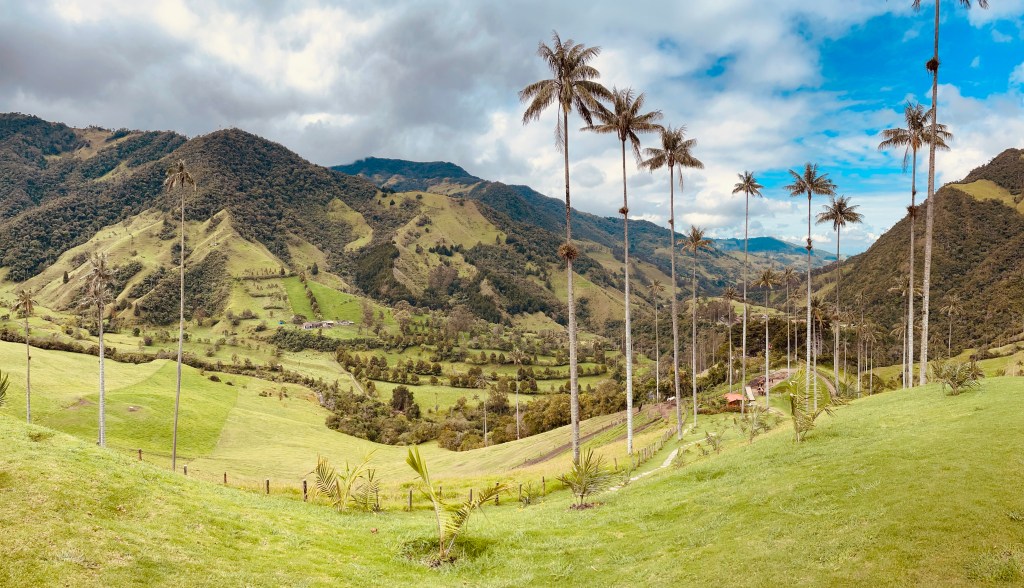
As the morning turned into afternoon, and eerie mist settled on the top of the surrounding mountains:
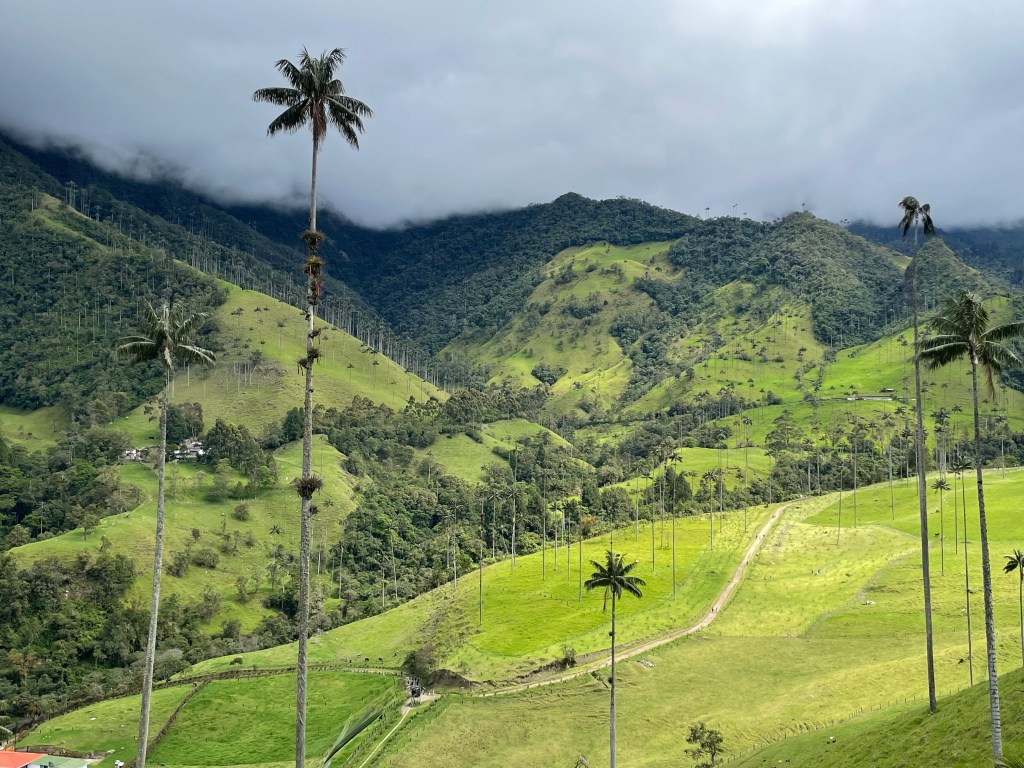
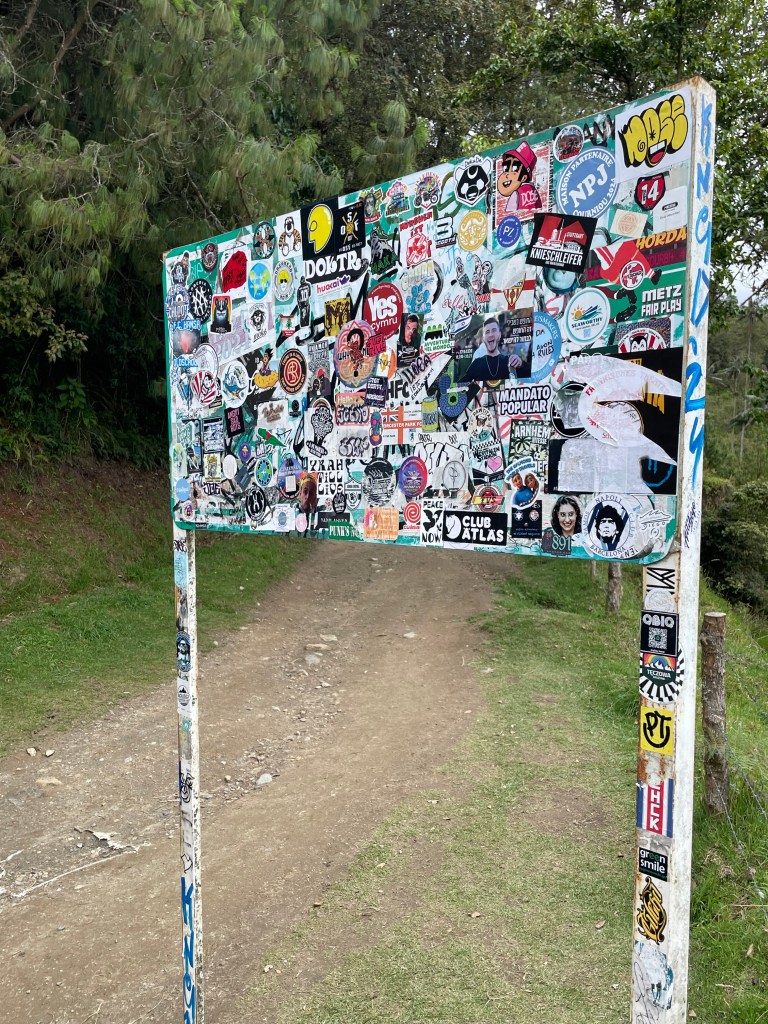
You could actually walk up the wrist to stand on the palm, plus YesCymru in Colombia!:
For the drive back, one of the Swiss girls insisted on standing on the rear bumper and hanging onto the frame of the roof. It’s something that our guide said is very much allowed and often necessary. The Willy can transport something like 14 average sized people including the driver!
After a delicious lunch at a restaurant the guide recommended, where you can spot humming birds feeding, I set out for the hour-long walk to Finca El Oscaso coffee farm. The walk was fairly easy going with lush green hills all around.
“Romancing The Stone” jungle this wasn’t!:
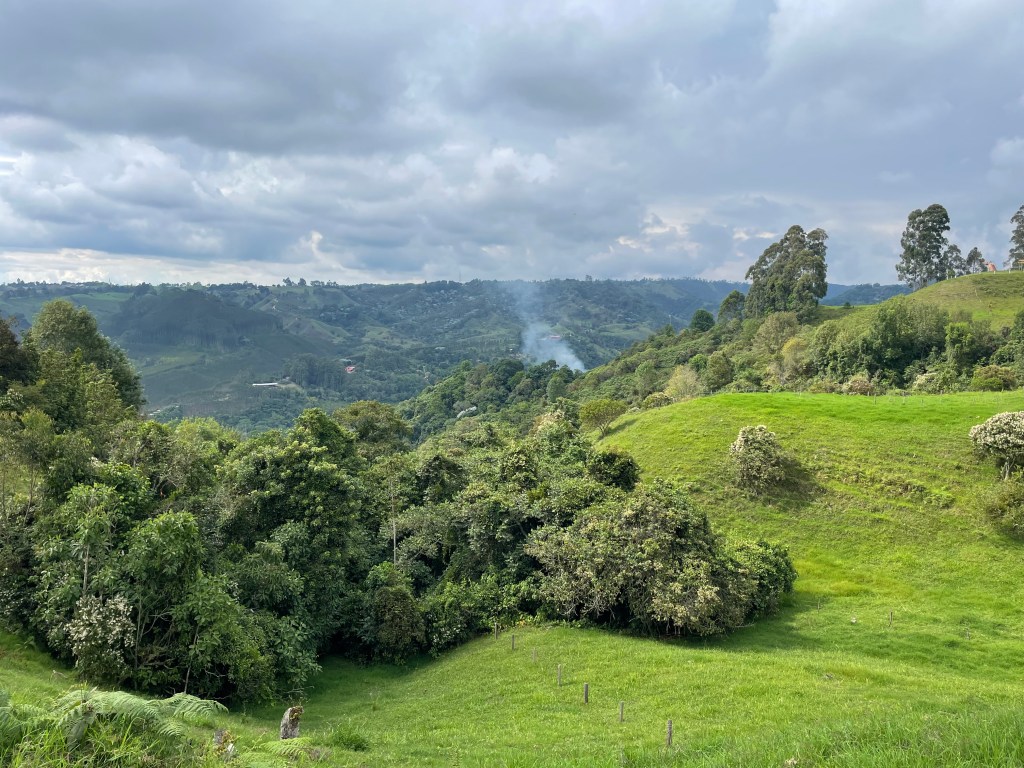
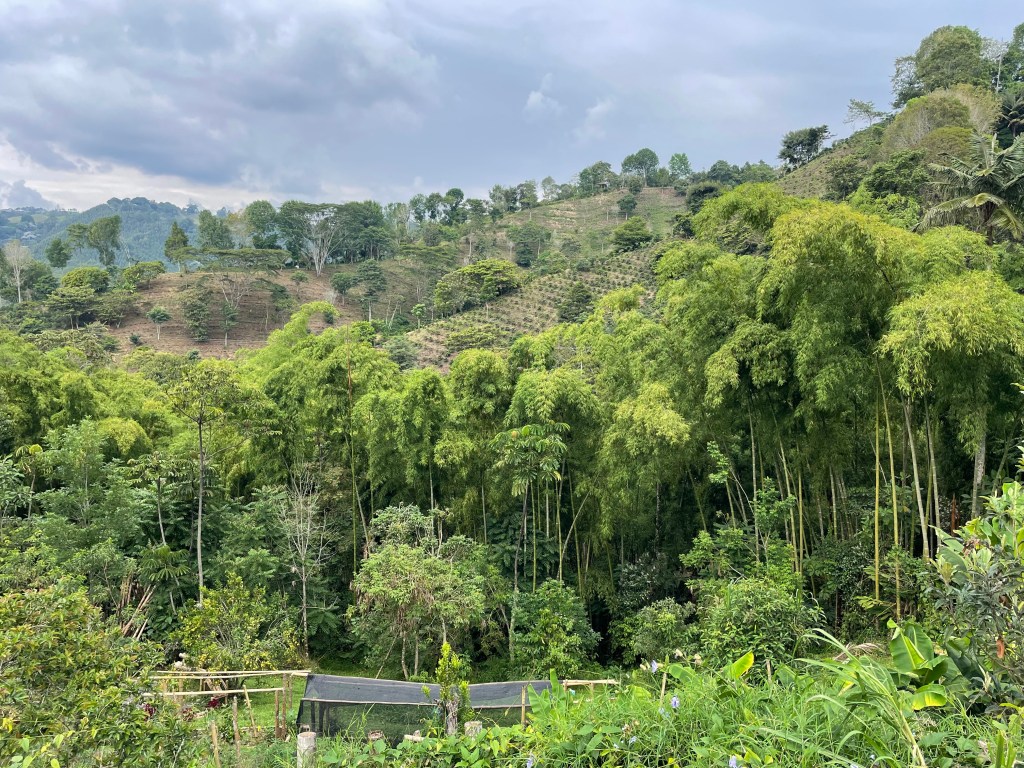
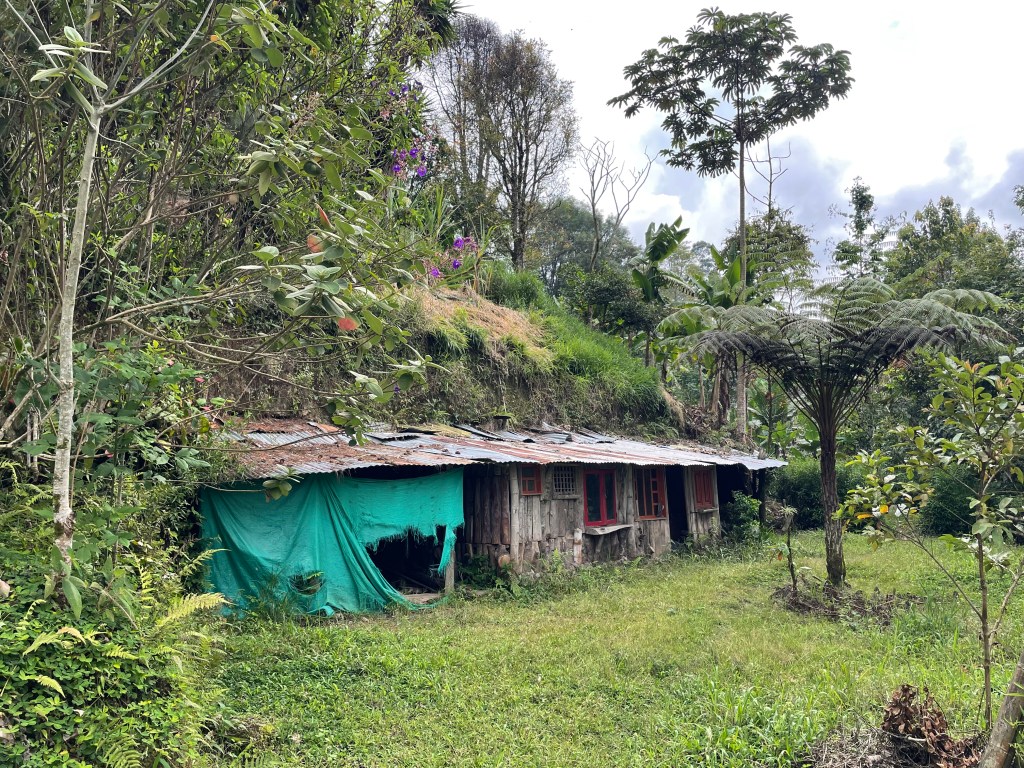
Finca El Oscaso:
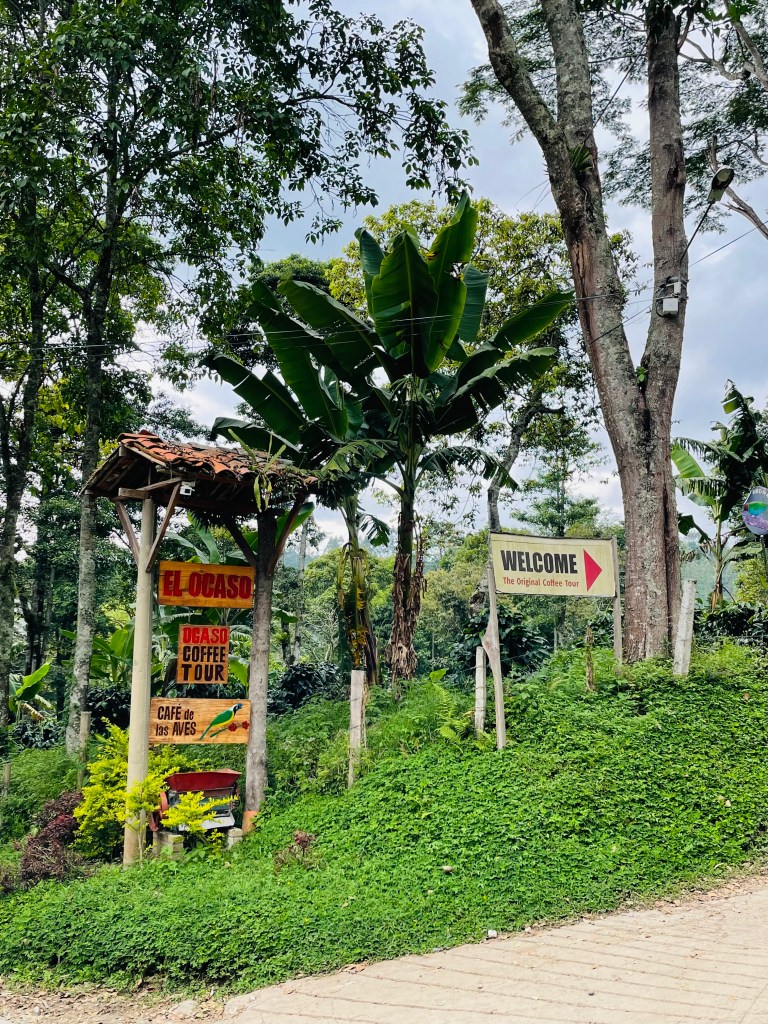
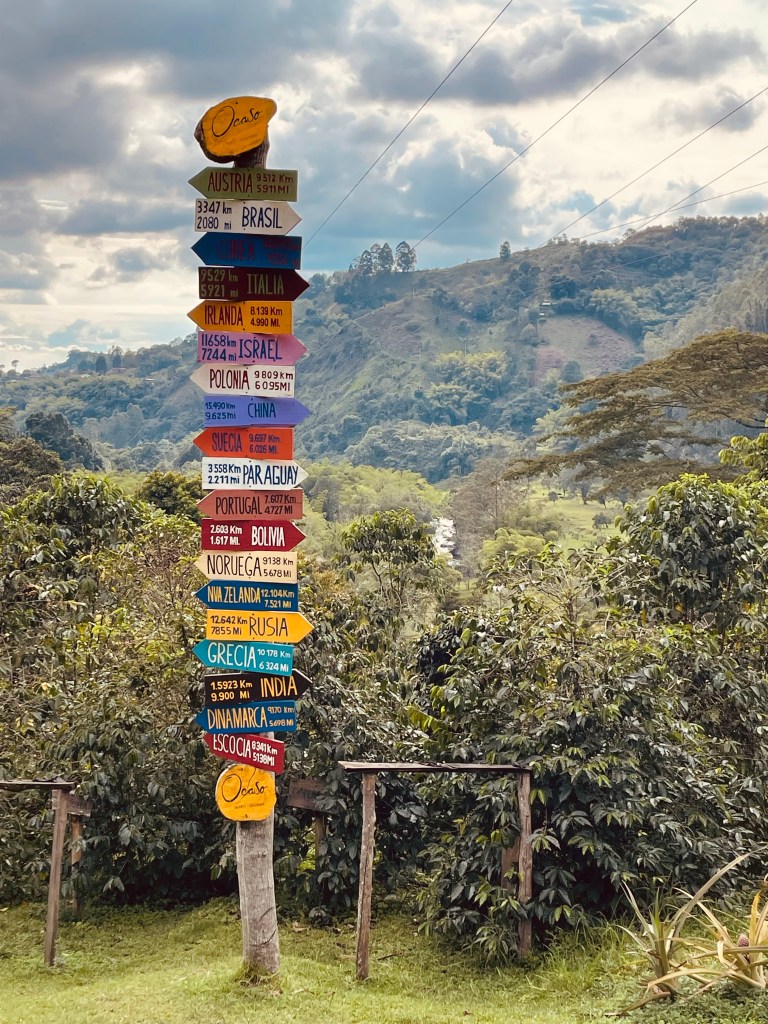
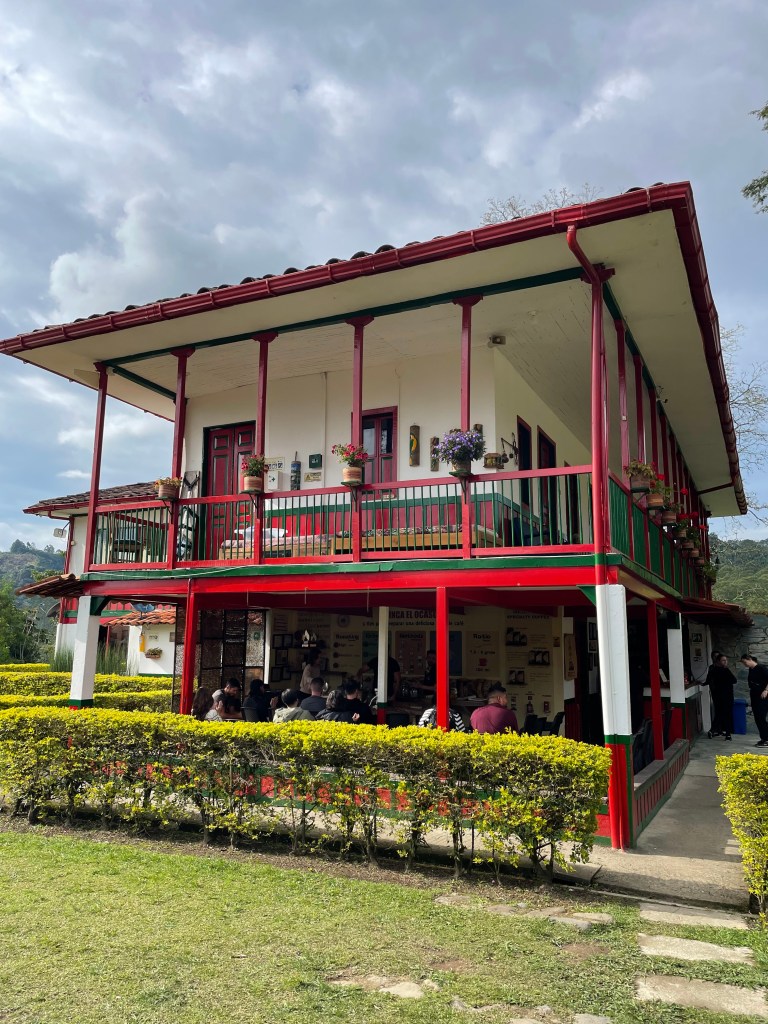
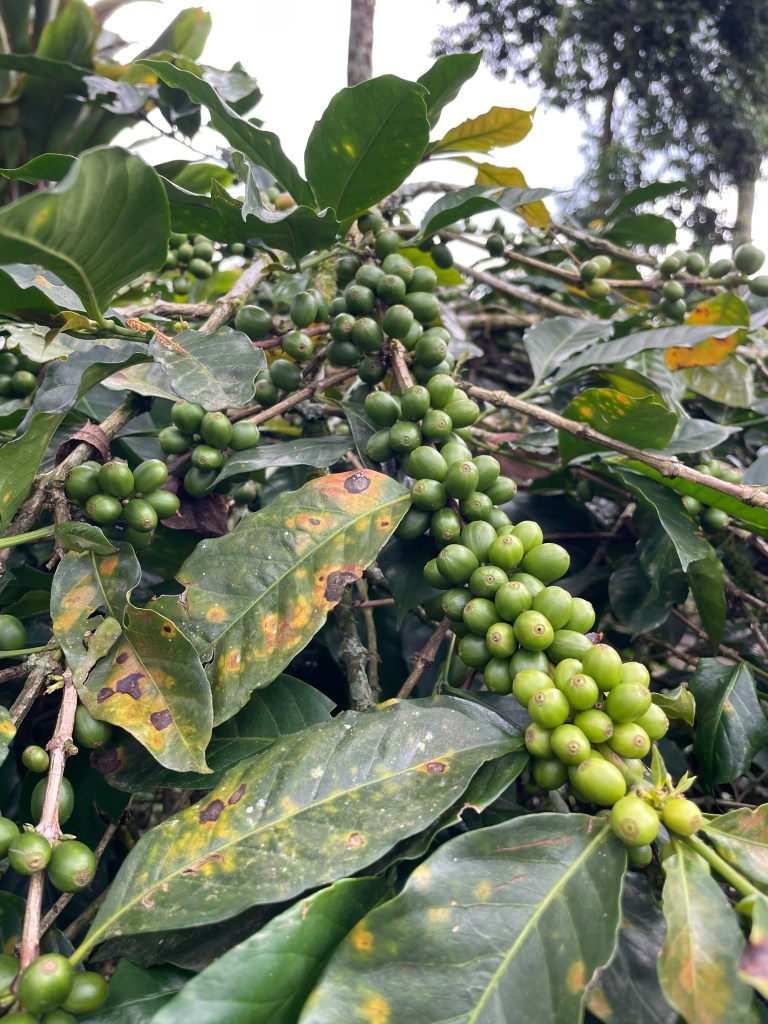
Our tour guide was quite the character who clearly loves his job, and after an amusing introduction and some history, he sent us off to find some ripe coffee berries.
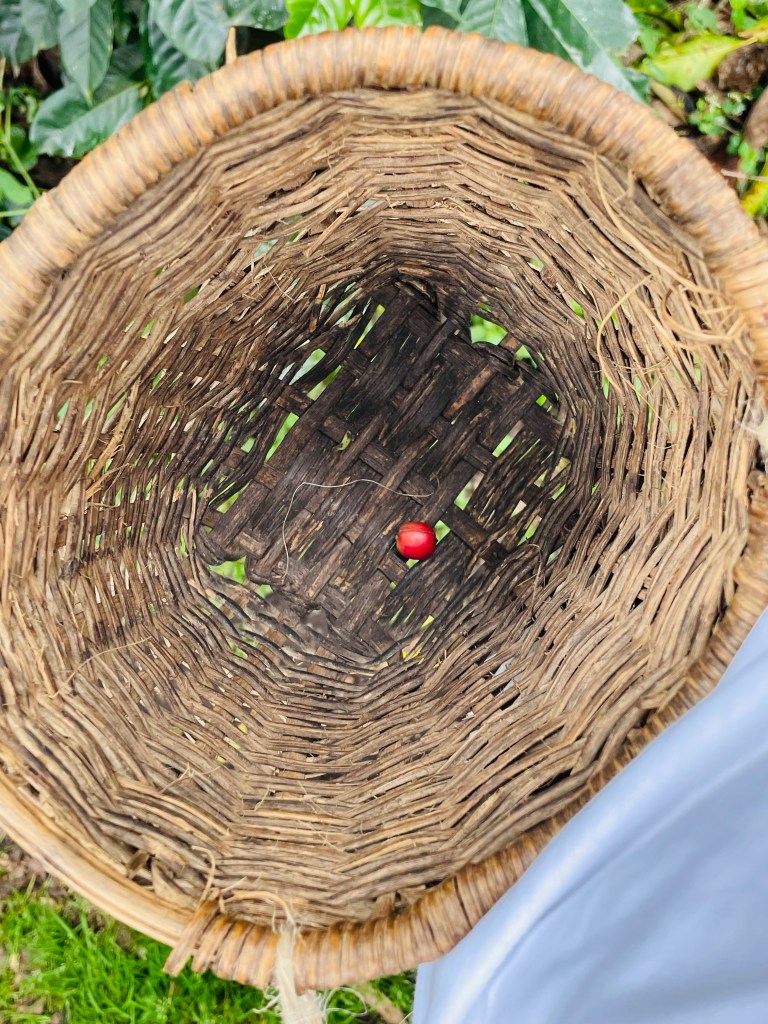
It wasn’t actually harvesting season so they were pretty difficult to find. I managed one single ripe berry!:
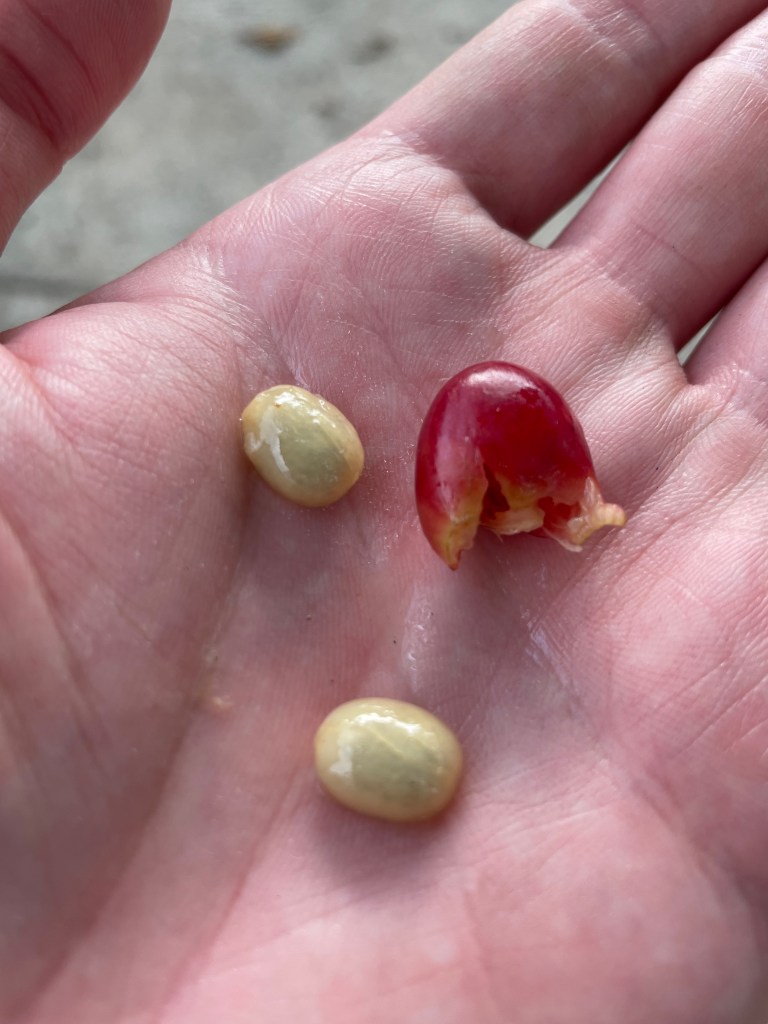
Surprisingly, crushing a ripe berry reveals two halves of the coffee bean. The halves are white, hard and covered in a sweet juice.
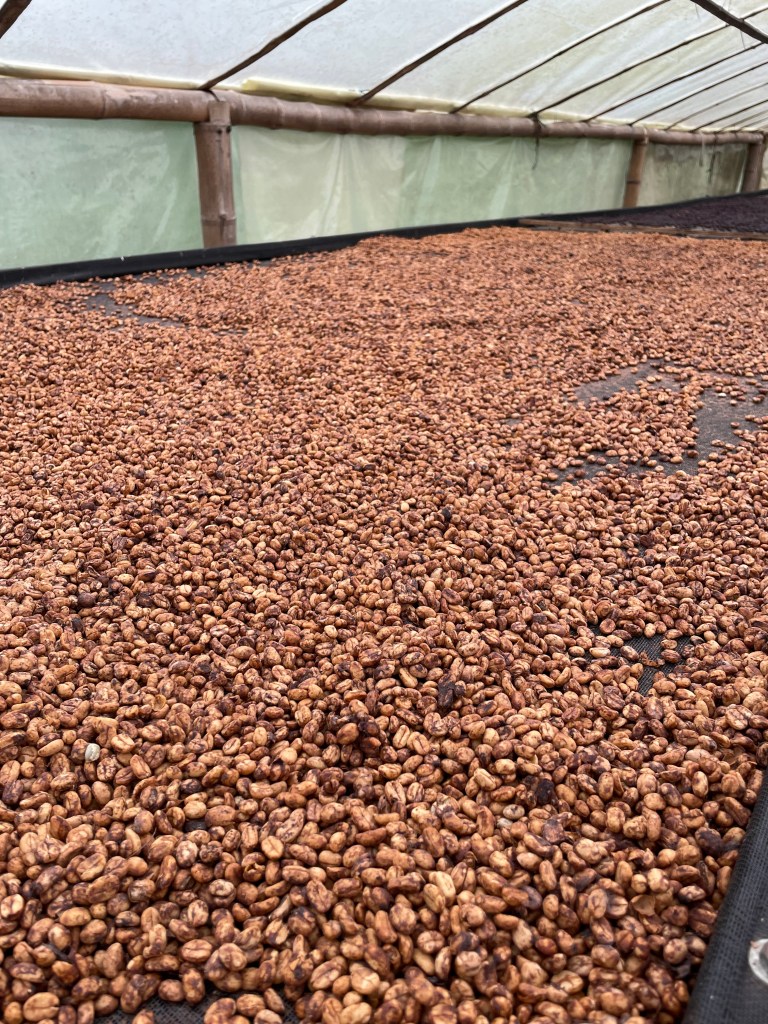
Upon drying, the white beans turn darker. The smell in this tent was incredible:
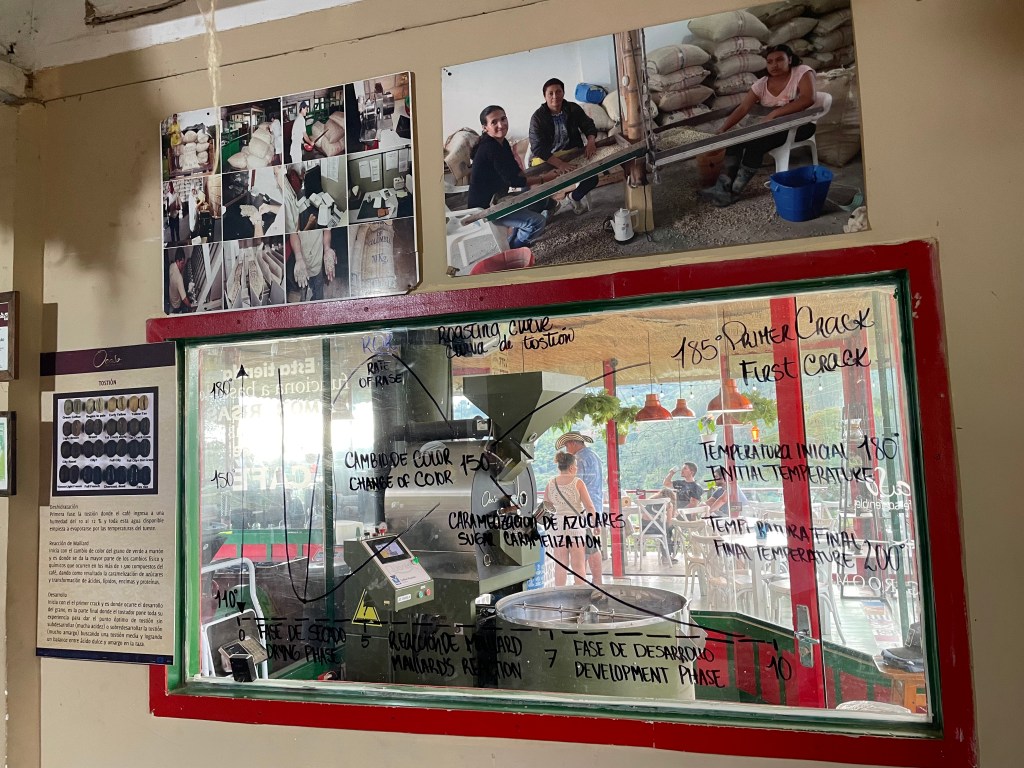
The roasting process completes the colour transformation:
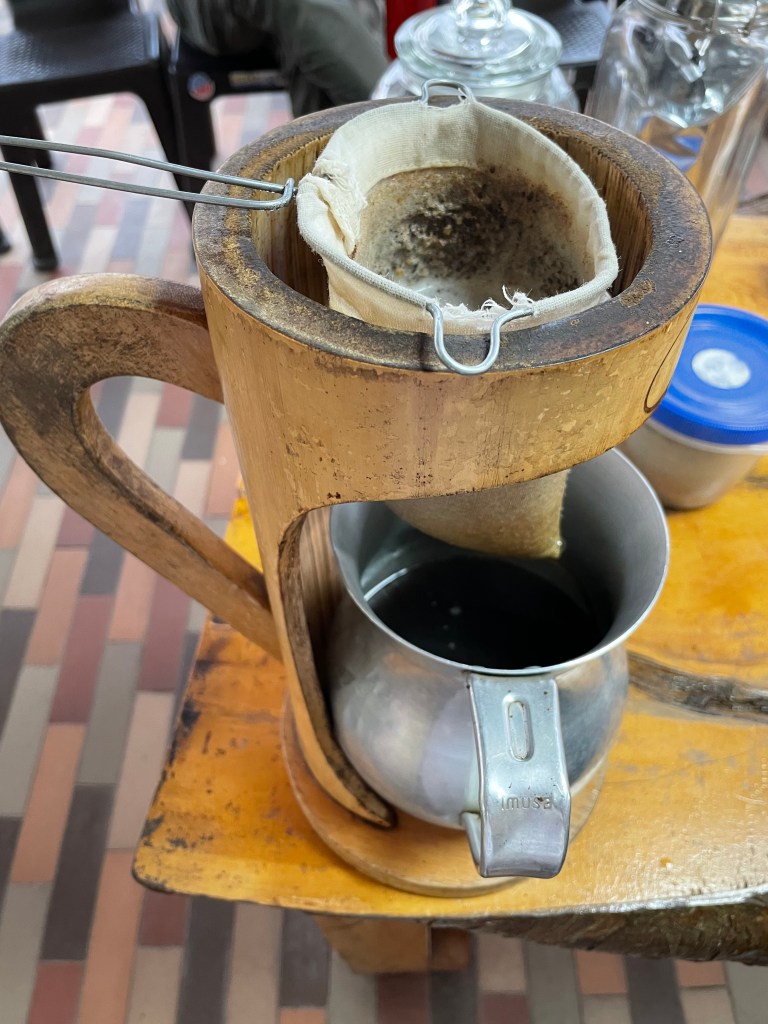
At the end of the tour our guide demonstrated making the perfect pour-over. We also learned what a good ground coffee should look and smell like. Hint: if the coffee is black not brown, then it’s likely you’ve burnt it with water that is too hot.
I didn’t fancy the walk back so I managed to snag a lift on a Willy, but unless I wanted to wait an hour for the next one, I would have to hang off the back bumper! I duly joined a nice guy and girl from Glasgow and Edinburgh on the bumper and actually really enjoyed the ride back.
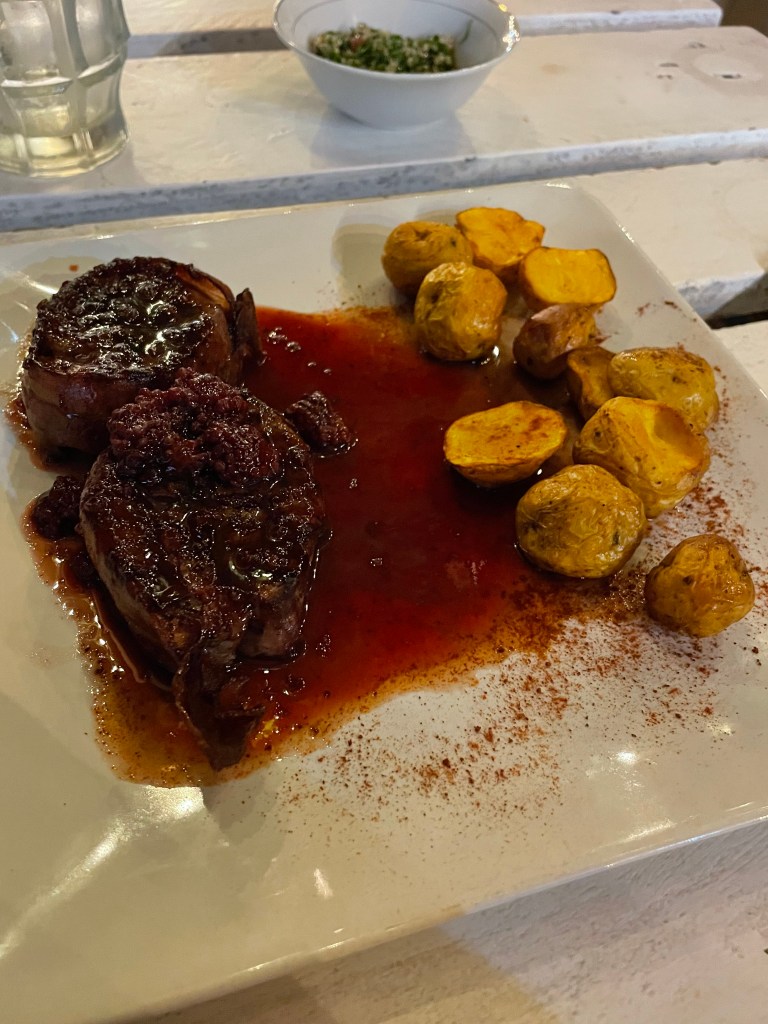
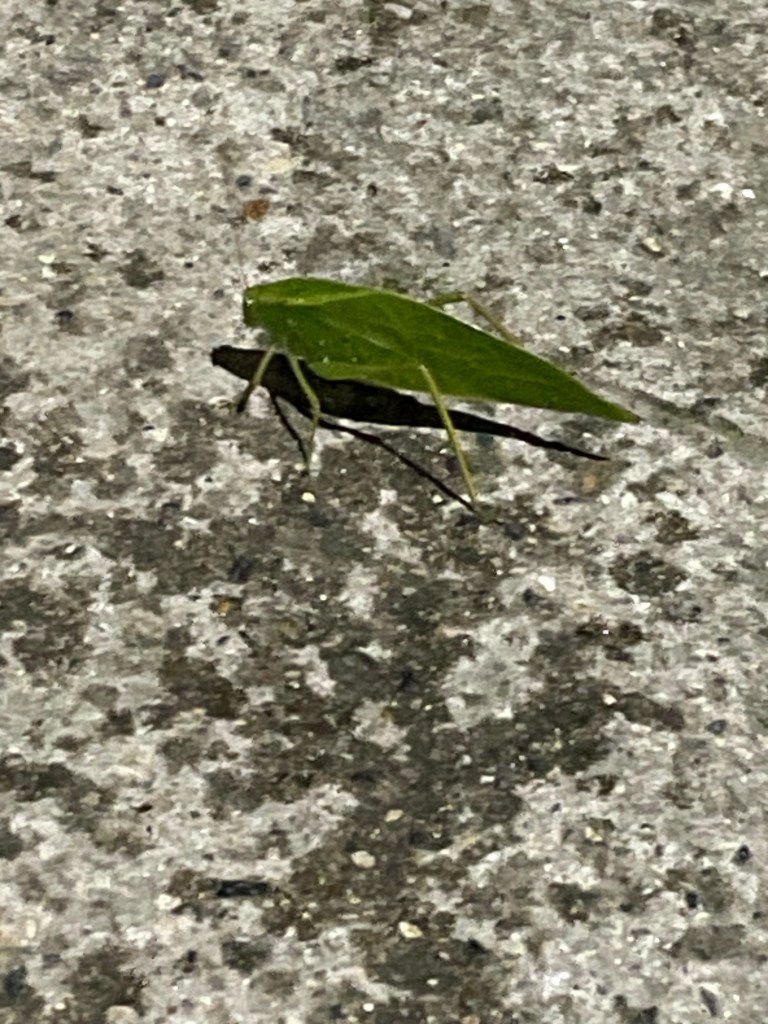
A proper pour-over at the farm; that evening’s meal, a filet mignon in a coffee and raspberry (yes, really) reduction which was delicious; and a leafy-looking fella spotted on the walk home:
Another morning, another cockerel alarm call and then a taxi back to Pereira airport for the short hop to Medellín.
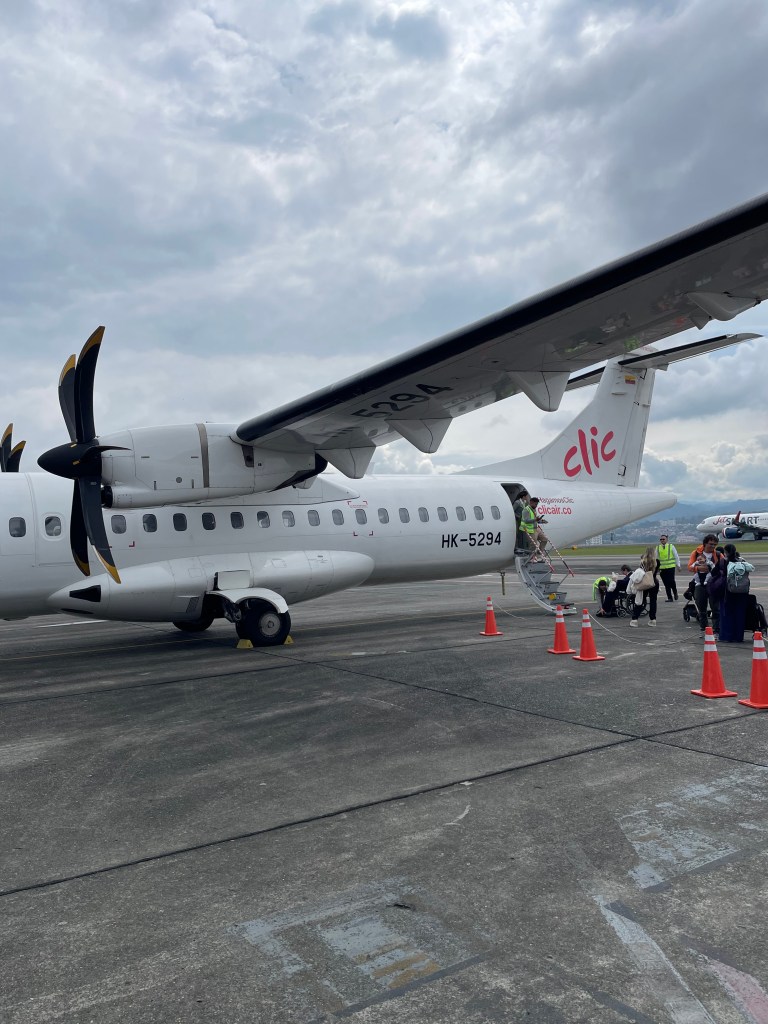
ClicAir’s plane was better than their website (I managed to get my first and surnames mixed-up when checking-in thanks to my poor Spanish):
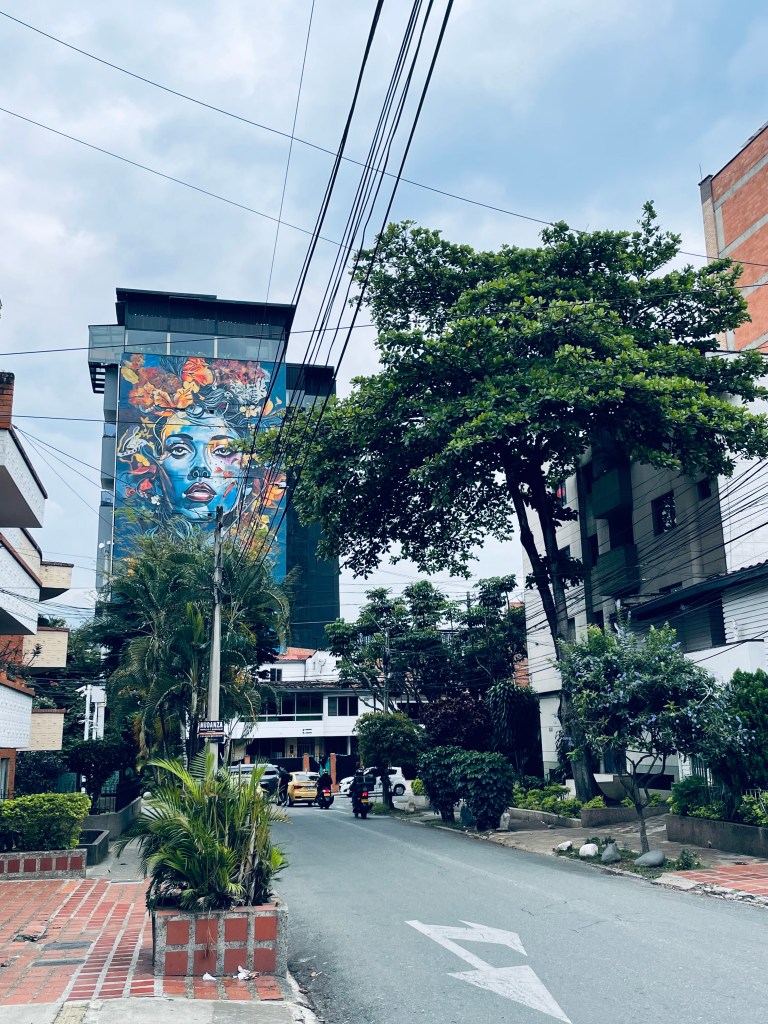
After a short taxi from the city’s domestic airport I headed into the centre on foot to get a sense of the place and to take a walking tour:
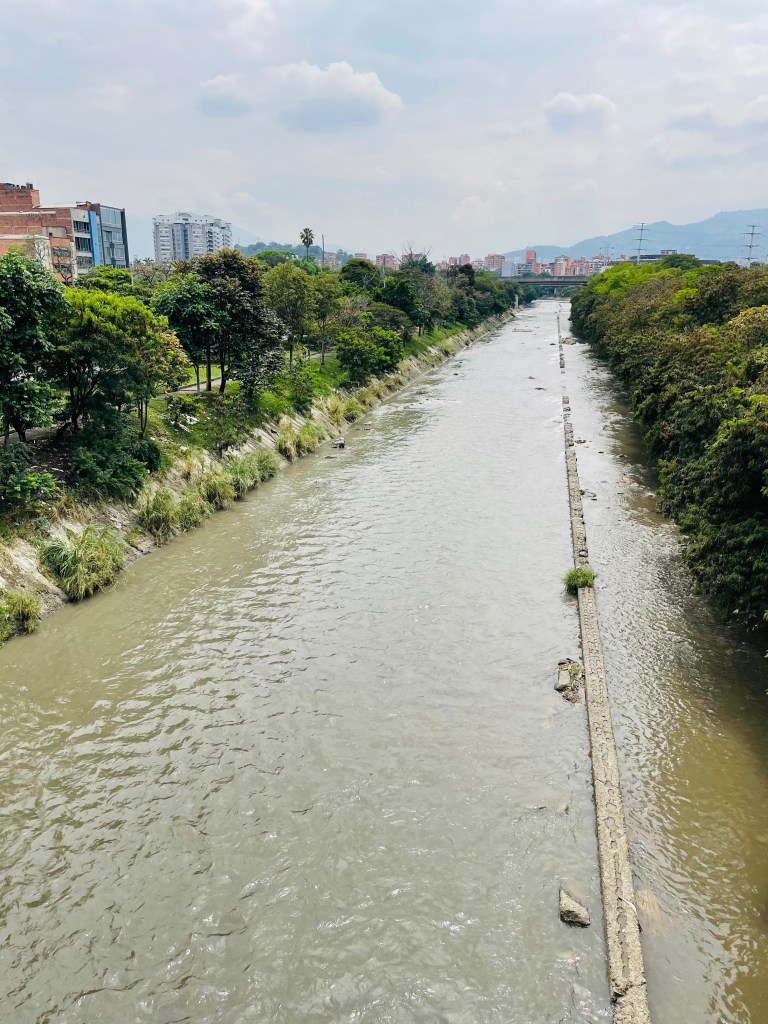
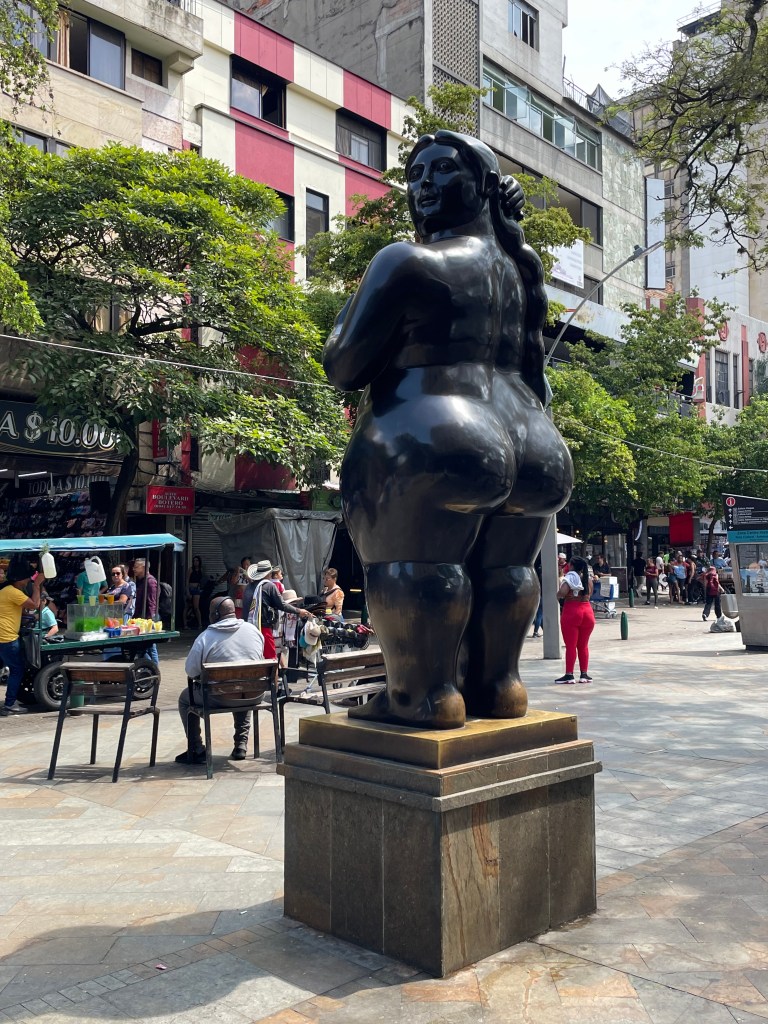
Plaza Botero, named after the artist Fernando, in the centre of Medellín is home to 23 of his bronze statues, like the one above.
The centre of Medellín was full of people seemingly all the time. As much as Bogotá felt underpopulated, Medellín felt overpopulated, and whether it was my preconceptions or not, the place had an edge. The feeling wasn’t helped by our tour guide emphasising the need to be careful in crowded areas.
Our guide was very good though, and he was certainly opinionated about a certain Pablo Escobar, or “Dumbledore”, as the name he used to refer to the drug kingpin. The reason for using a nickname was to ensure passers by didn’t mistakenly think anyone was making money or entertainment from the topic.
Half way through we stopped for snacks (more cheesy arepas) and fluids. As soon as you stop or look around, you’re almost instantly besieged by locals asking you to buy something from them. Shockingly this often meant single sweets from large sharer sized bags.
It feels stupid to say now, but I didn’t feel overly keen about taking pictures in the crowded areas.
The walking tour included popping into the impressive El Palacio del Centro shopping centre, and the Galería de Arte Palacio Nacional on the top few floors:
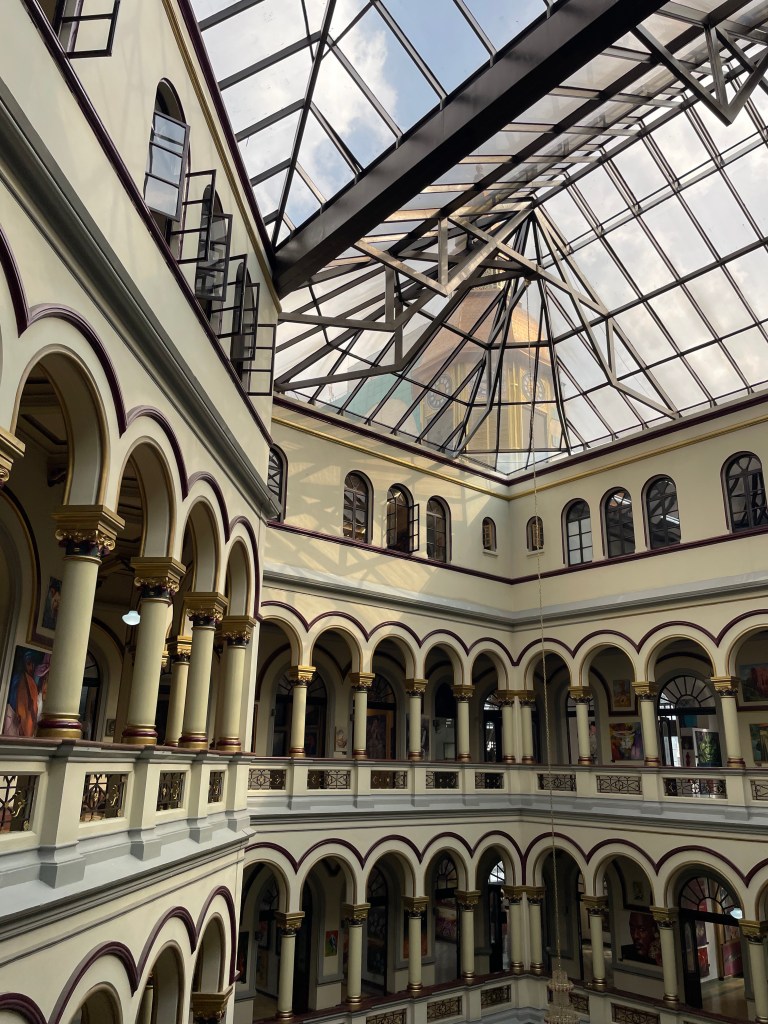
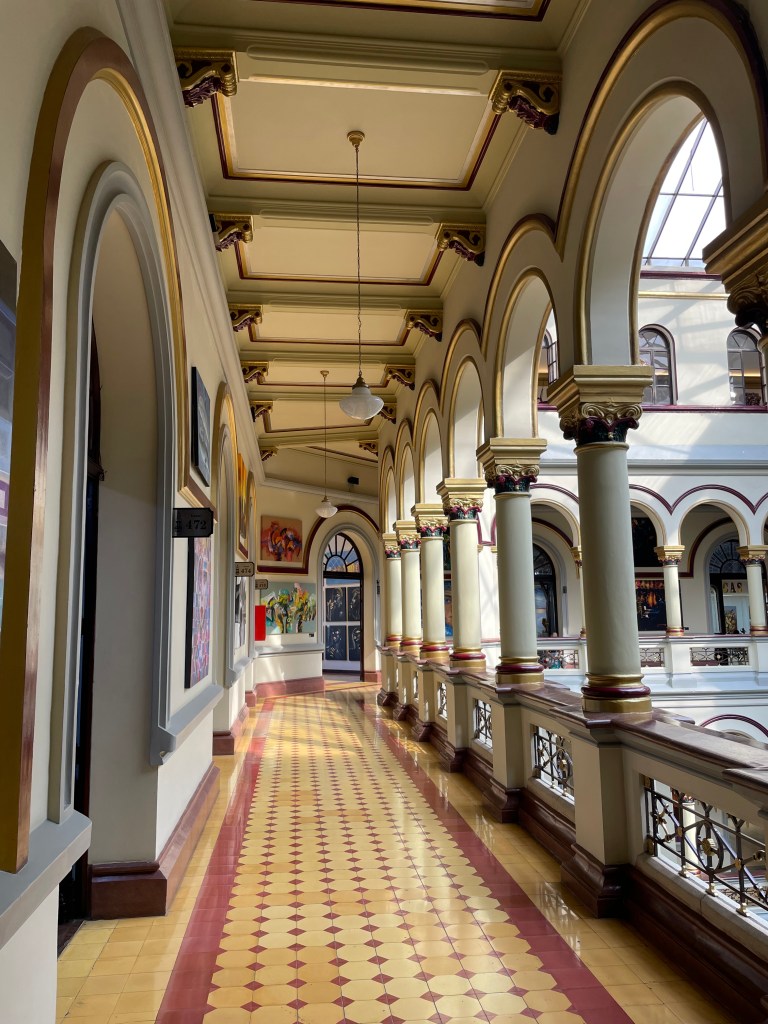
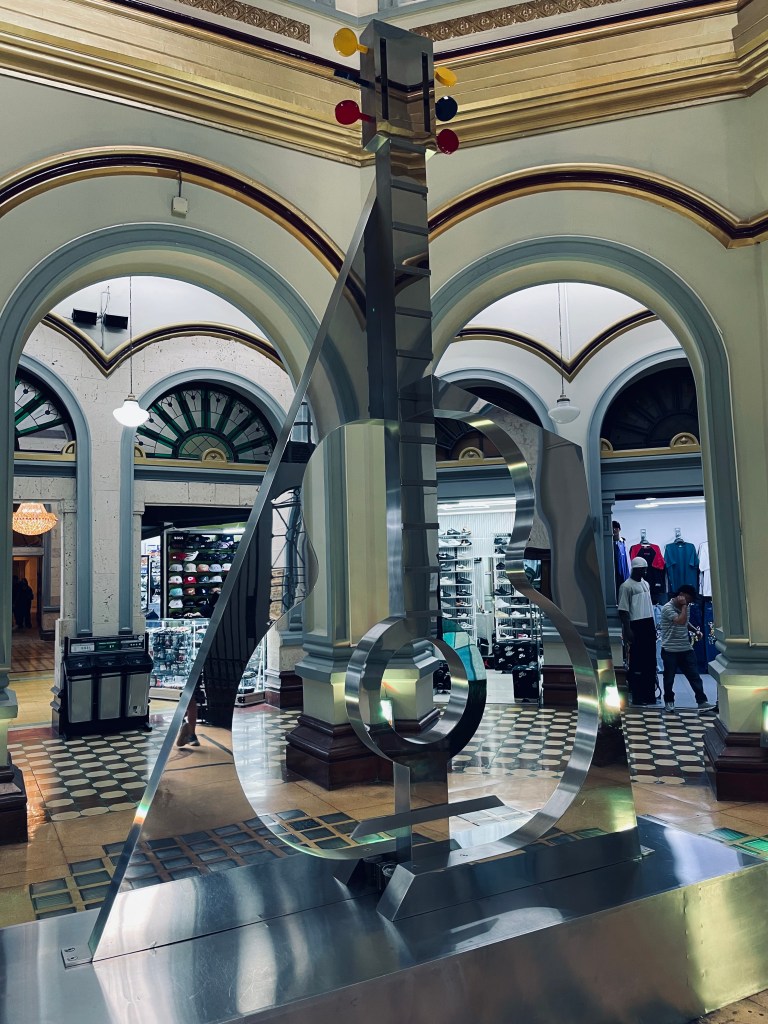
The view:
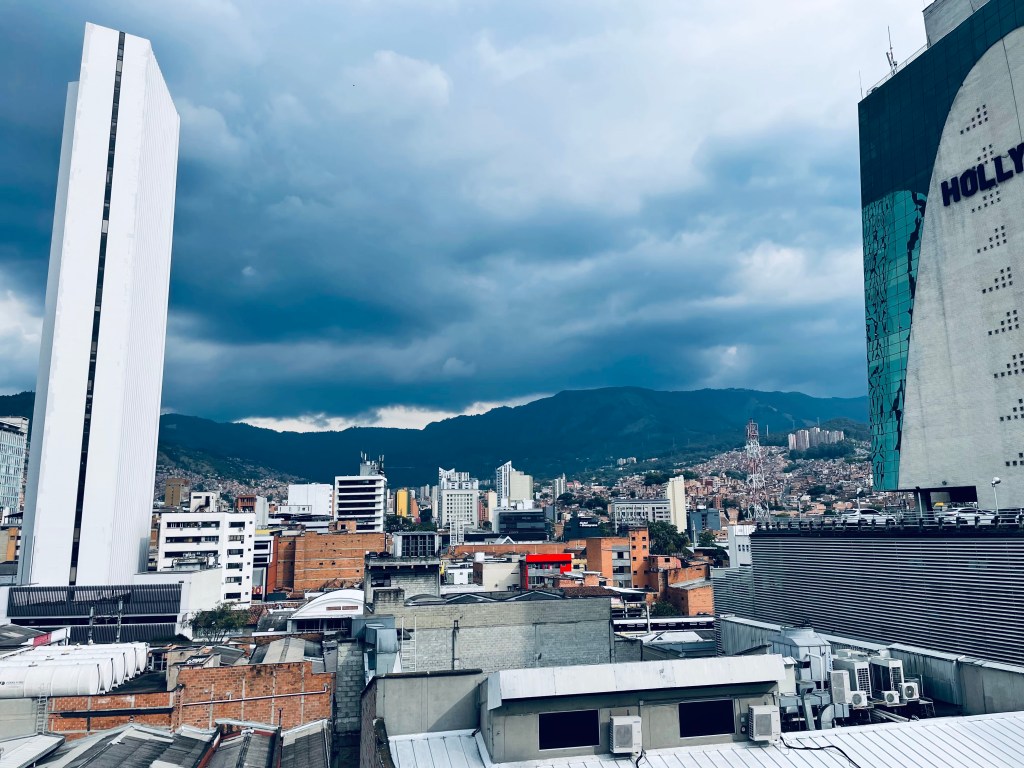
The tour ended in San Antonio Park with sobering stories of drug violence and massacres related to conflicts with the Revolutionary Armed Forces of Colombia (FARC) and other guerrilla movements. The Botero statue in the park was partially destroyed during a shootout but has been left in situ with a new replica alongside it for comparison.
The walk back to my accommodation offered sights of the dirty, litter-strewn streets and neighbourhoods:
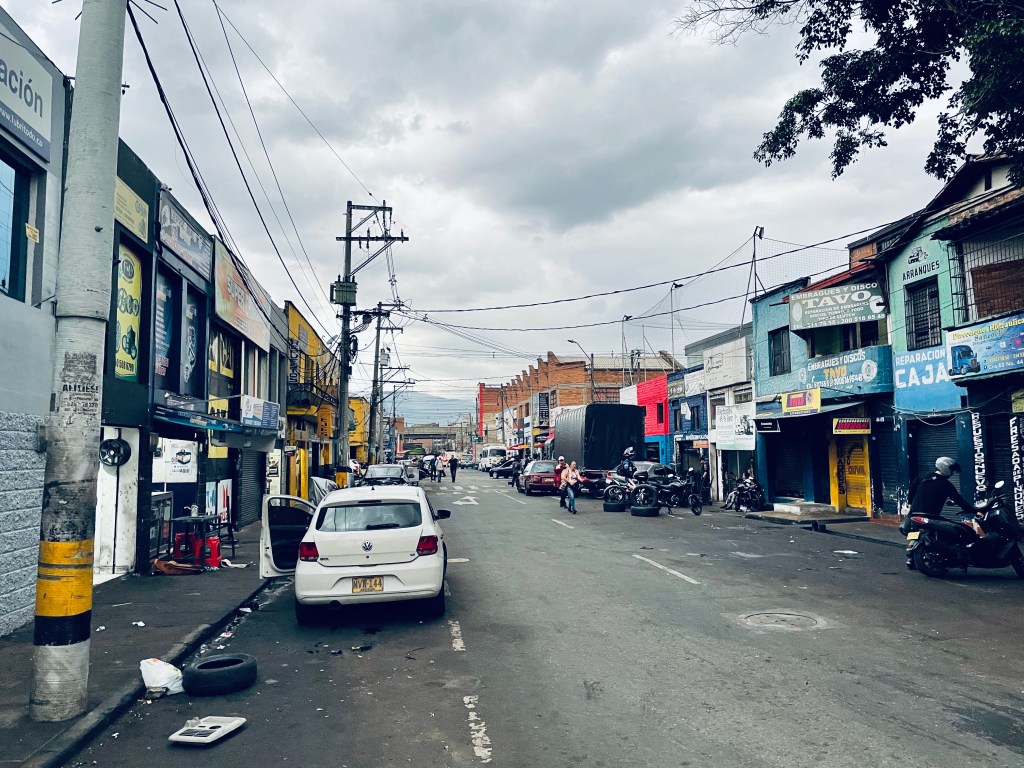
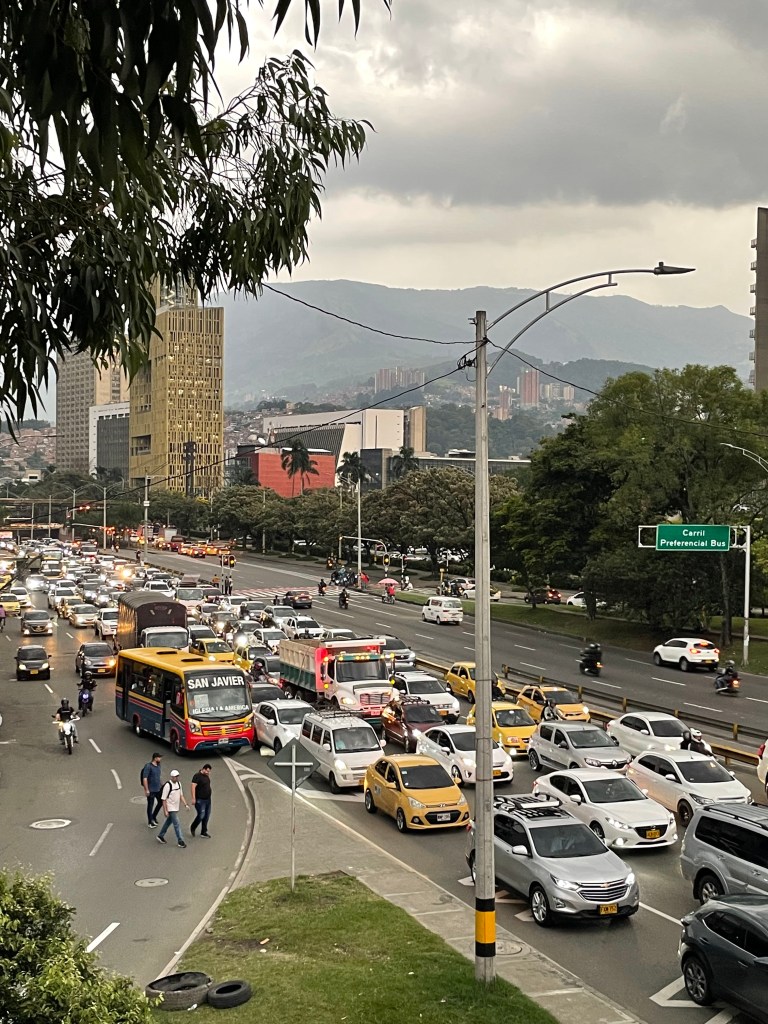
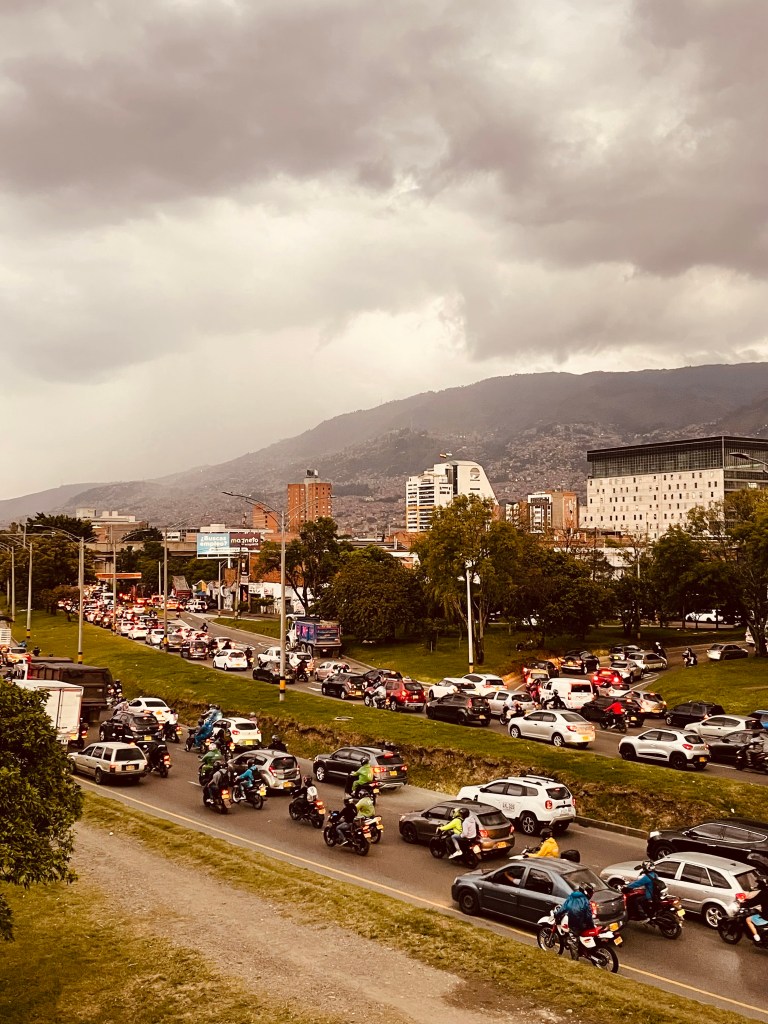
My accommodation was in the Laureles-Estadio neighbourhood and I stayed locally that evening. It was pretty lively:
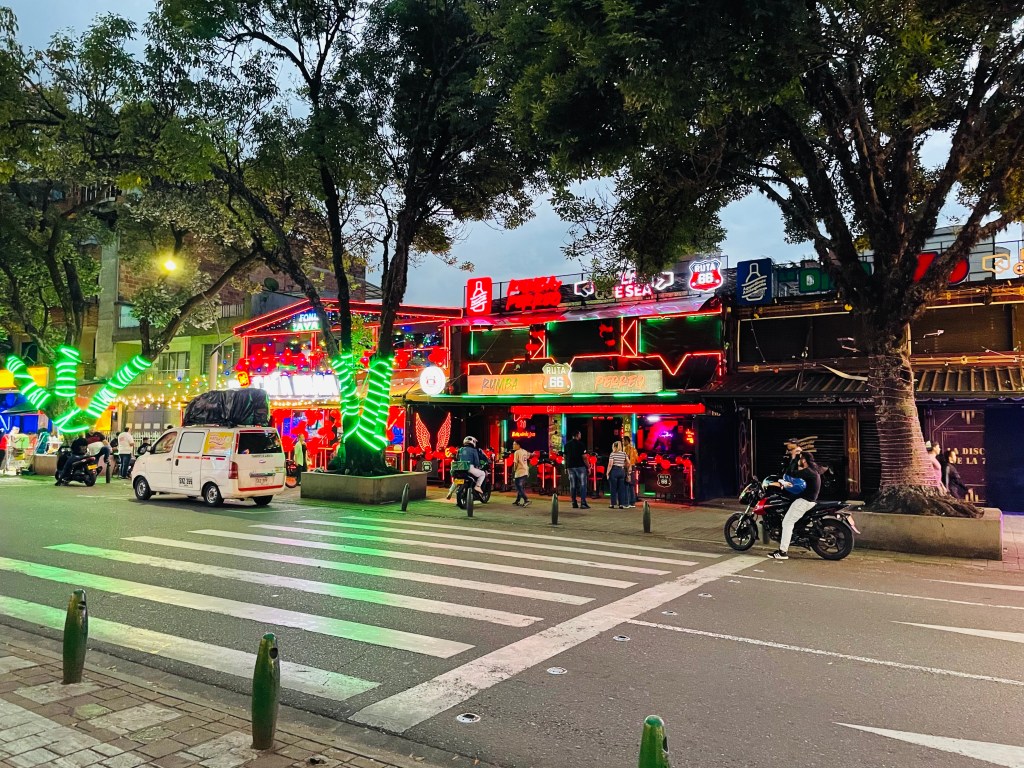
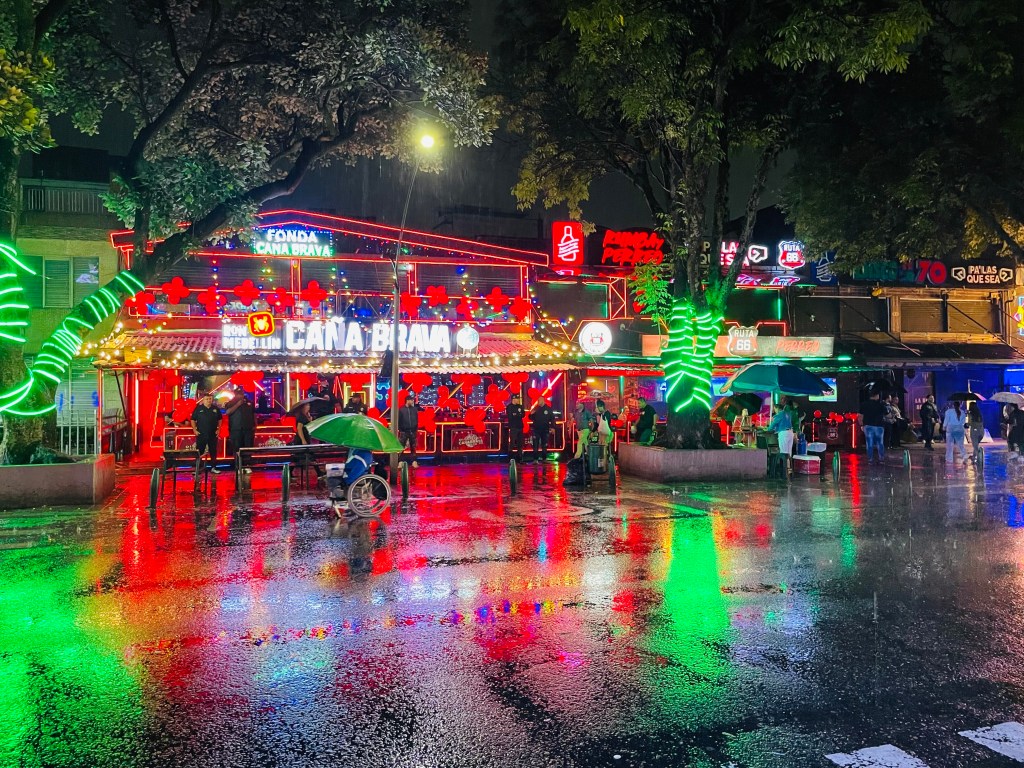
And wet!
The following day began with a sight seeing tour using the extensive cable car system. You pay on entry so if you don’t leave a station you can keep on riding.
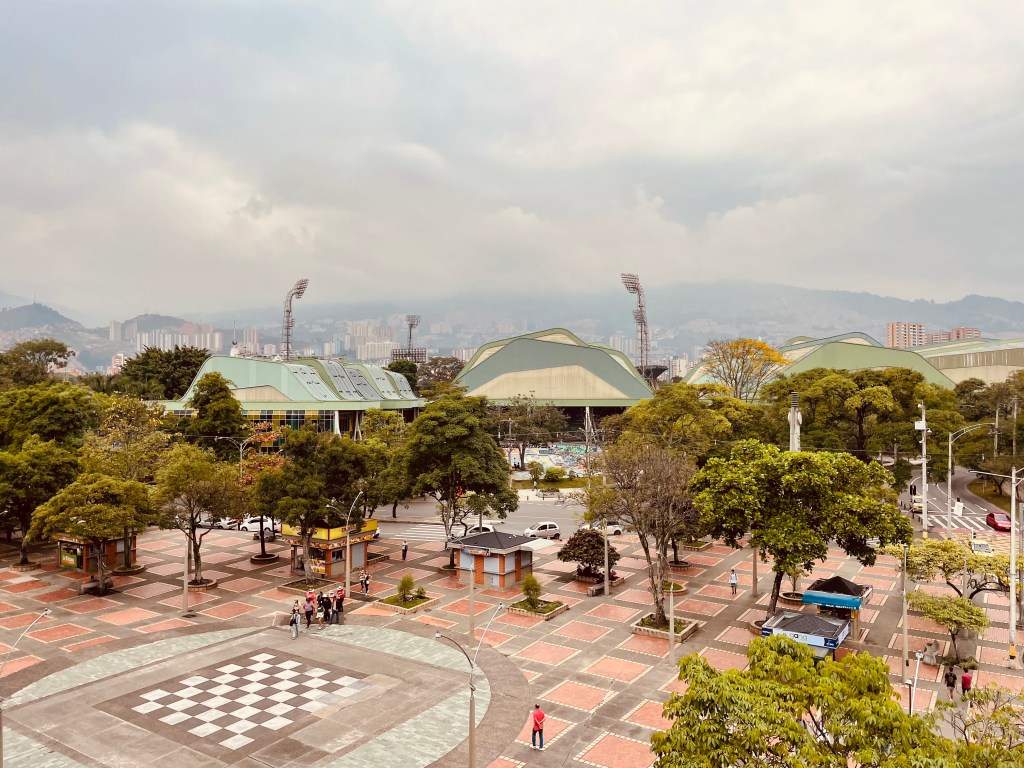
Estadio Atanasio Girardot, home of Atlético Nacional and Independiente Medellín:
The communes of San Javier were pretty spectacular:
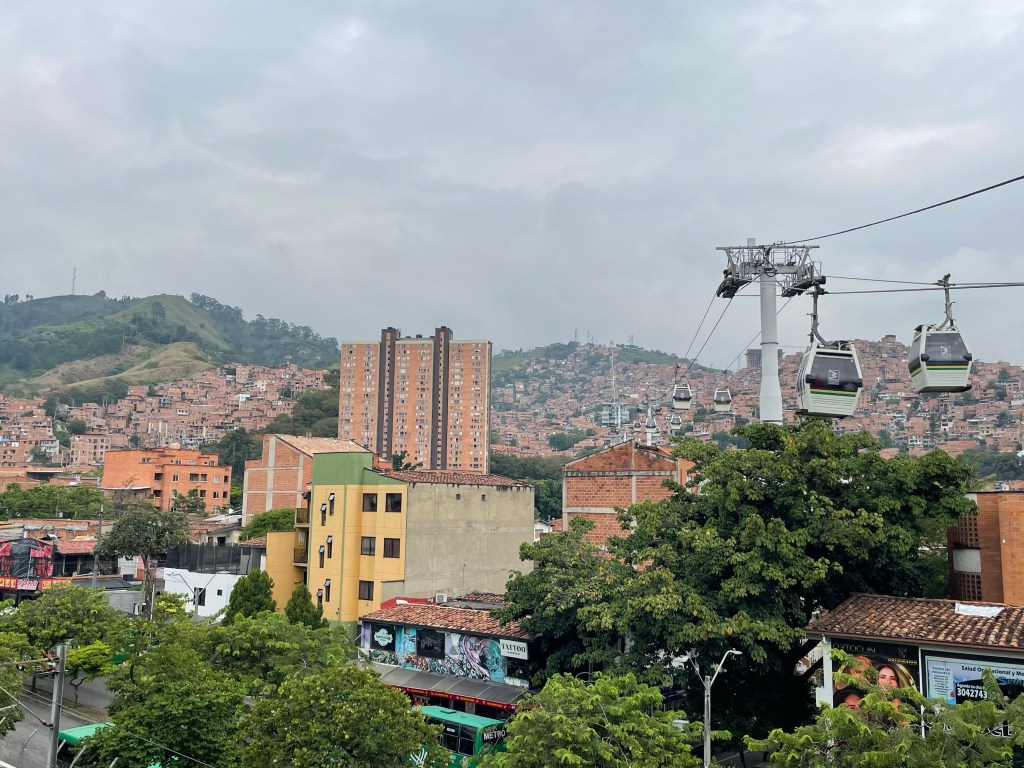
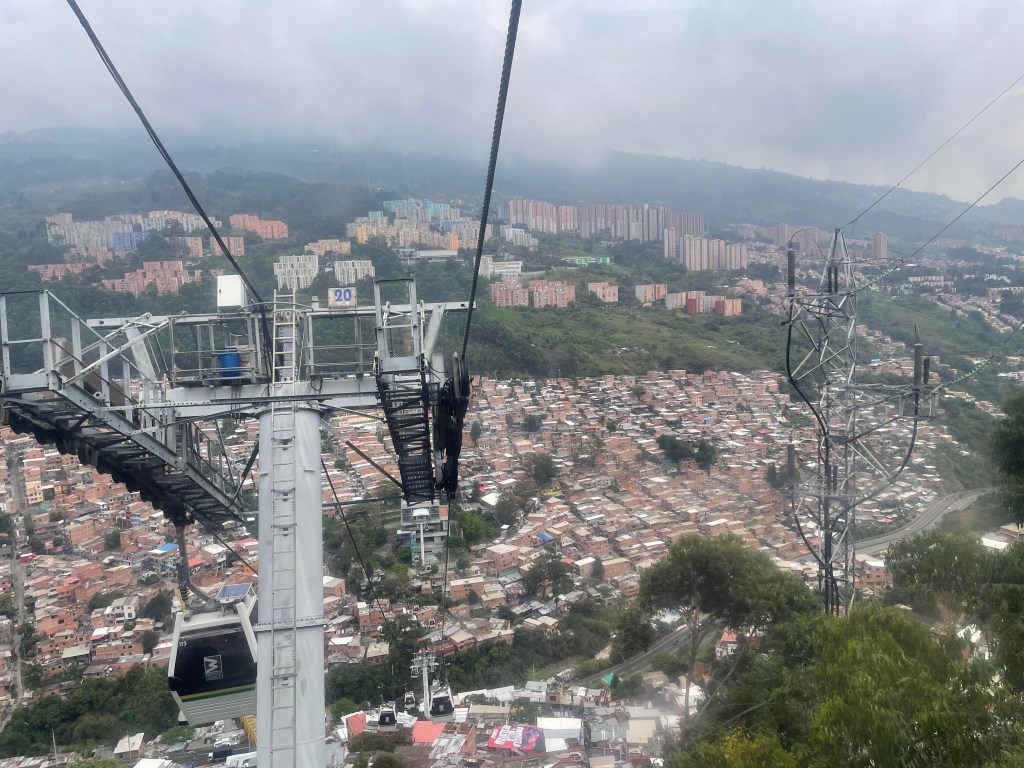
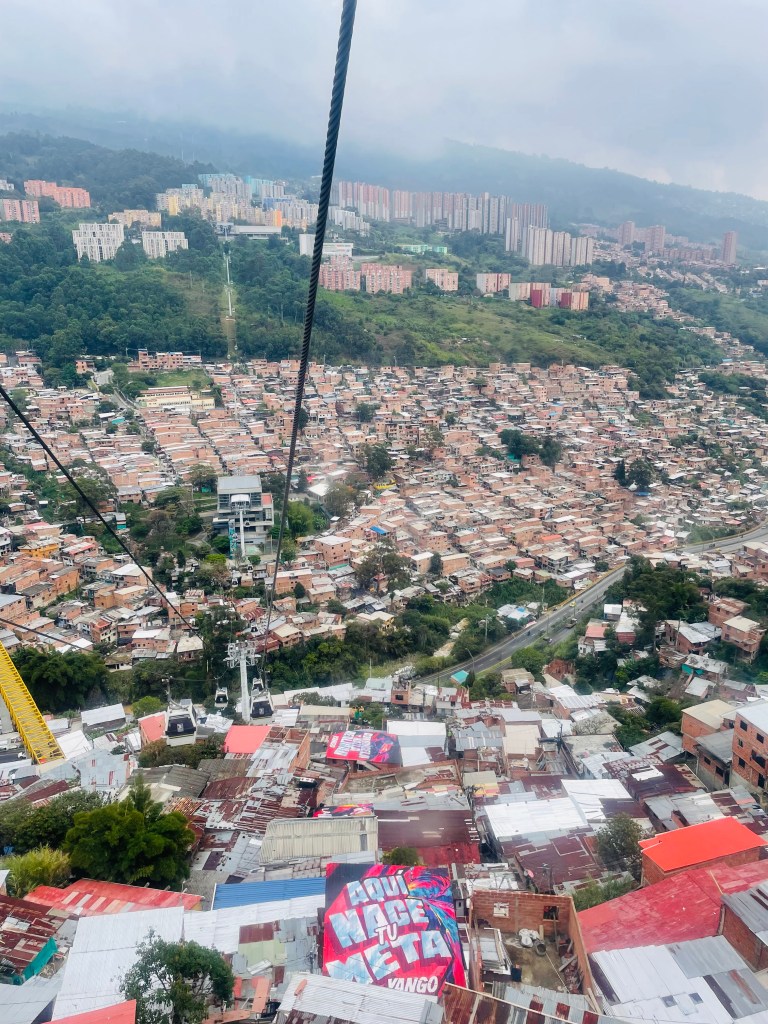
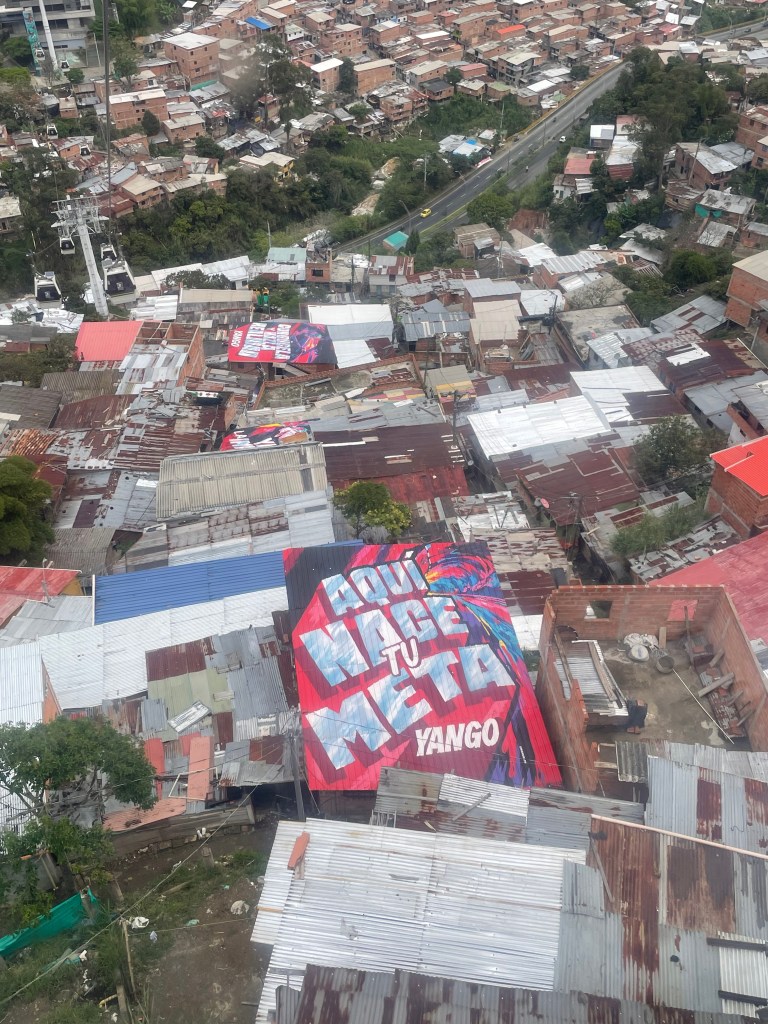
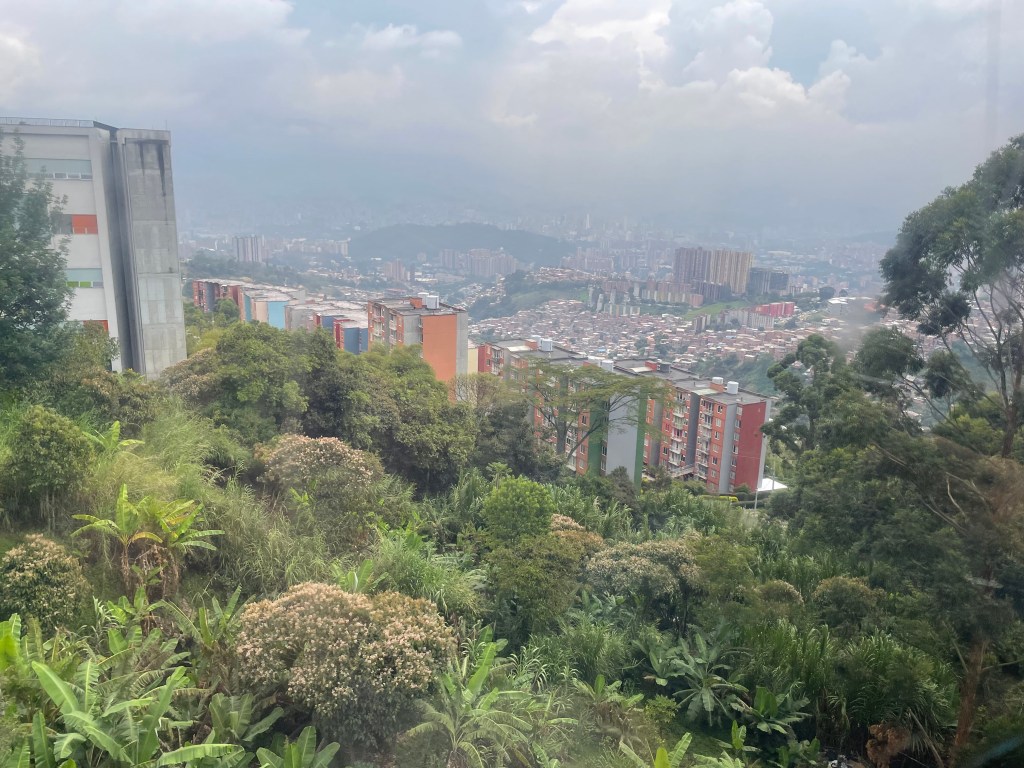
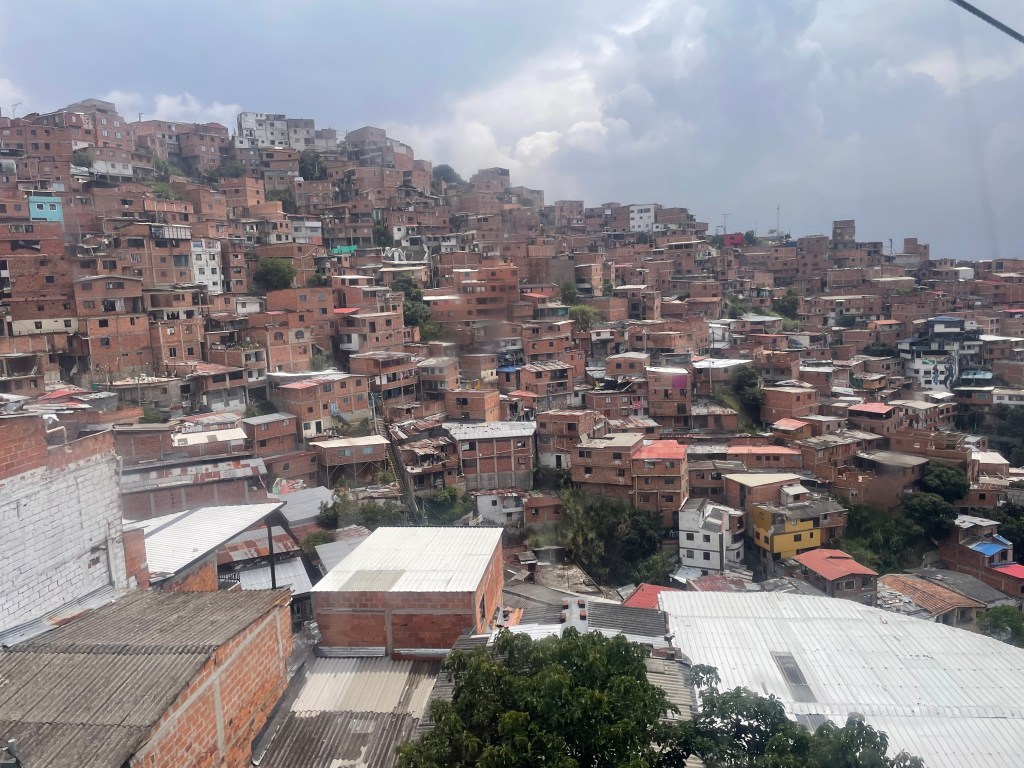
Incredible how some of these buildings appear to cling to the side of hills:
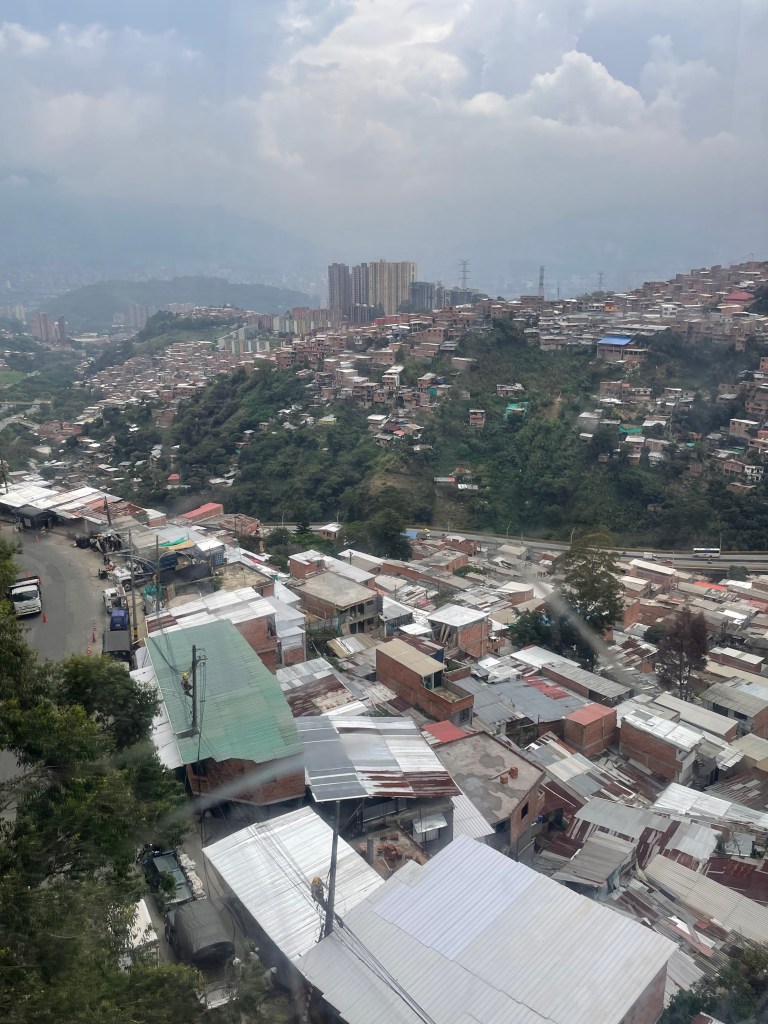
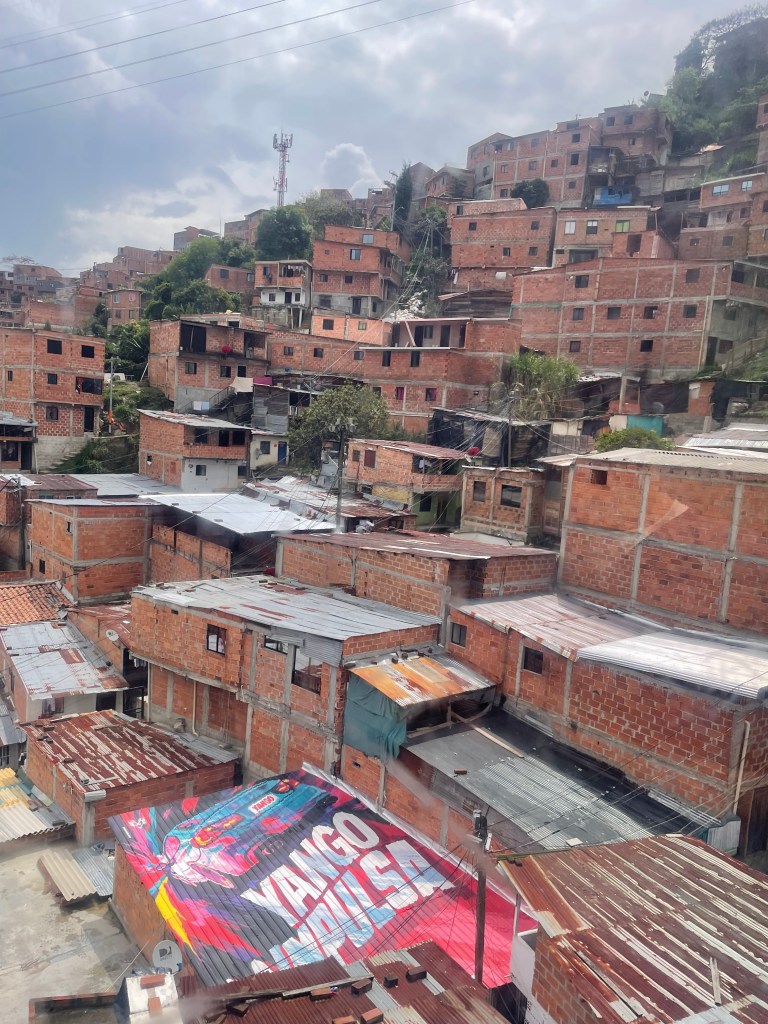
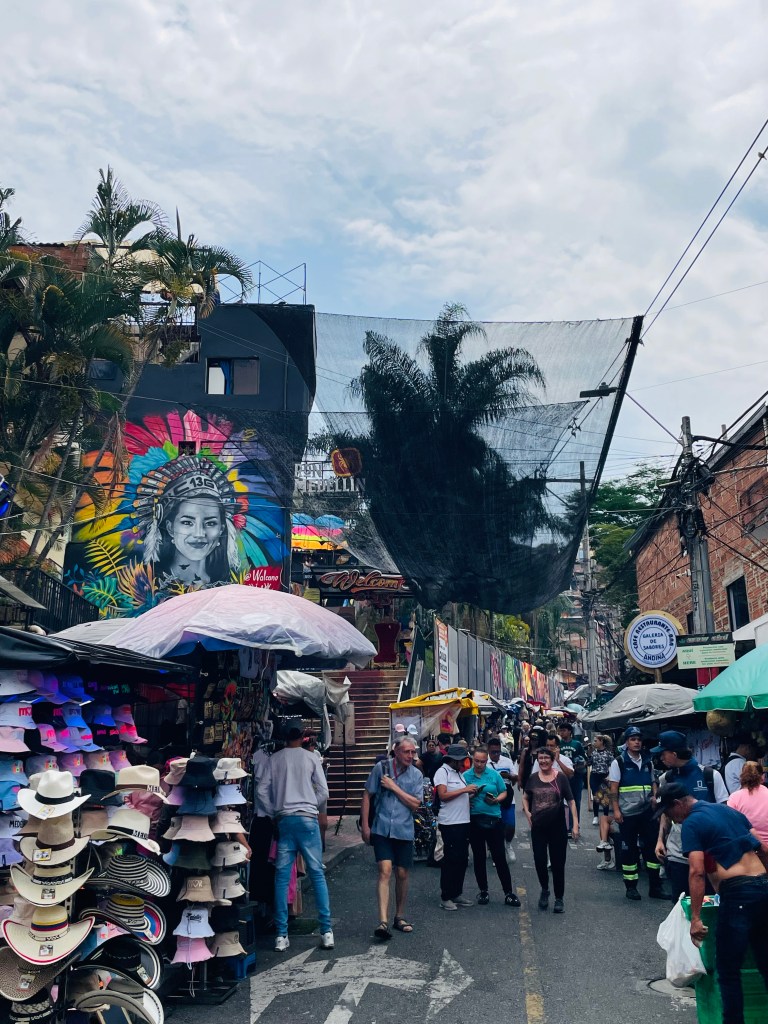
In the afternoon I climbed Communa 13; once a neighbourhood of violence, drug trafficking, paramilitaries, and military operations, but now a place of street art performances, graffiti, bright colours, and fresh fruit vendors:
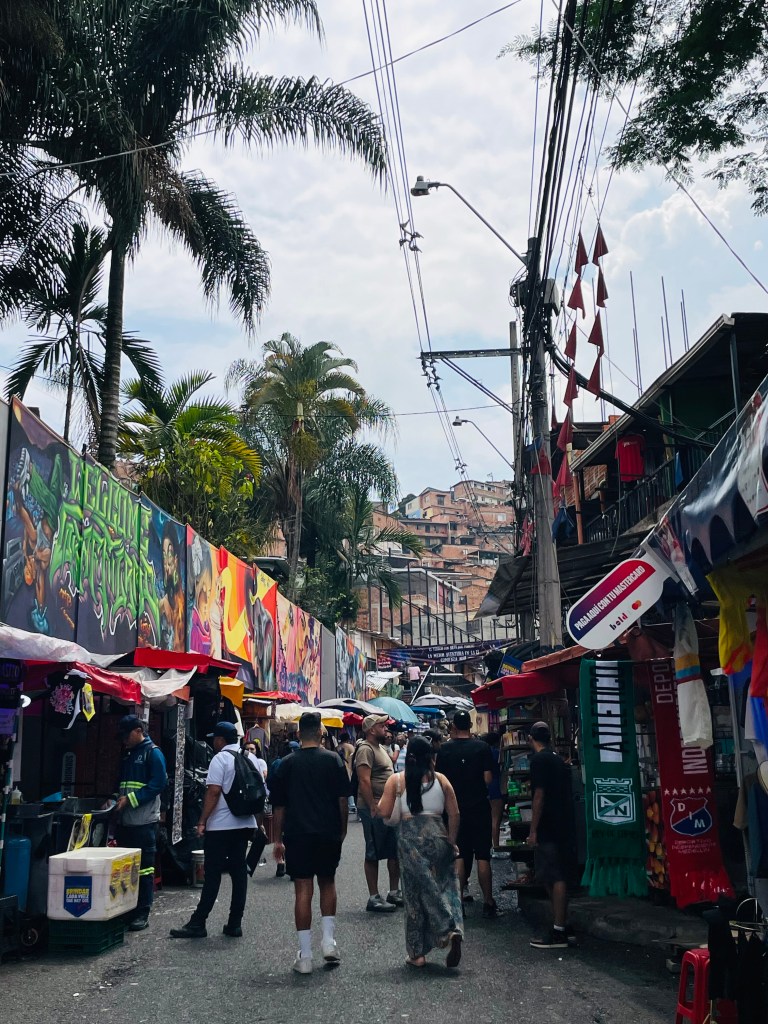
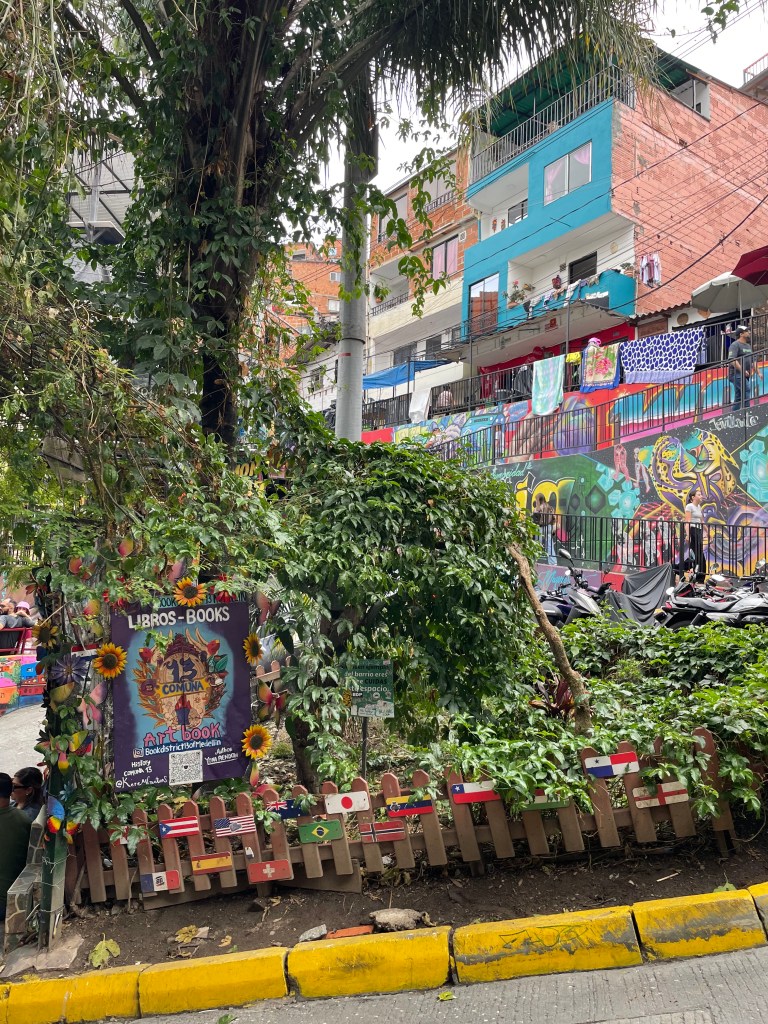
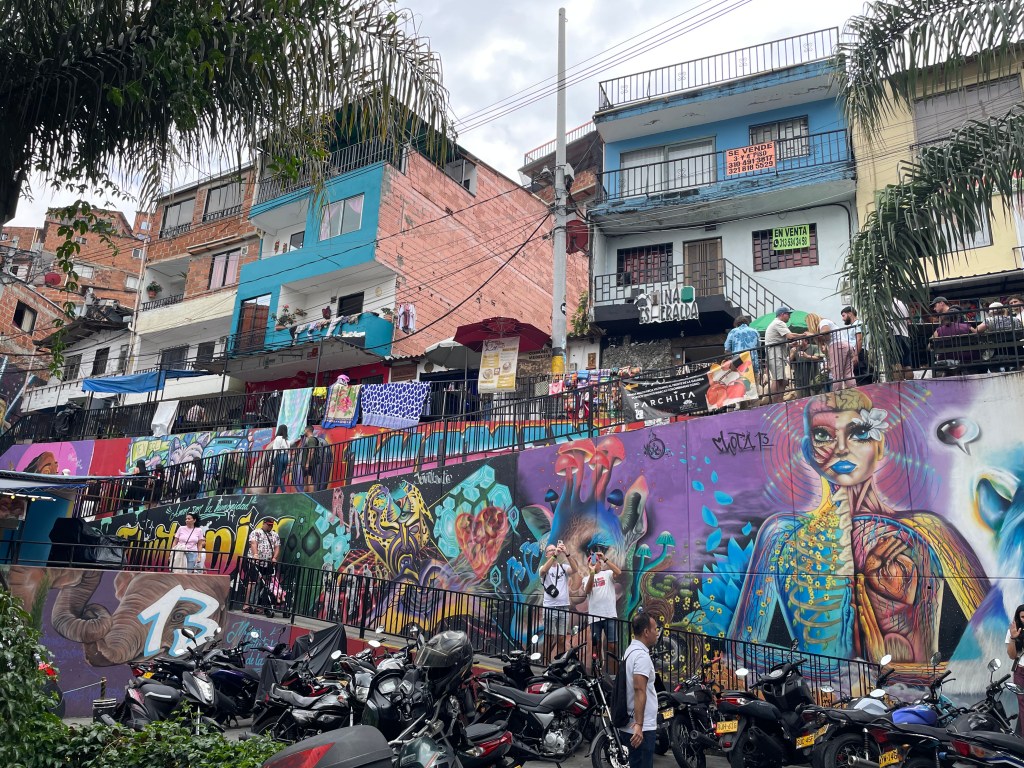
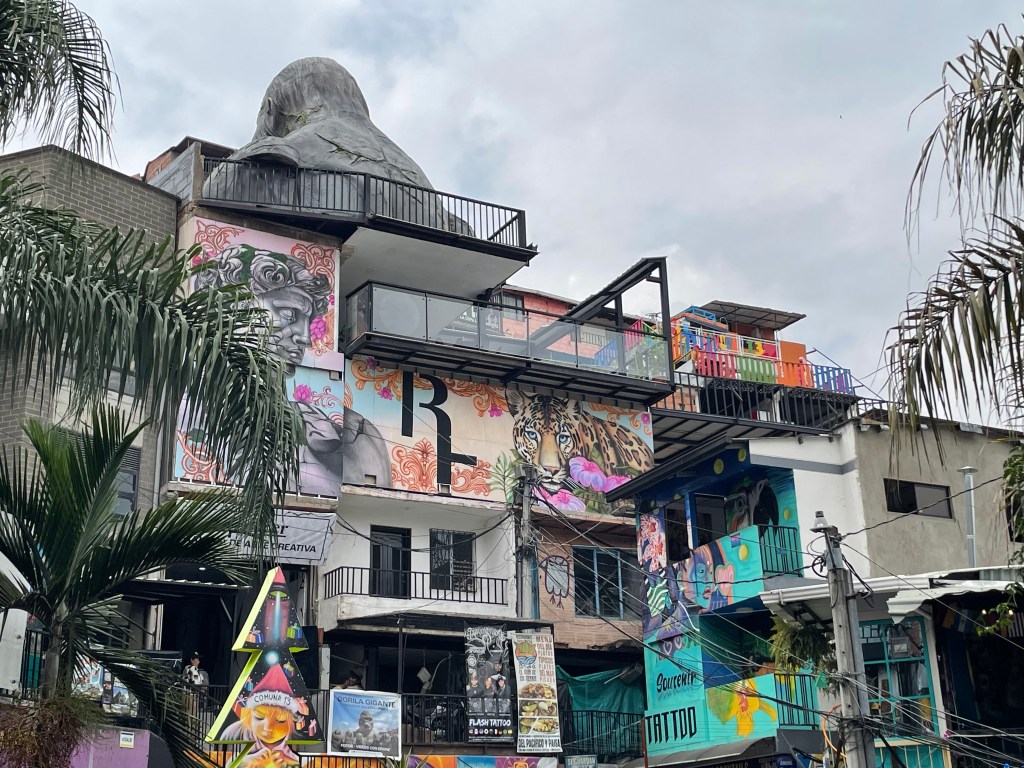
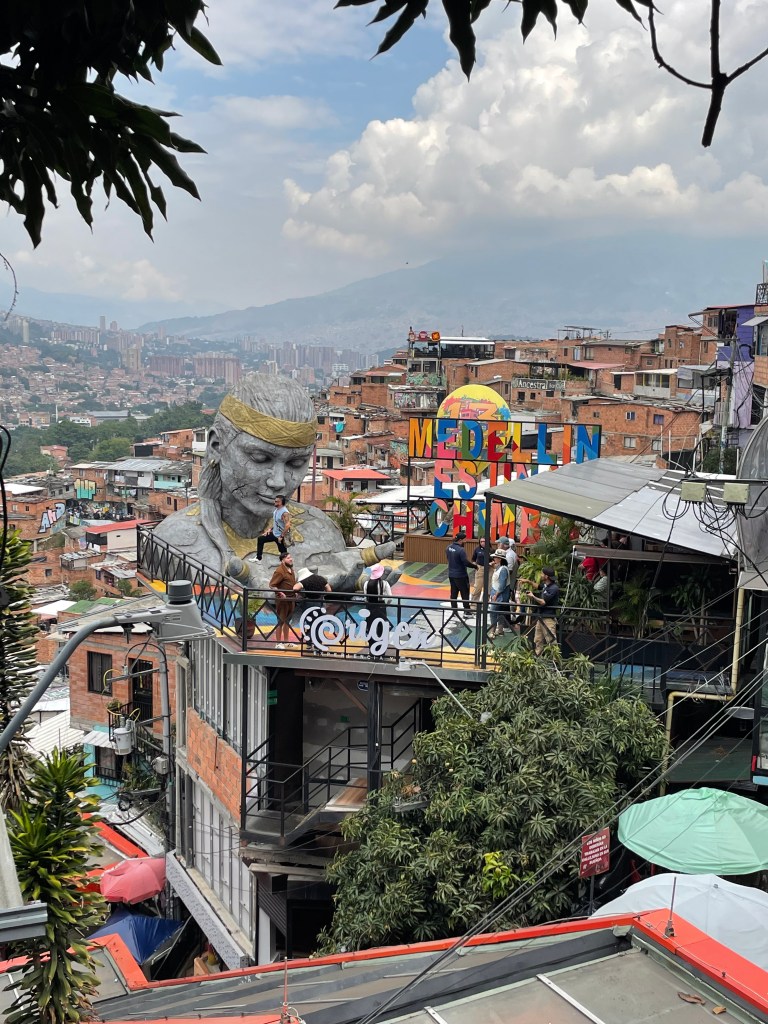
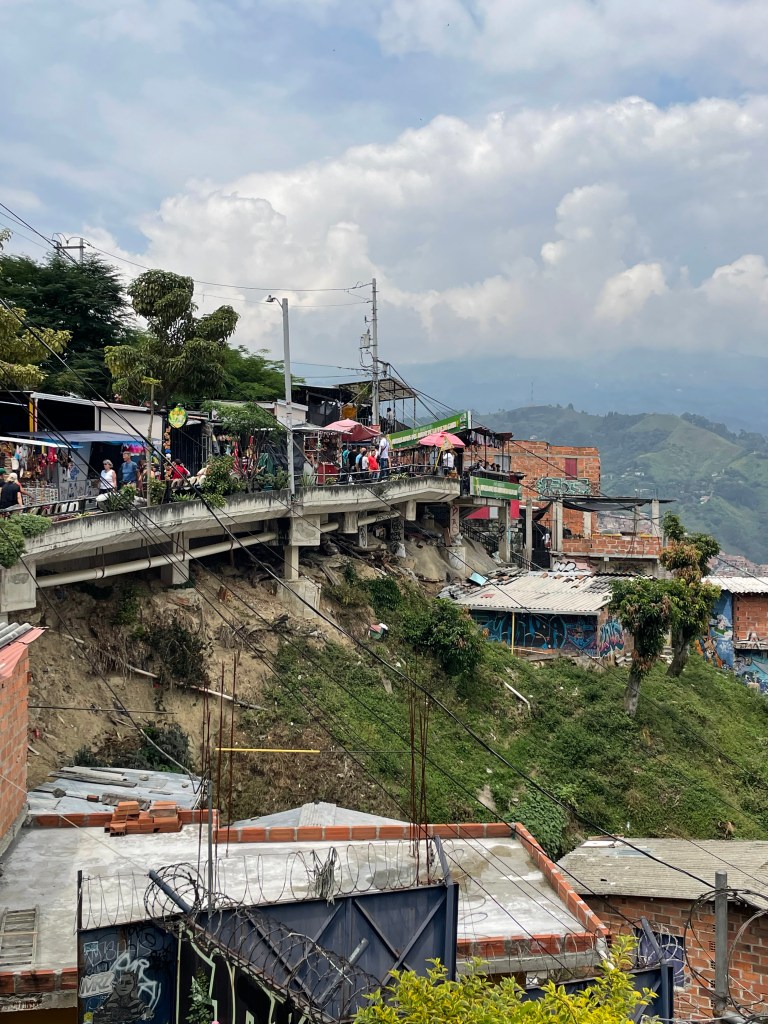
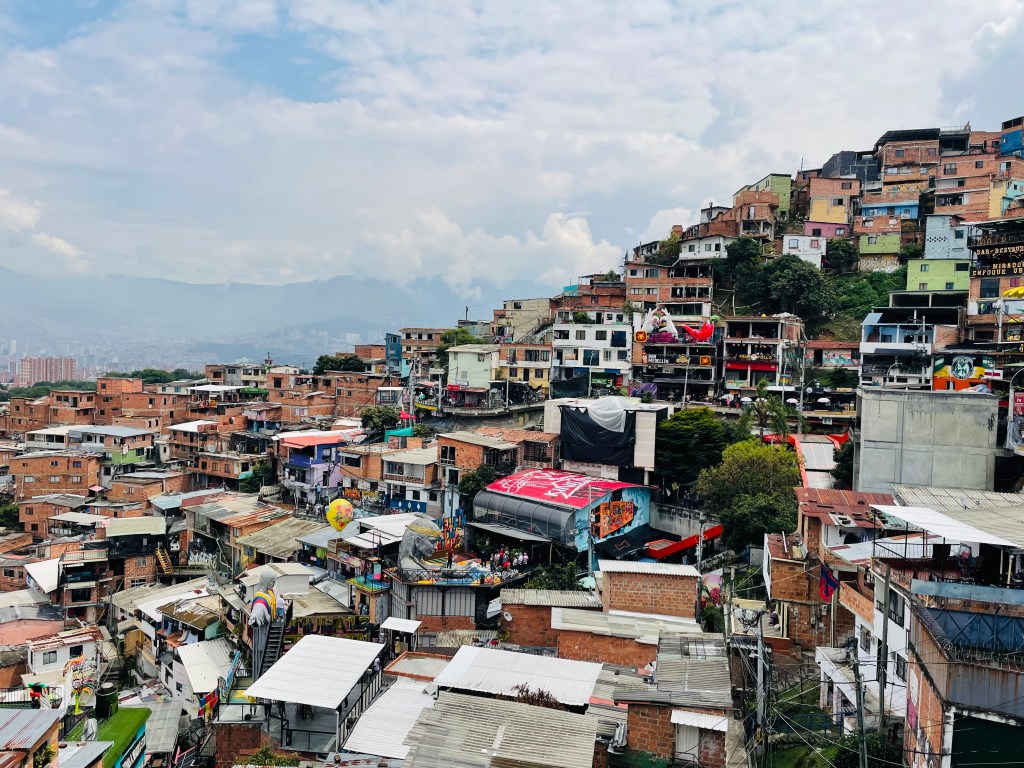
How do they all not just collapse onto each other?!:
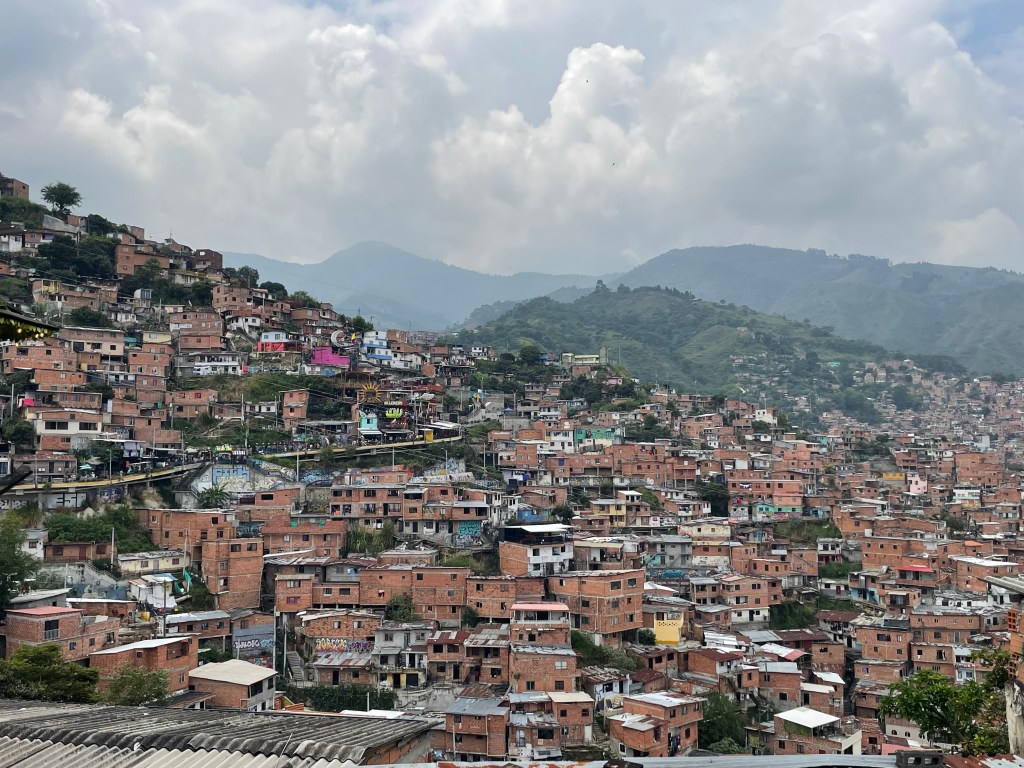
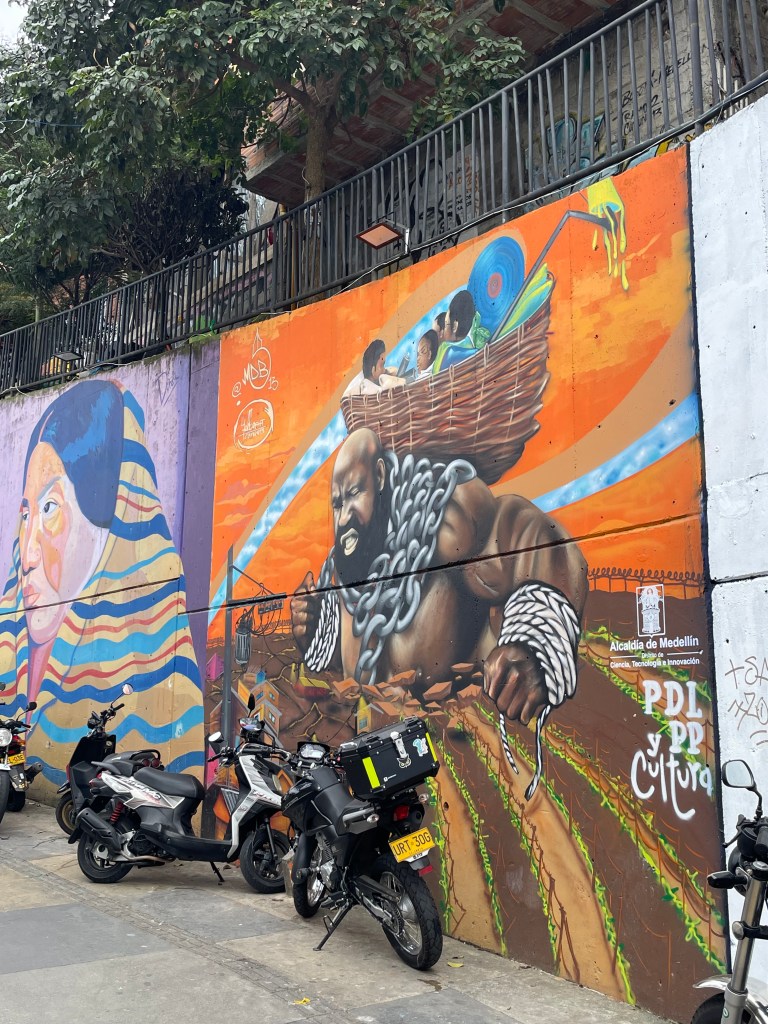
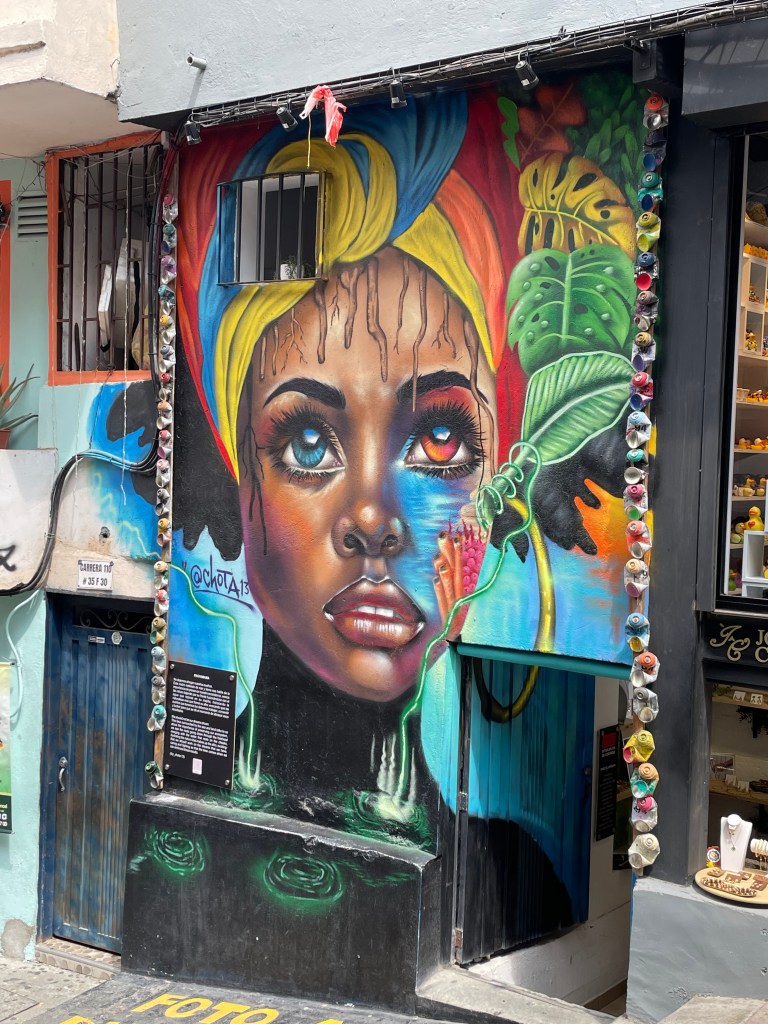
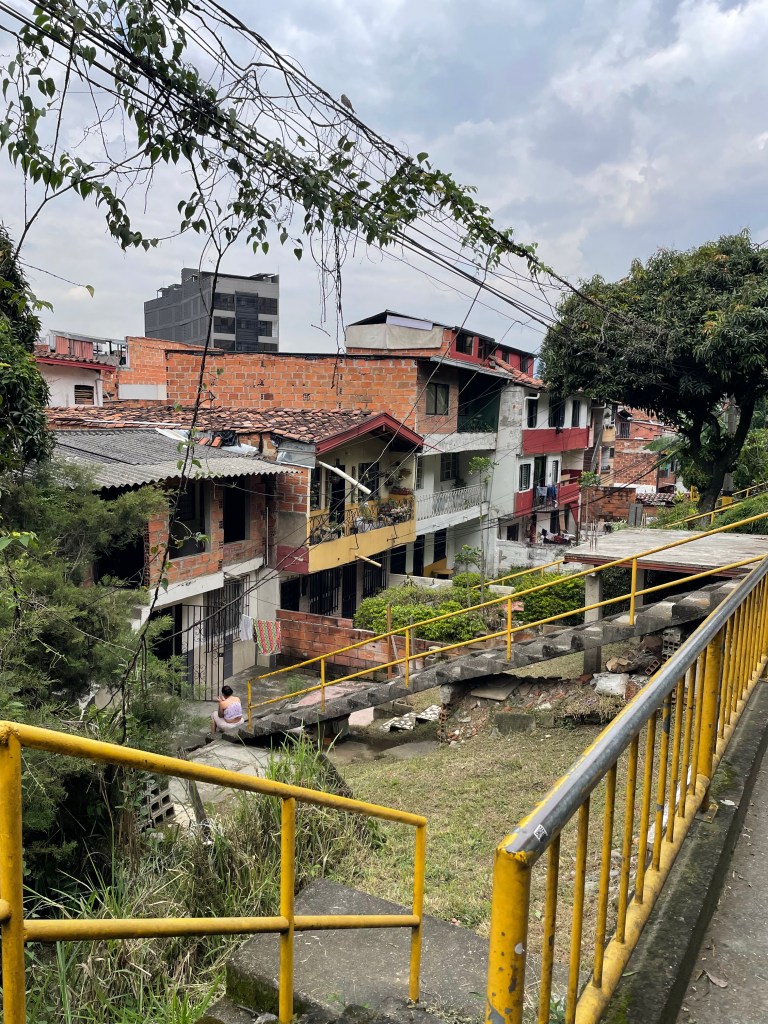
The suburban shacks versus the concrete centre:
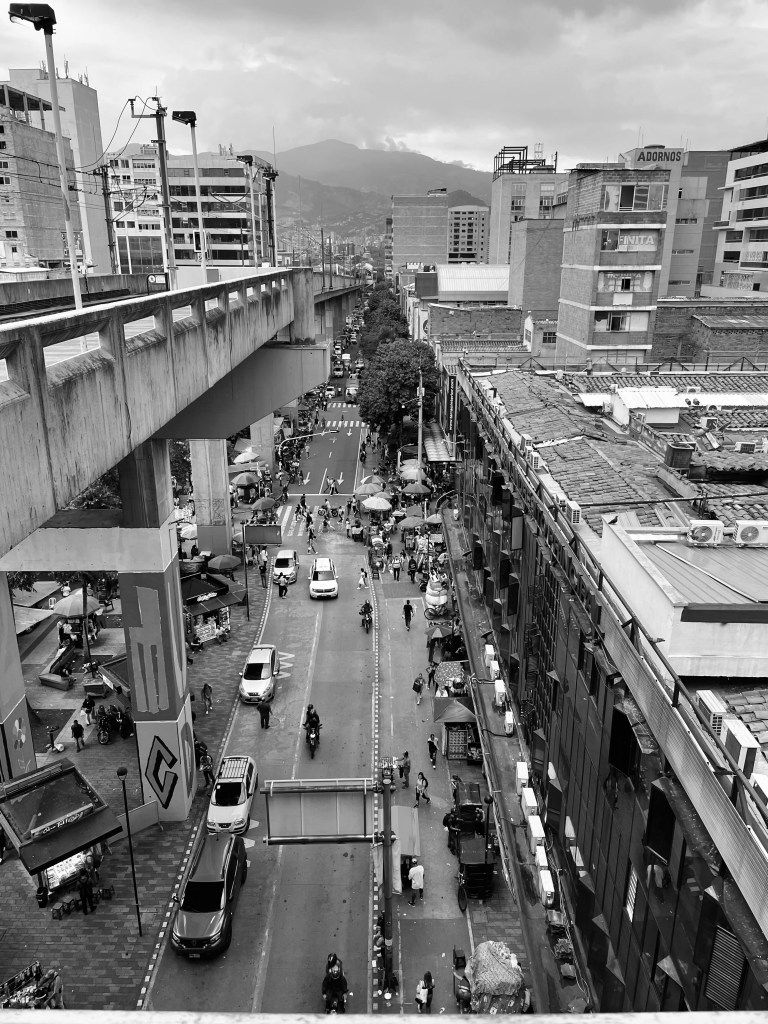
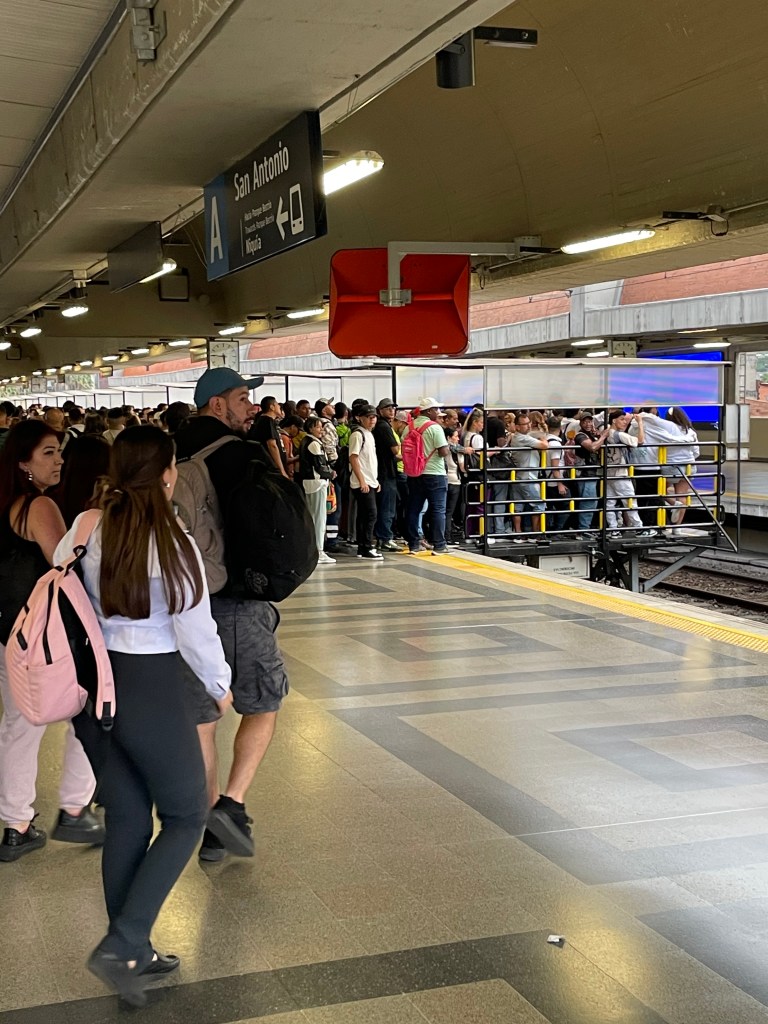
The metro system uses a sort of horse box approach, like horses readying to start a race. It’s very efficient:
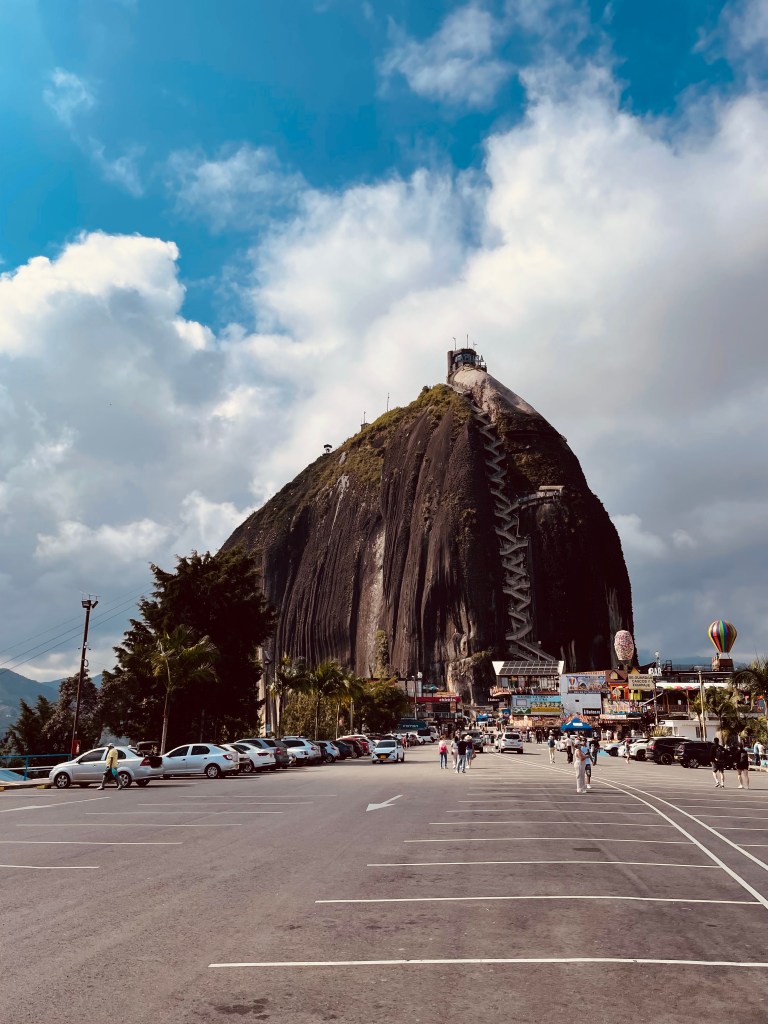
My final day in the area involved a day trip to visit the 220 metre tall El Peñol, located near Guatapé. There was an inauspicious start to the day as some locals foiled a spot of theft as we waited on our tour bus. It seemed someone tried to steal the contents of a car but the garbage collectors (in front) and another car owner (behind) boxed-in the thief’s getaway car with great success! Once arrested we set-off.
Our first stop involved breakfast at a local café en route which afforded the opportunity to get chatting with several people as we sat to eat on long canteen style bench seats.
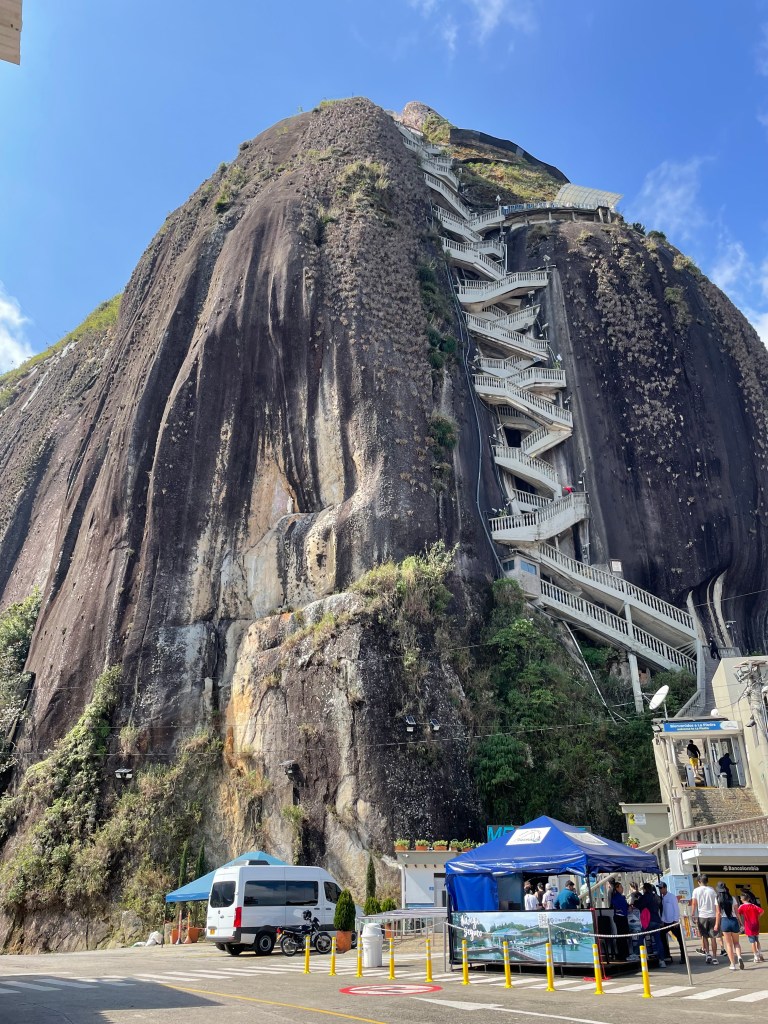
El Peñol with it’s 700+ steps:
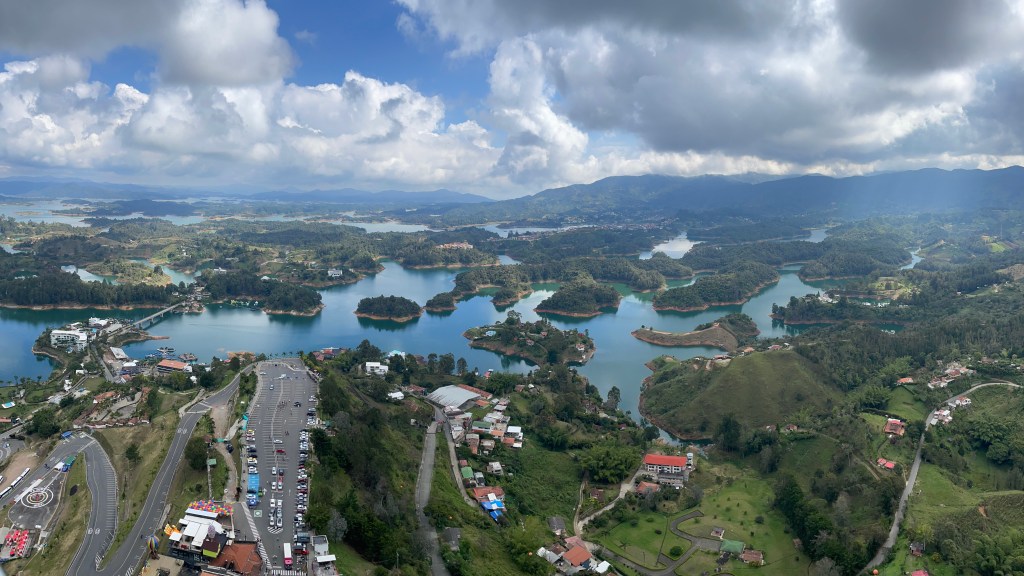
The view from the top was beautiful:
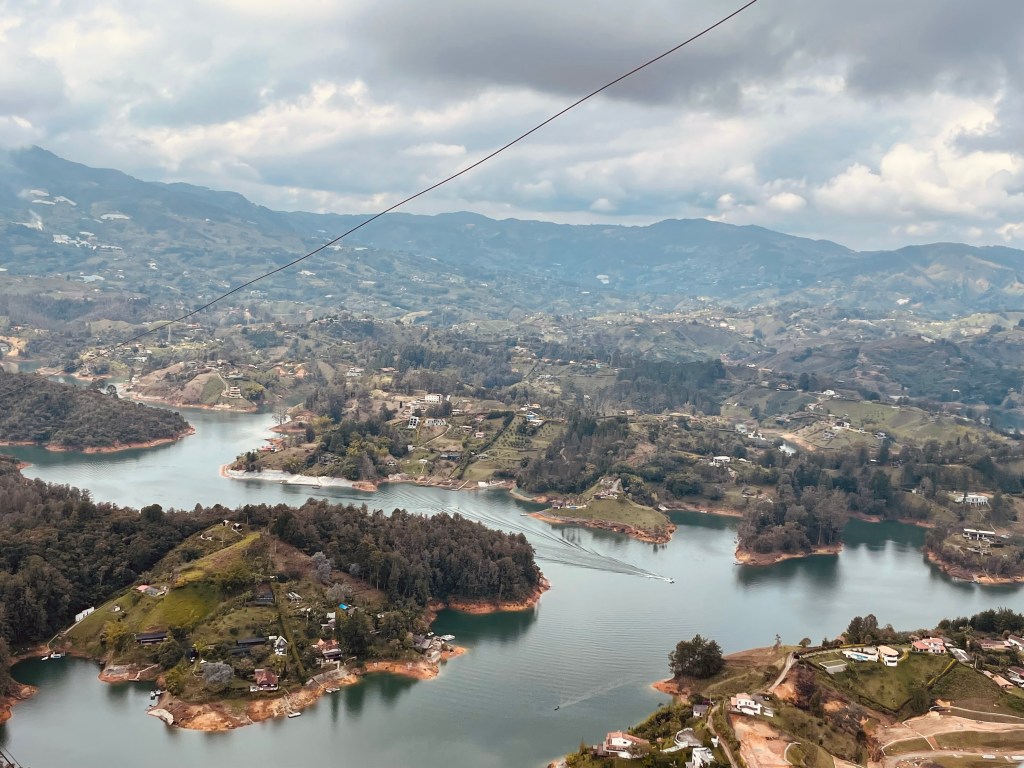
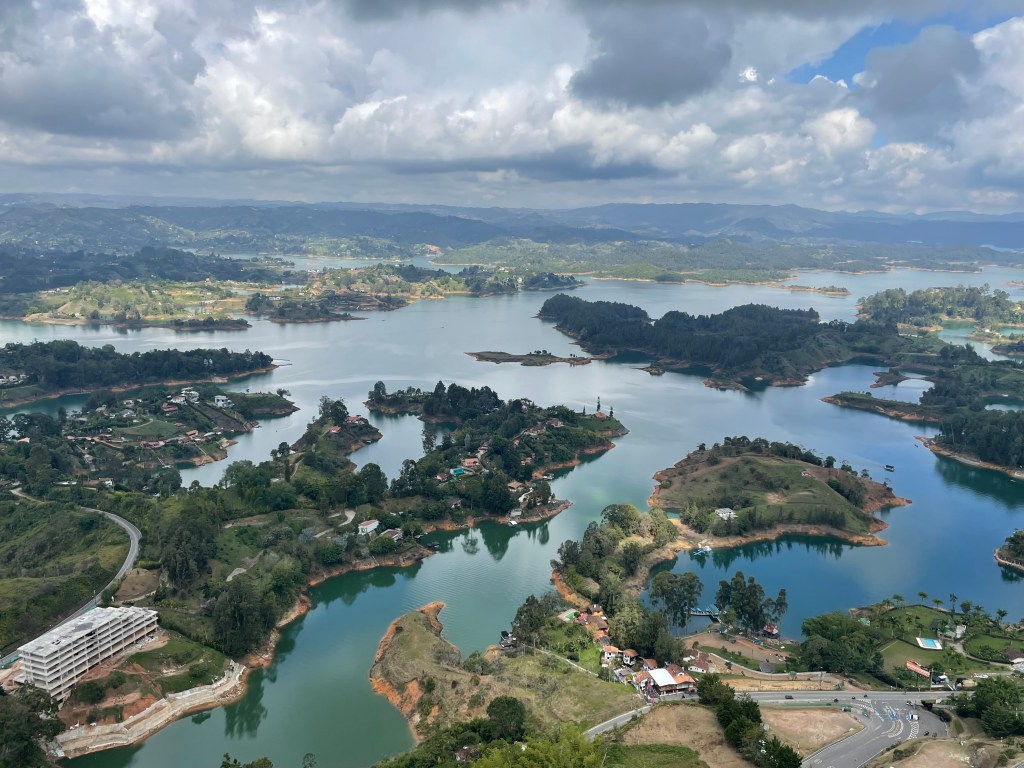
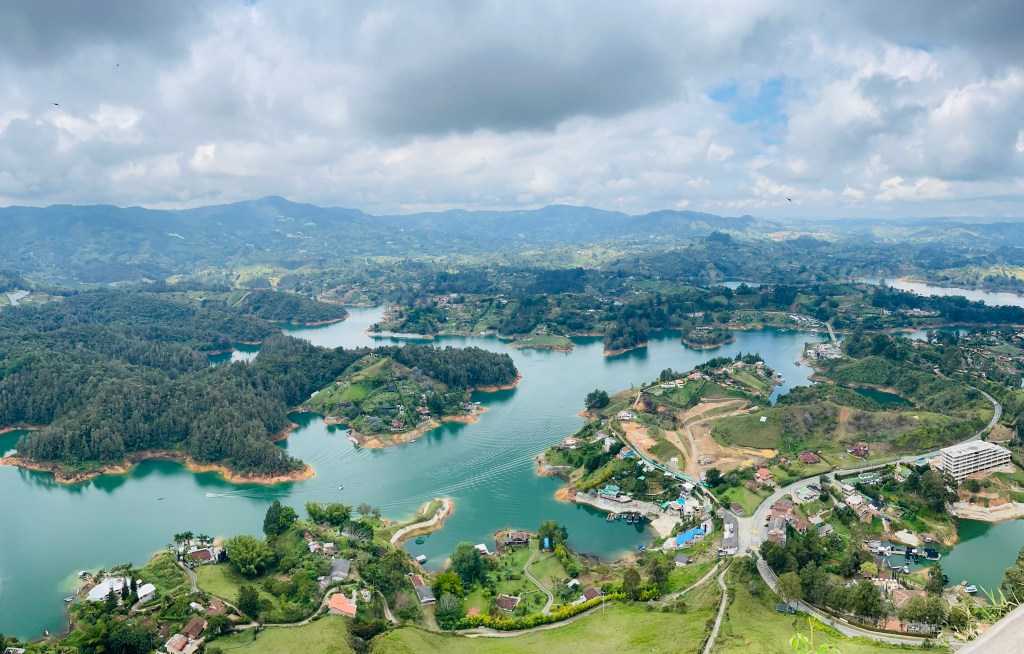
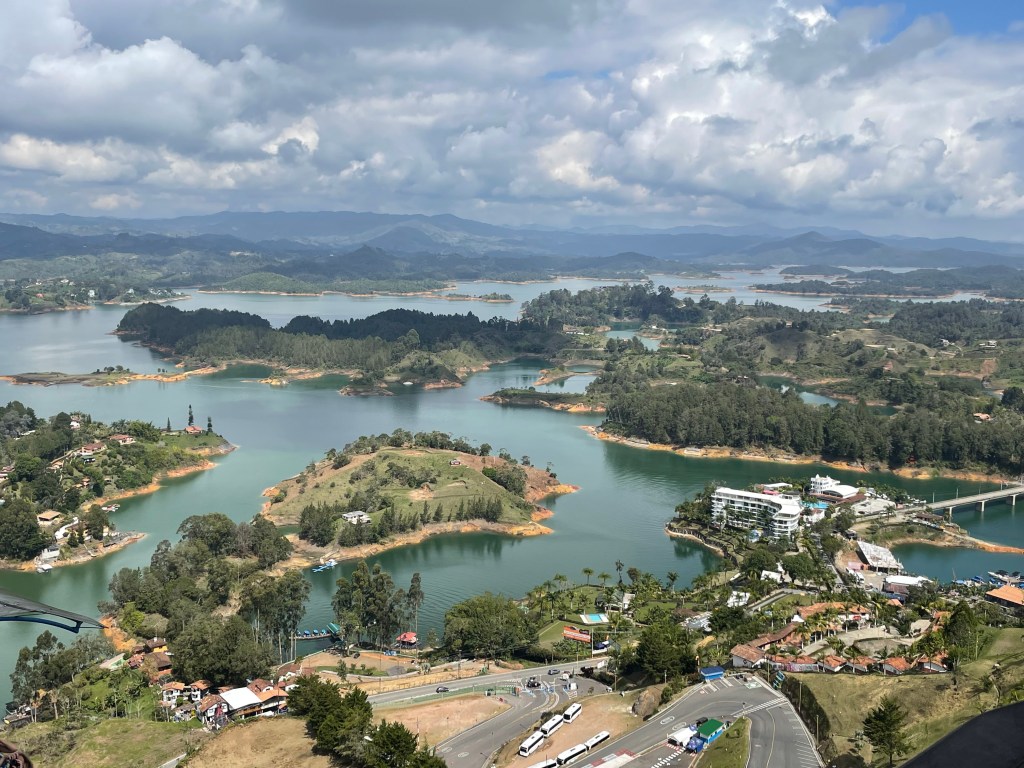
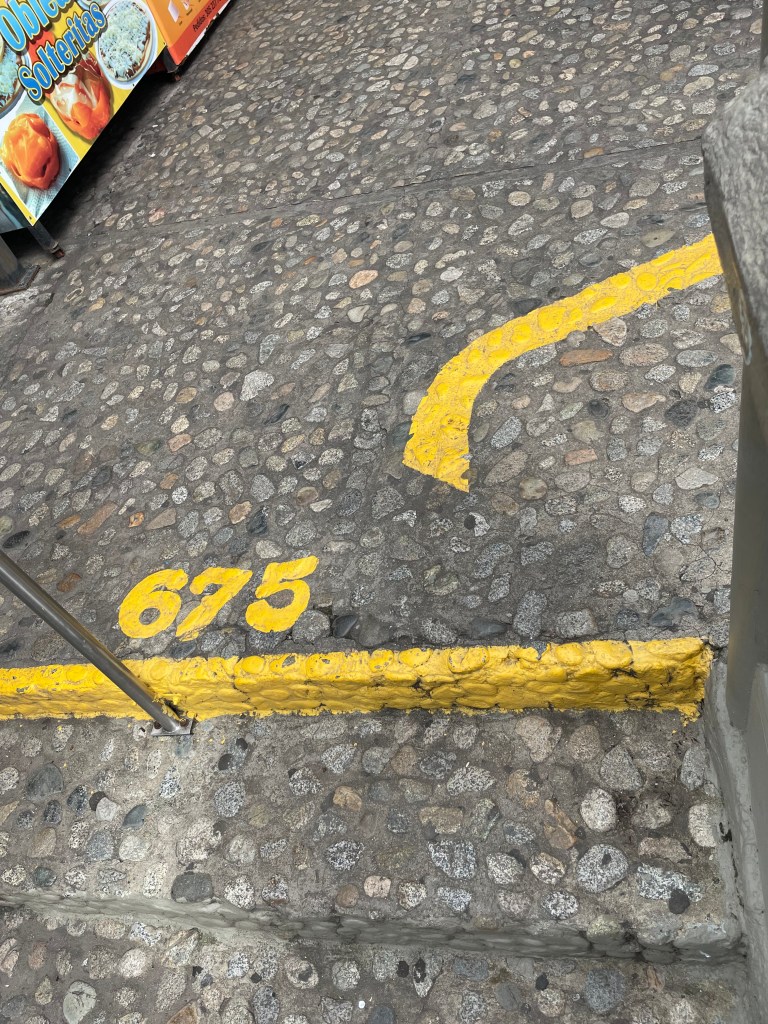
The step labels only went this far, annoyingly!:
The next stop on the trip was the little village of Guatapé with its pretty buildings complete with fresco-like panels called zocalos.
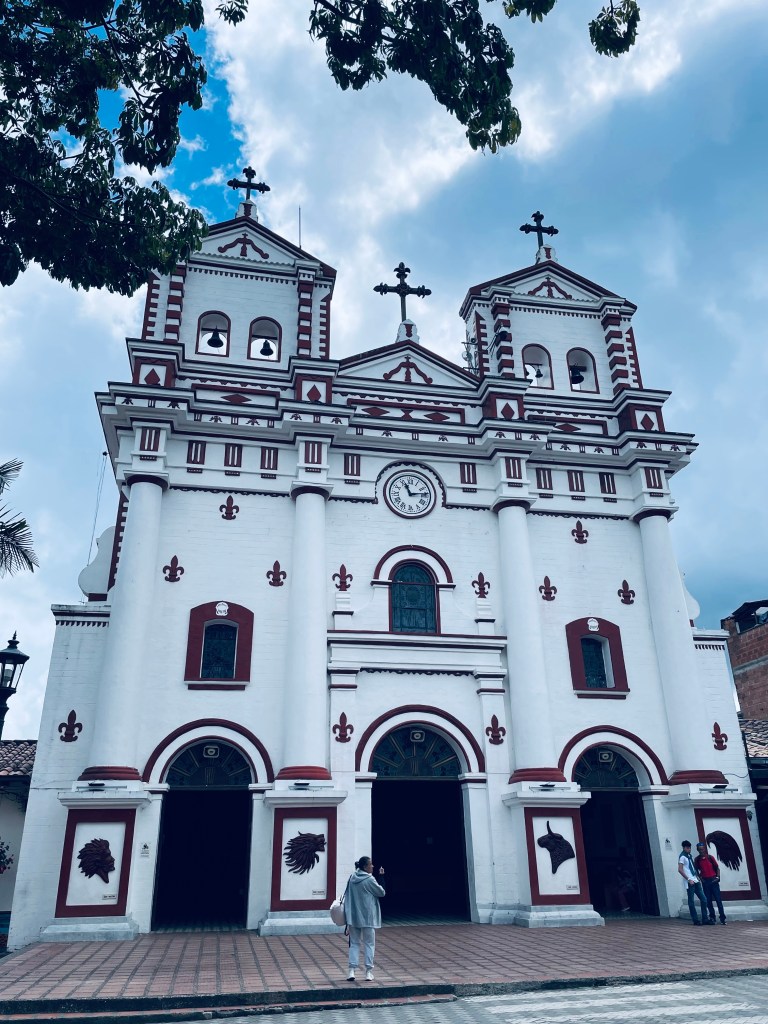
Parroquia Nuestra Señora Del Carmen Guatape on Parque Principal de Guatapé:
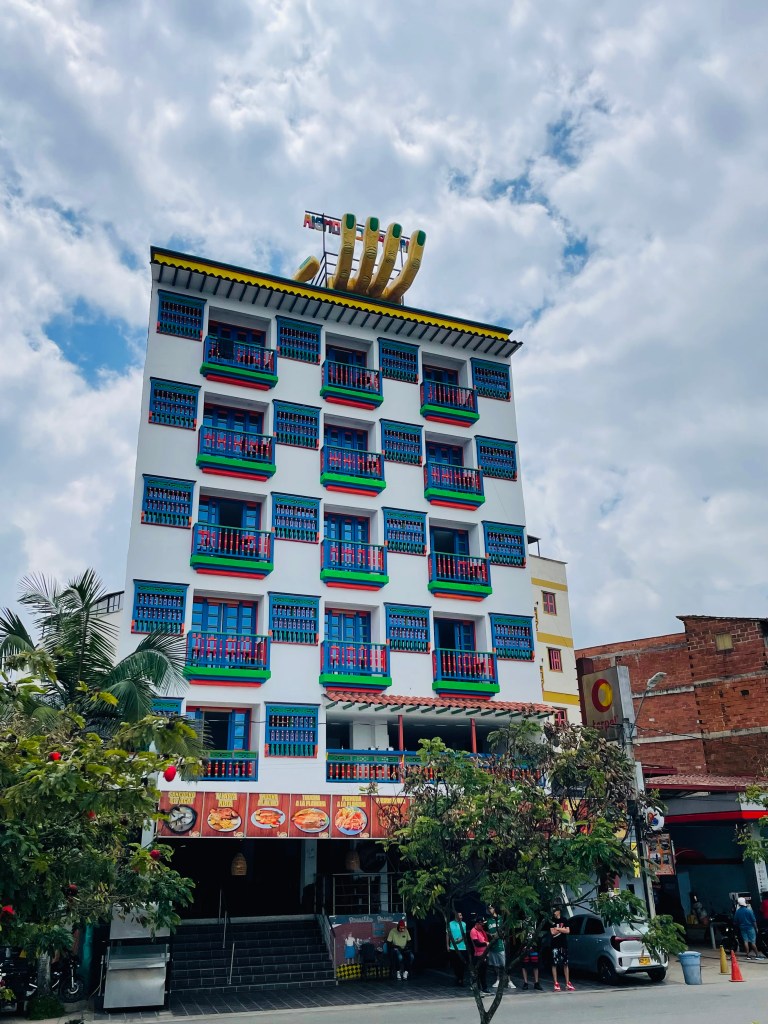
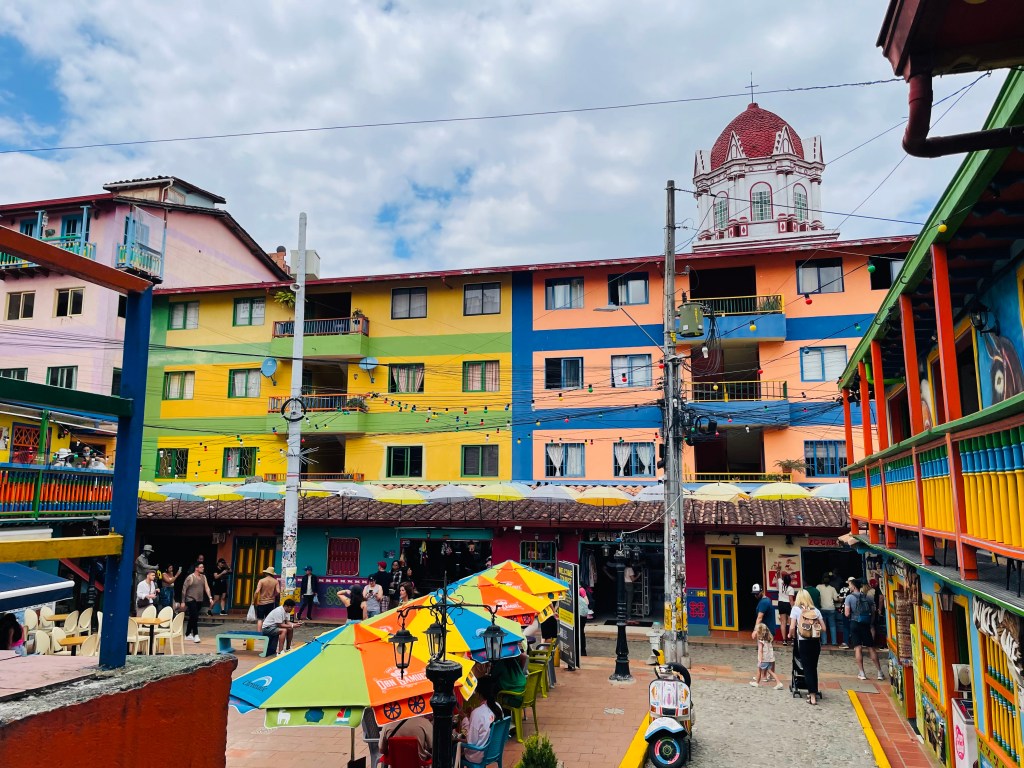
A very colourful town:
The famous zocolo, which our wonderful tour guide went to great lengths to describe, along the base of most buildings:
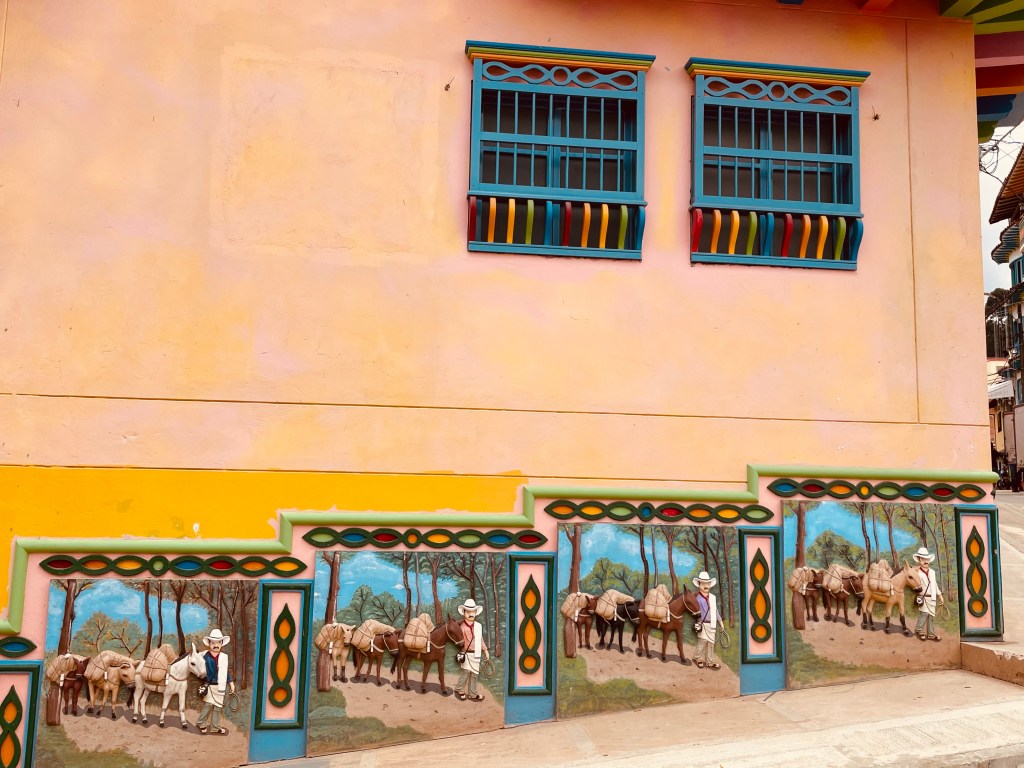
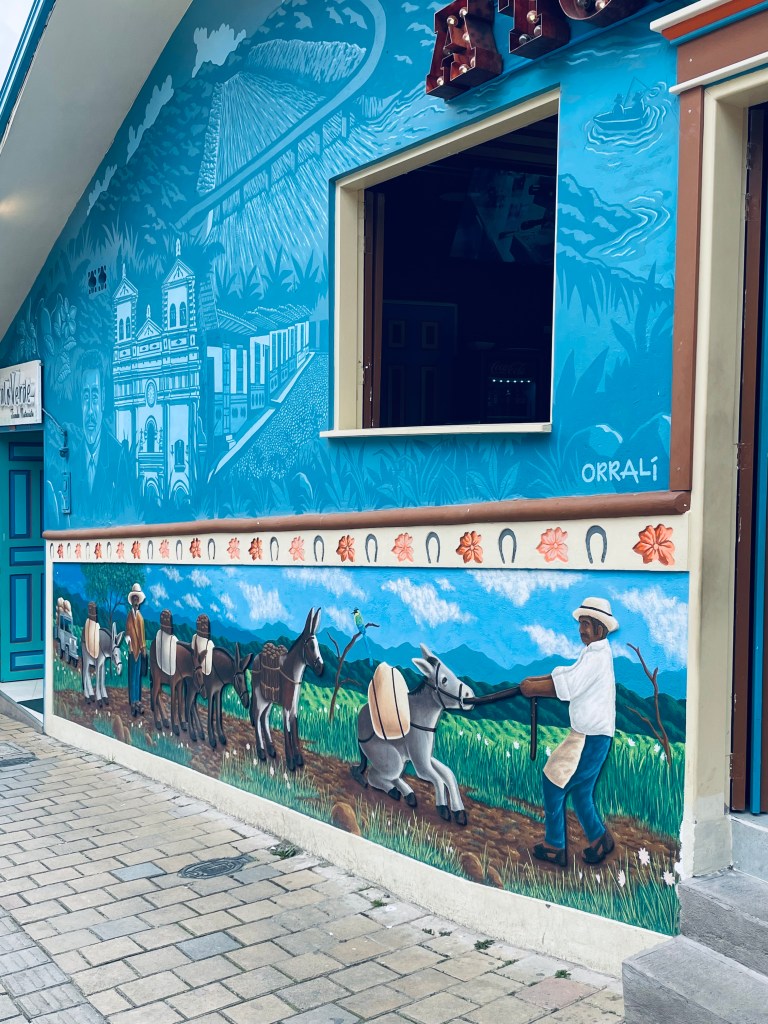
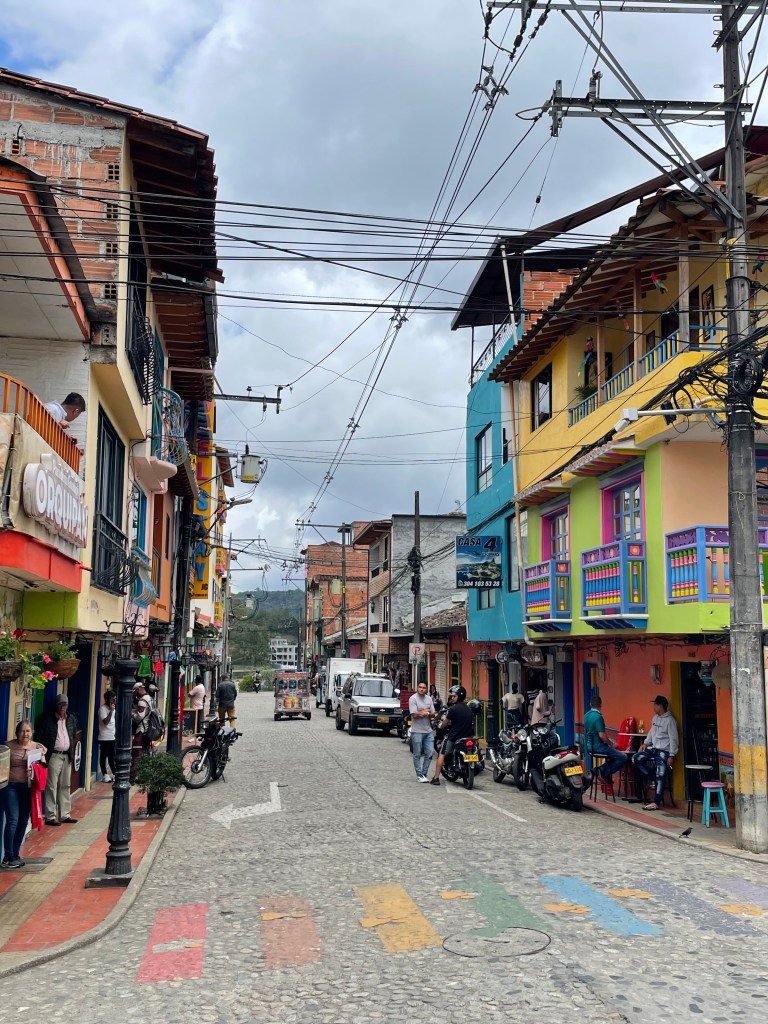
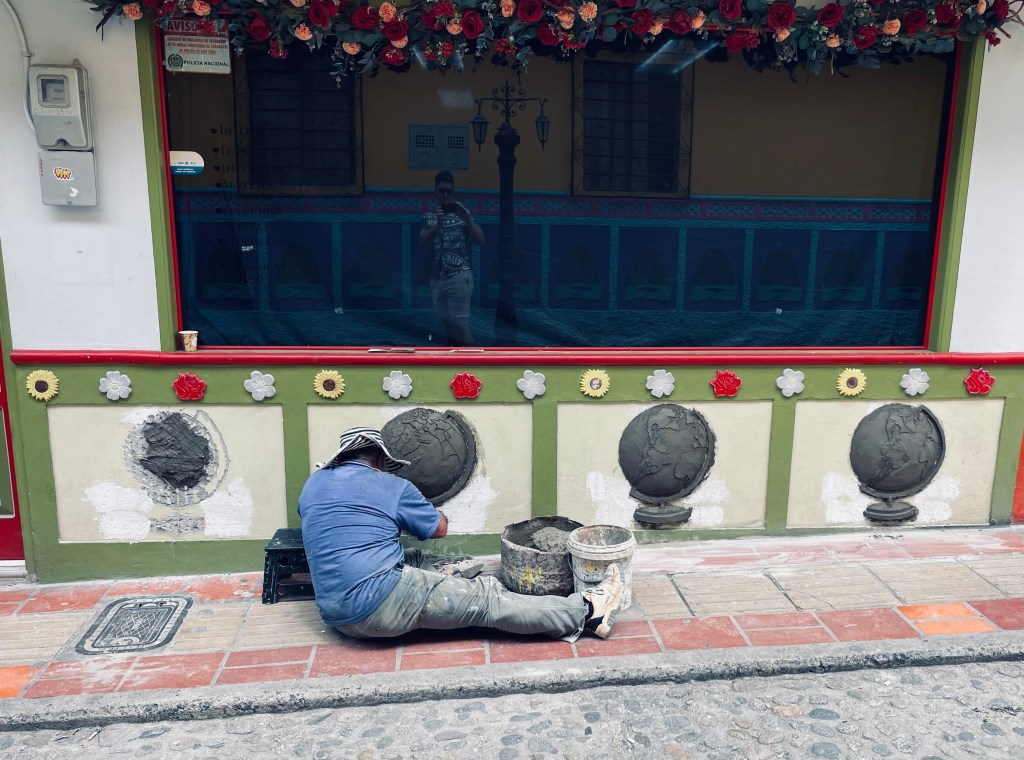
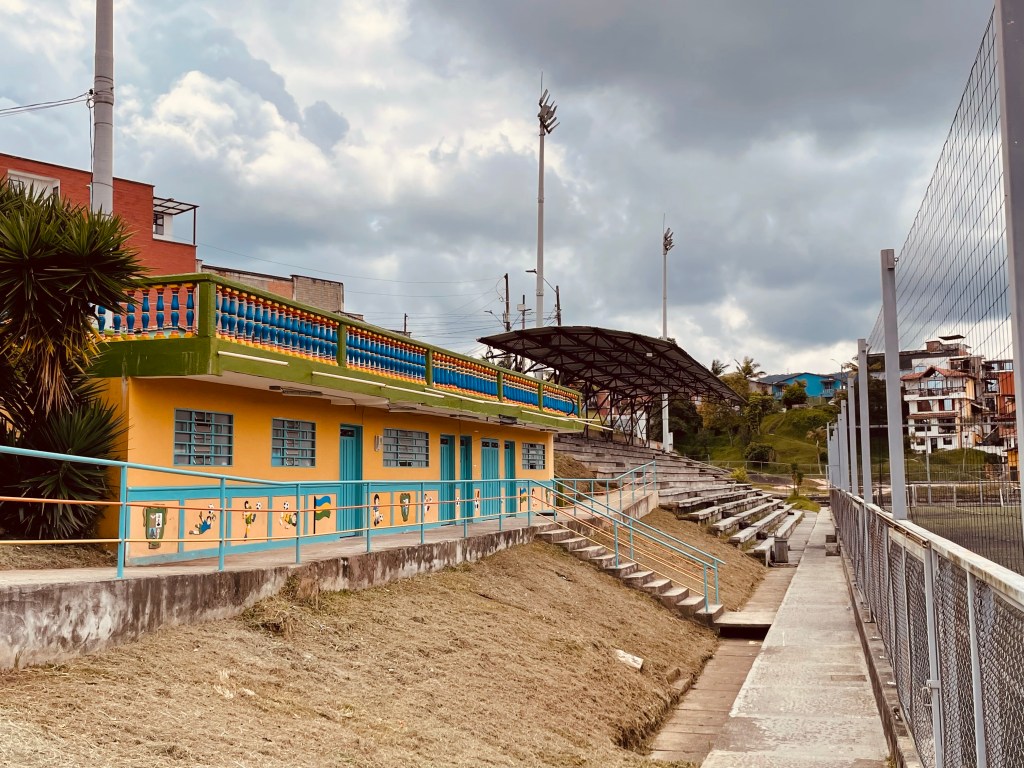
Even the local football ground got in on the zocolo act:
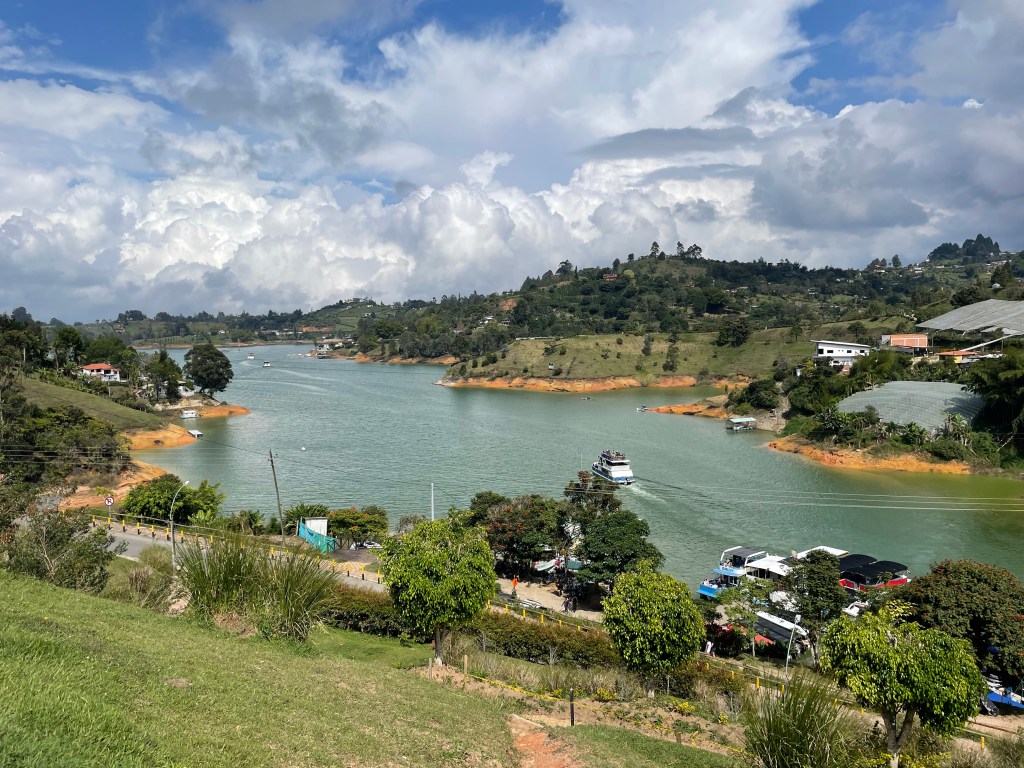
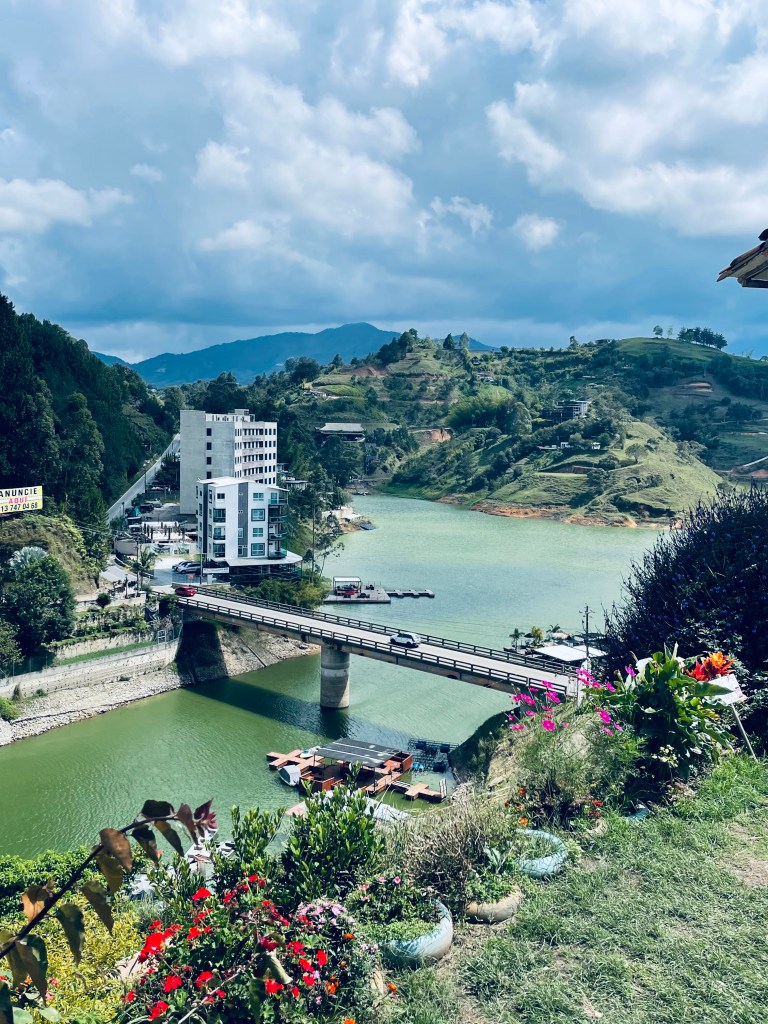
A quick beer at a mini beer festival pop-up caused me to almost miss the bus to the next stop. Unfortunately, that’s where my luck ran out. I mis-heard the departure time for the boat ride to see Pablo Escobar’s old hacienda so I sat on a wall with a couple of beers until the group returned. There’s always one…
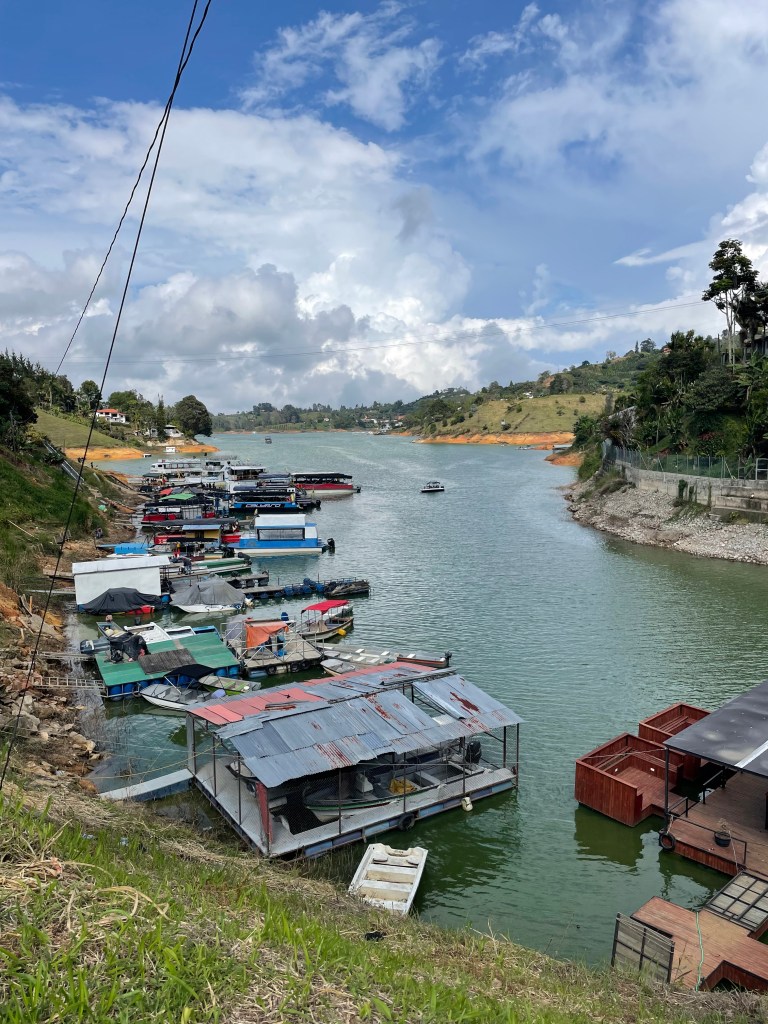
Cartagena and the Caribbean coast were up next and as soon as I got off the plane I noticed the difference in atmosphere. Gone was the temperate climate, replaced by Caribbean humidity.
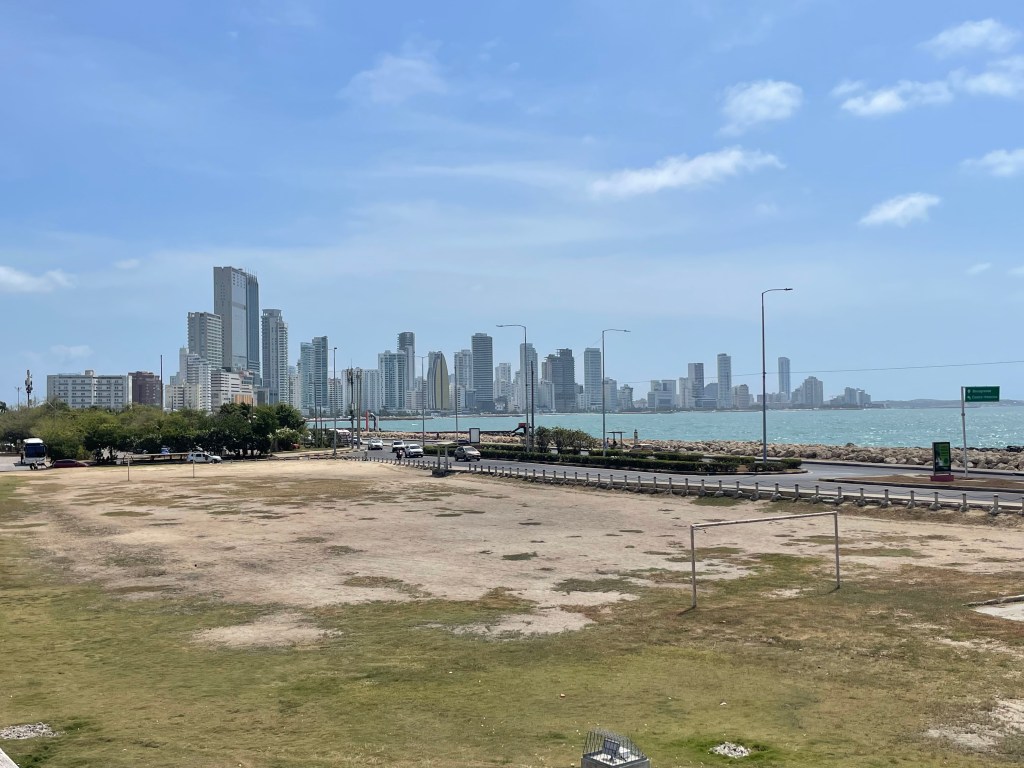
The city and beach resorts in the distance as viewed from the old town:
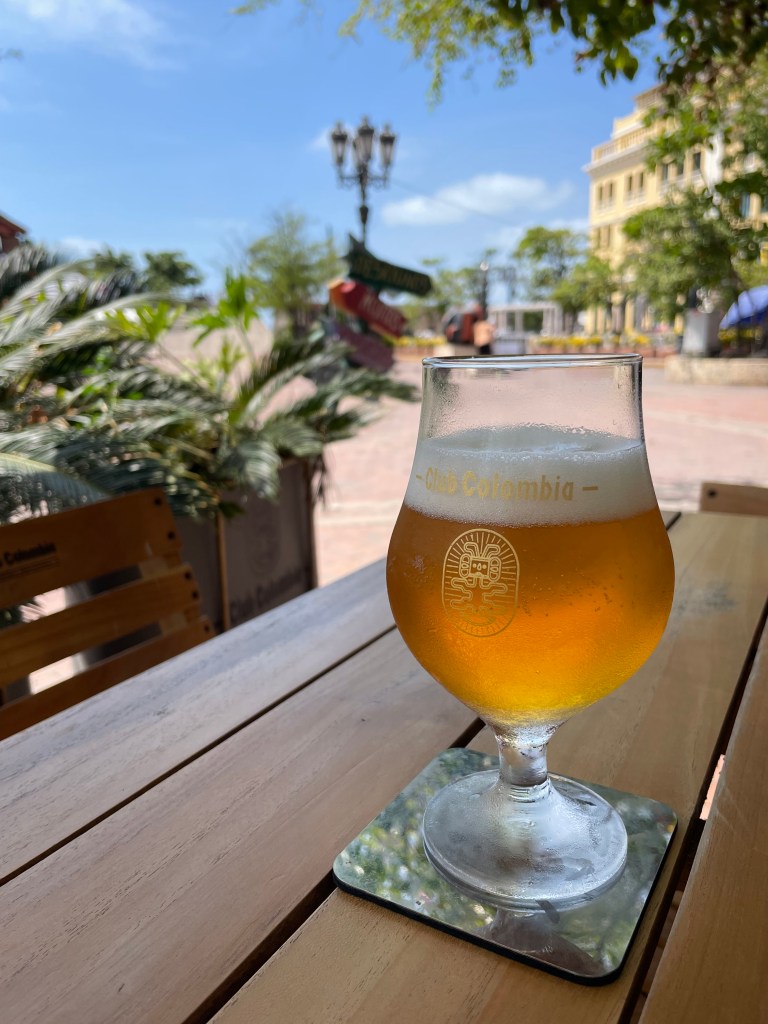
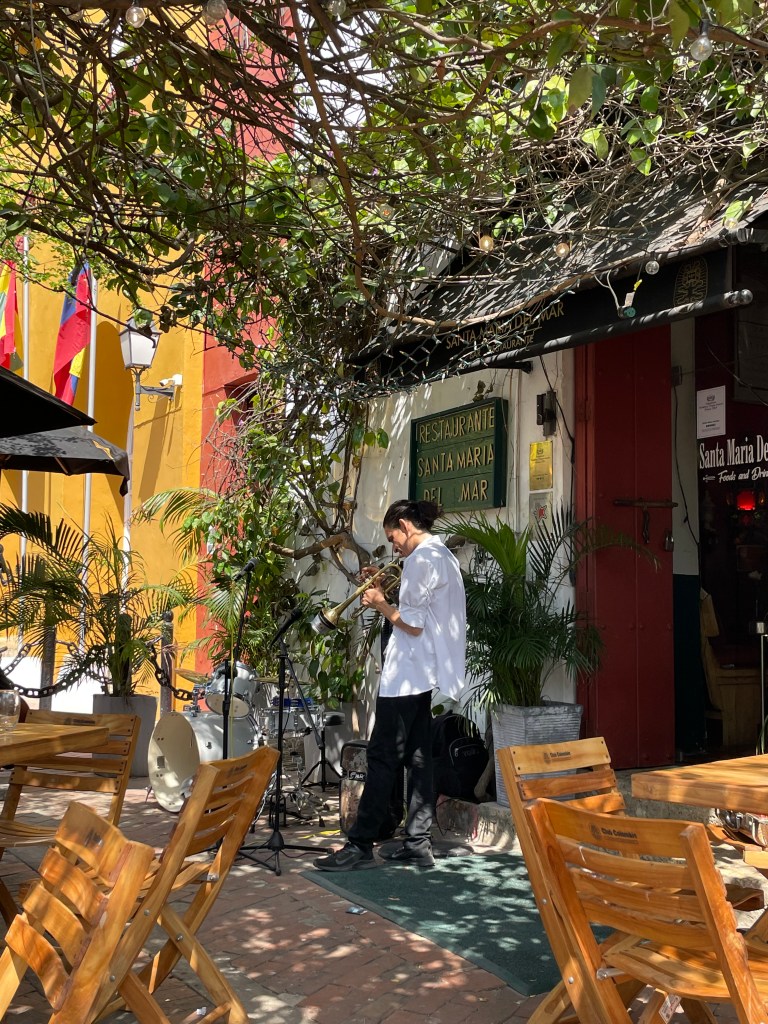
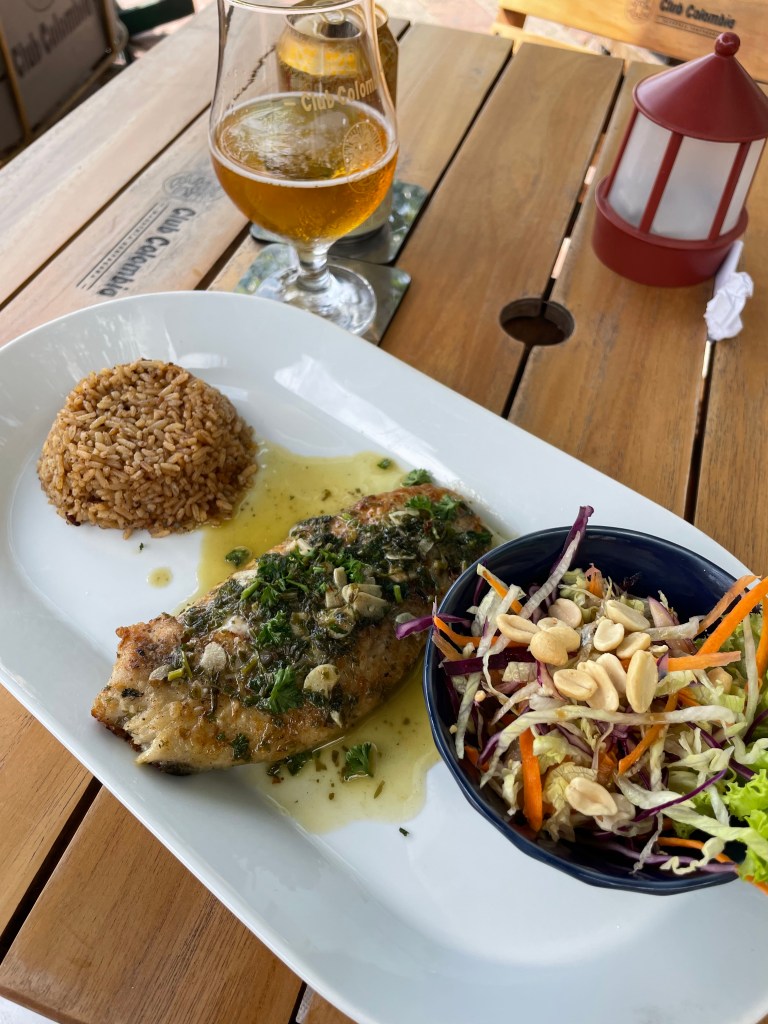
After a short stroll around the old town in searing heat I opted to chill for a bit with live music and the catch of the day:
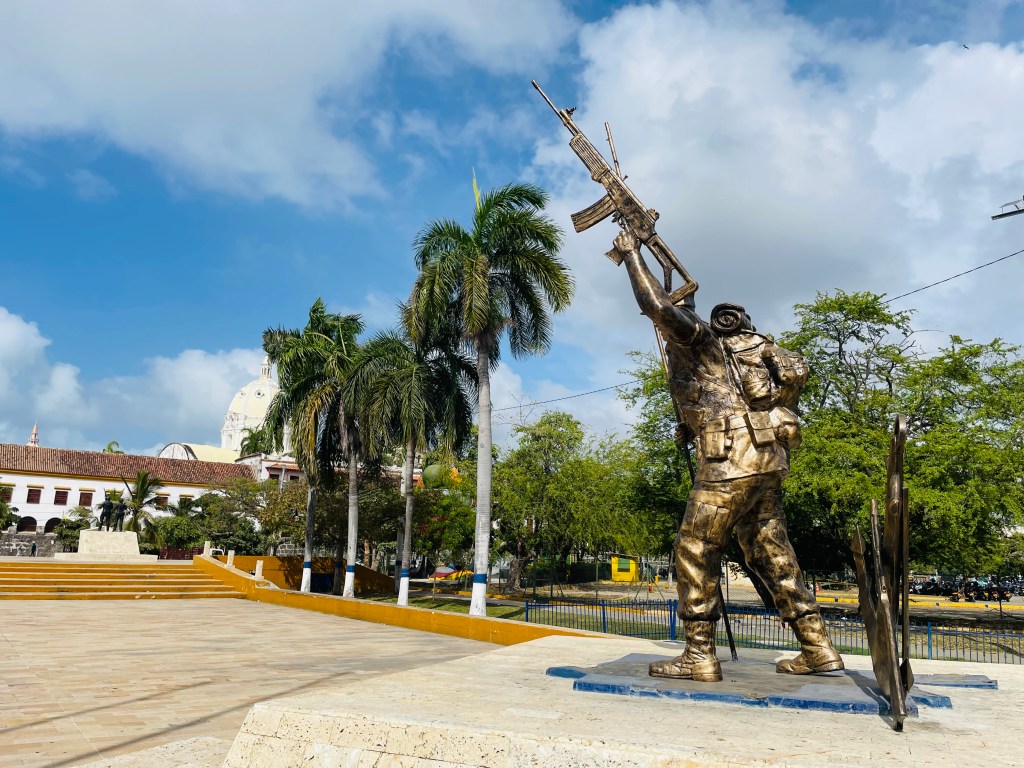
This monument commemorates the Colombian soldiers who fought in the Korean War alongside the United Nations forces:
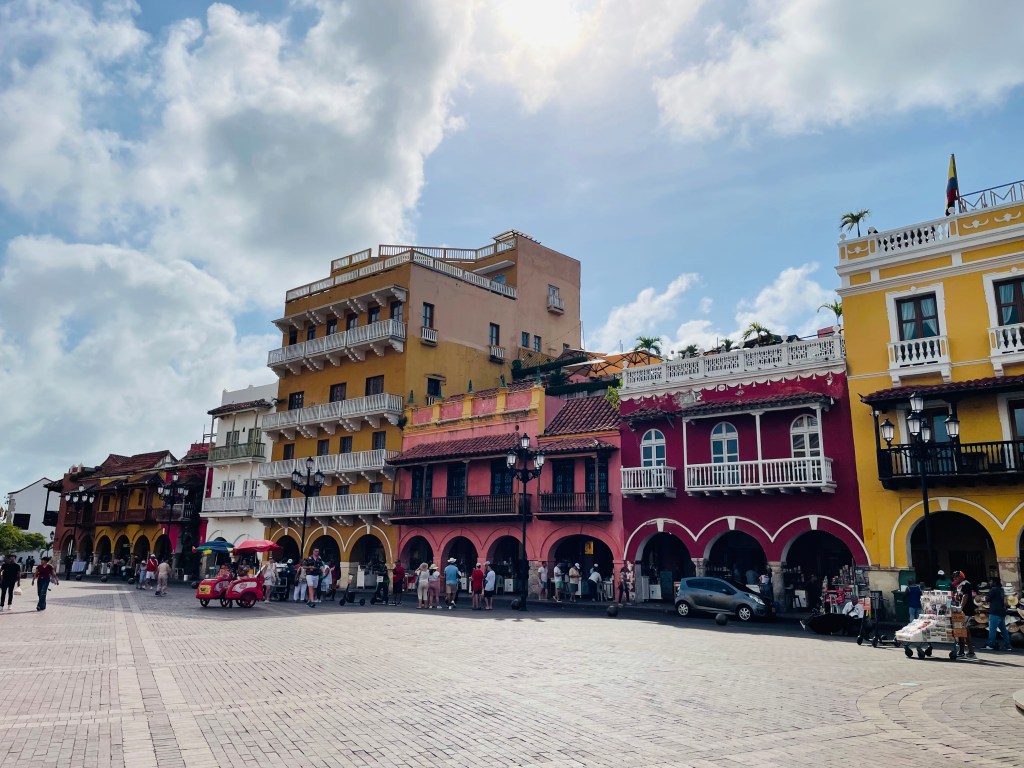
Plaza de los Coches, the lively square beyond the city gates:
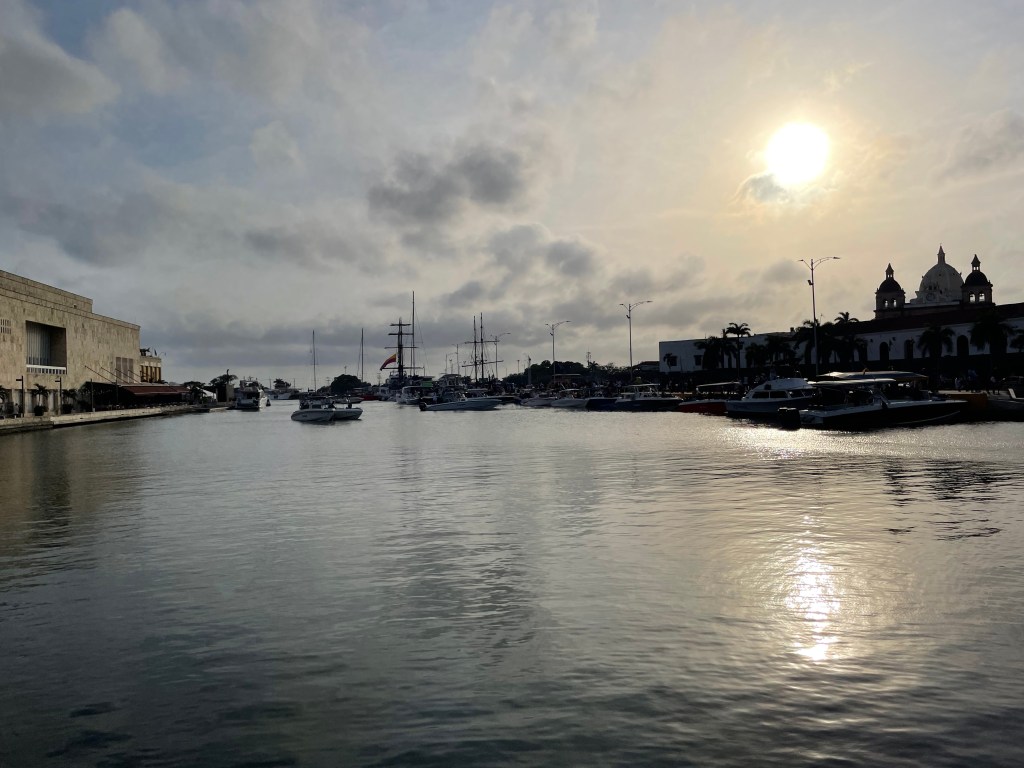
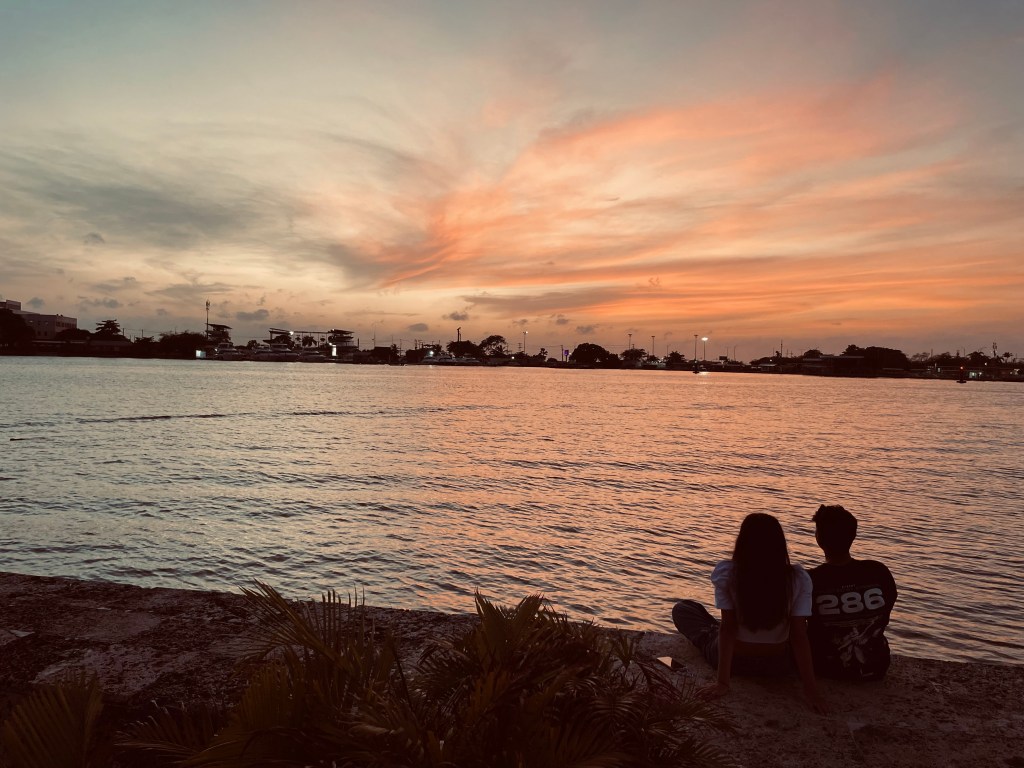
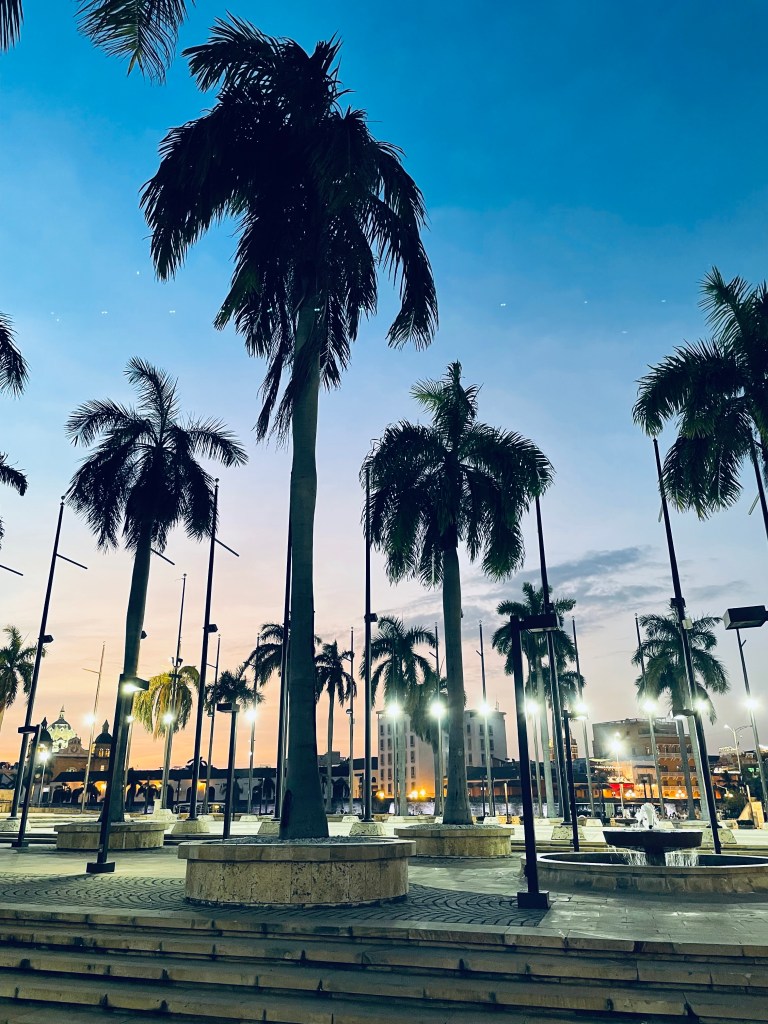
Sun setting over the town port:
At some point over the previous few days something happened on the right side of my mouth which forced me to eat just on the left side to avoid a lot of pain. With a few days still to go I decided to try a local 24-hour dentist.
It actually turned out to be a good idea. Once I negotiated my way through the gates and explained the situation to the English-speaking dental nurse, they took some x-rays and the dentist got to work filing down a tooth! It didn’t fix the root cause but it meant no more pain and all for the princely sum of about £57. It would transpire that some exposed jawbone had caused a minor inflammation and the filed-down tooth needed a crown.
At least I got to see a part of the town I wasn’t expecting to see:
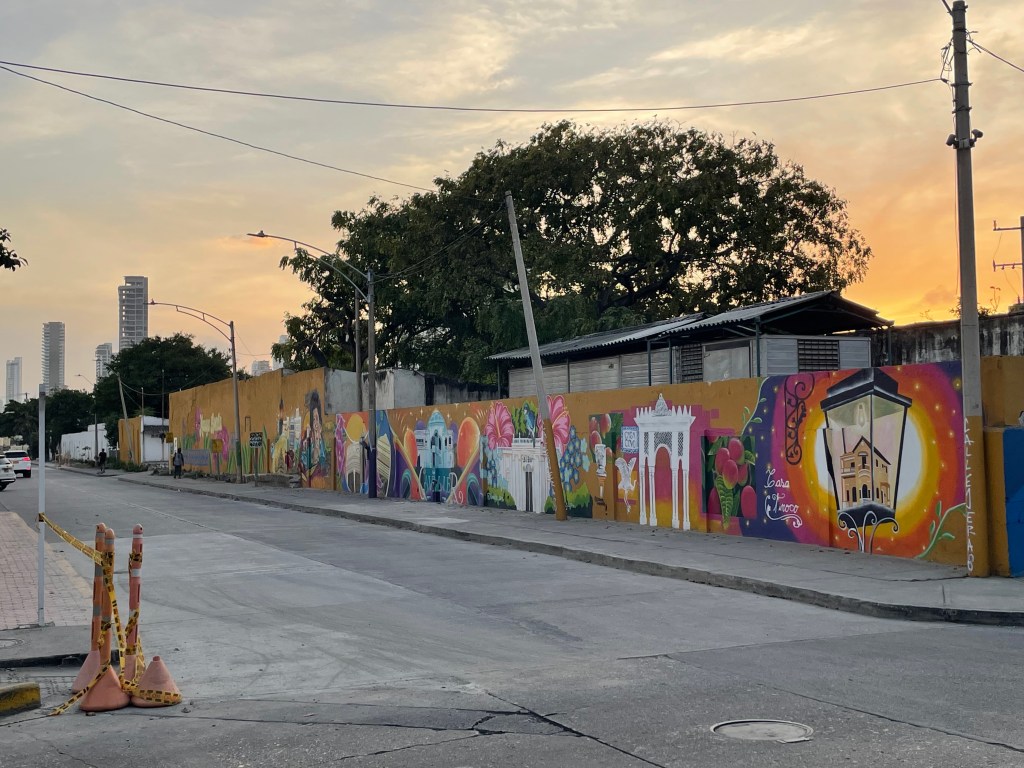
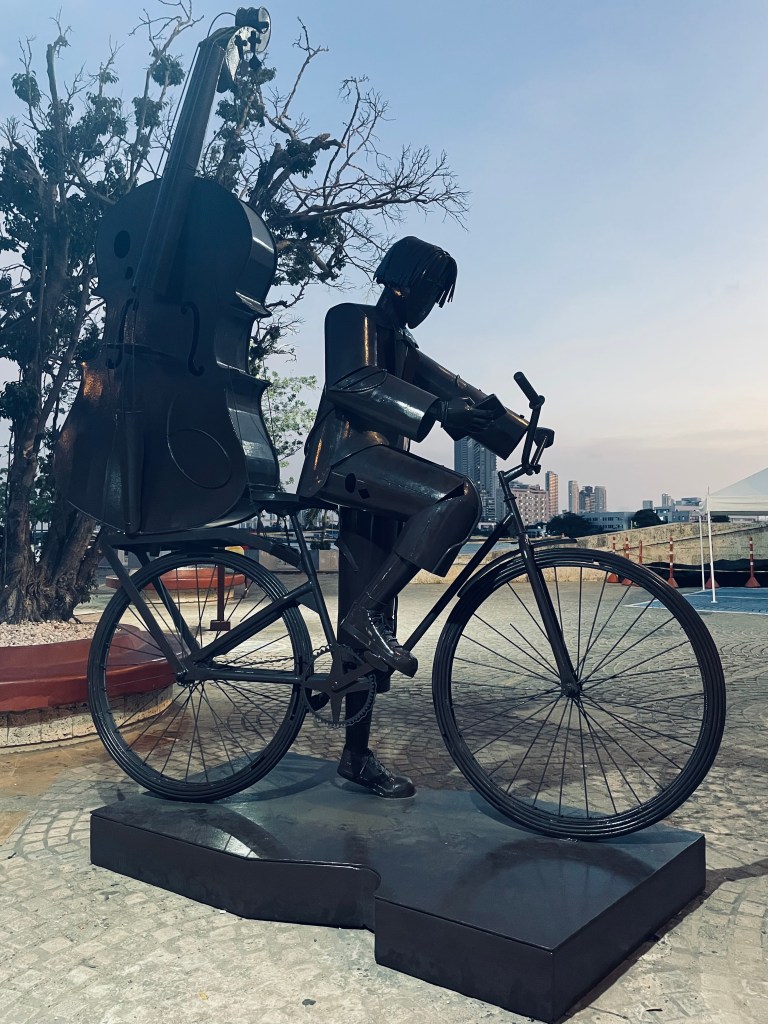
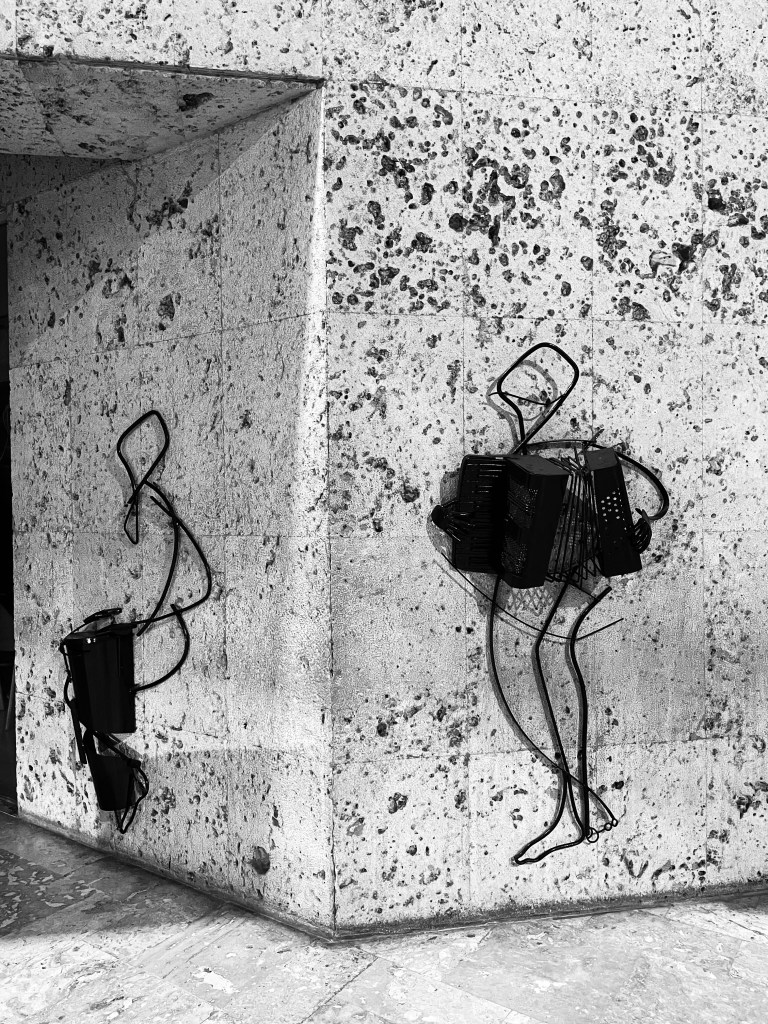
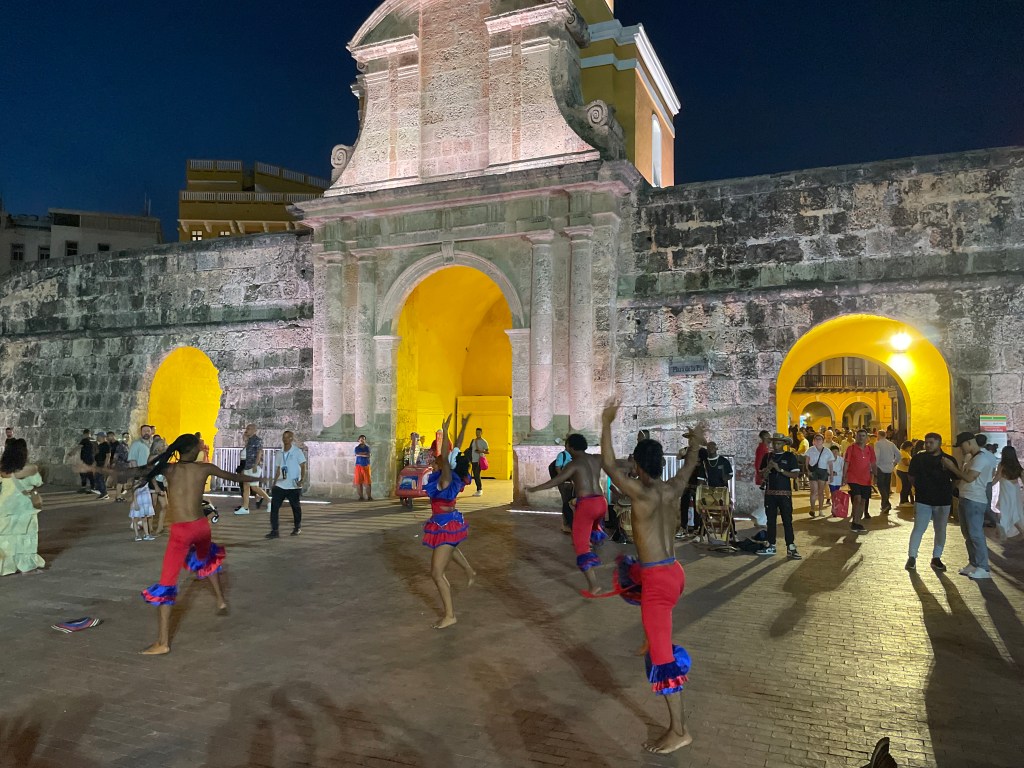
A local native dance routine on Plaza del Reloj, for the benefit of the tourists, in front of the city gate:
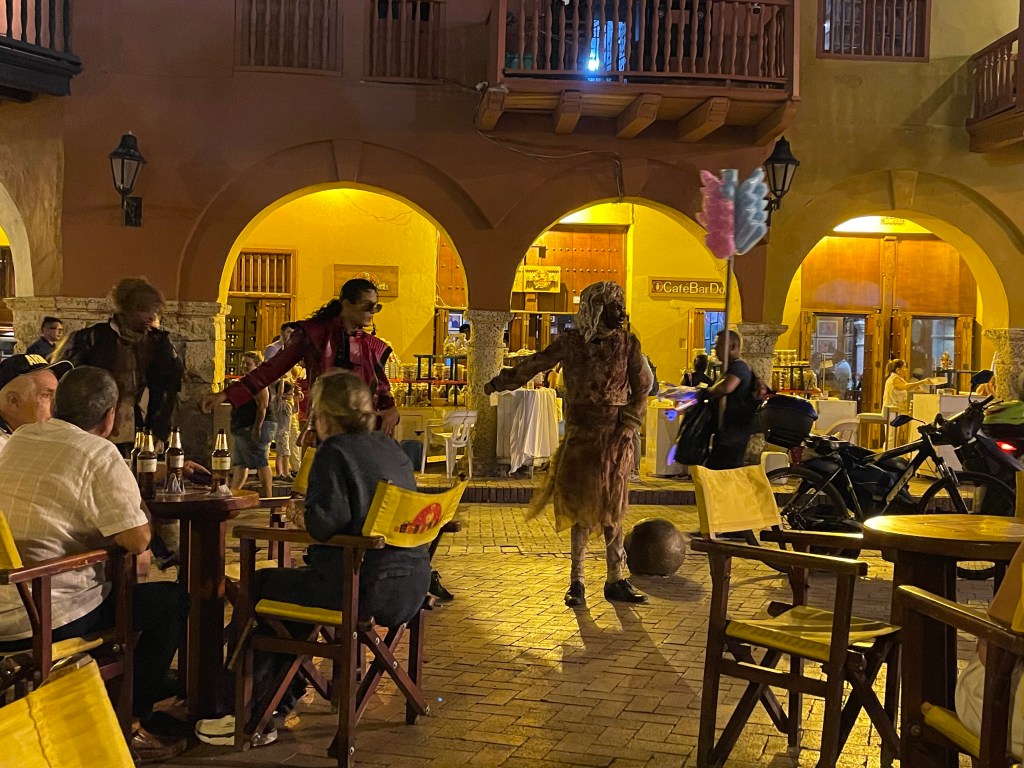
Fake Jacko doing the rounds:
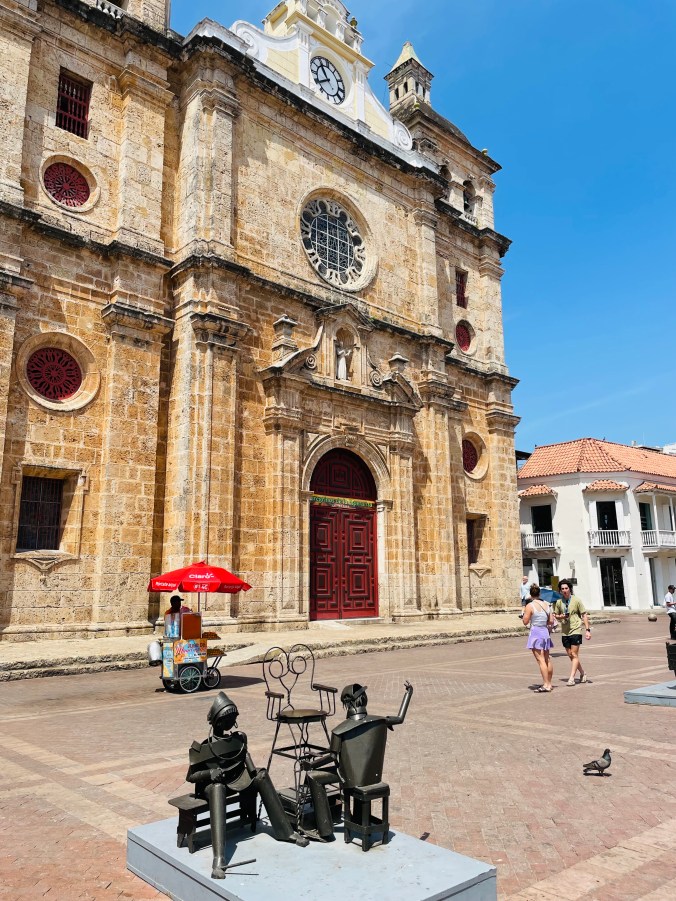
For my second day, after a cracking breakfast consisting of Colombian arepas and avocado, I signed-up for a free walking tour:
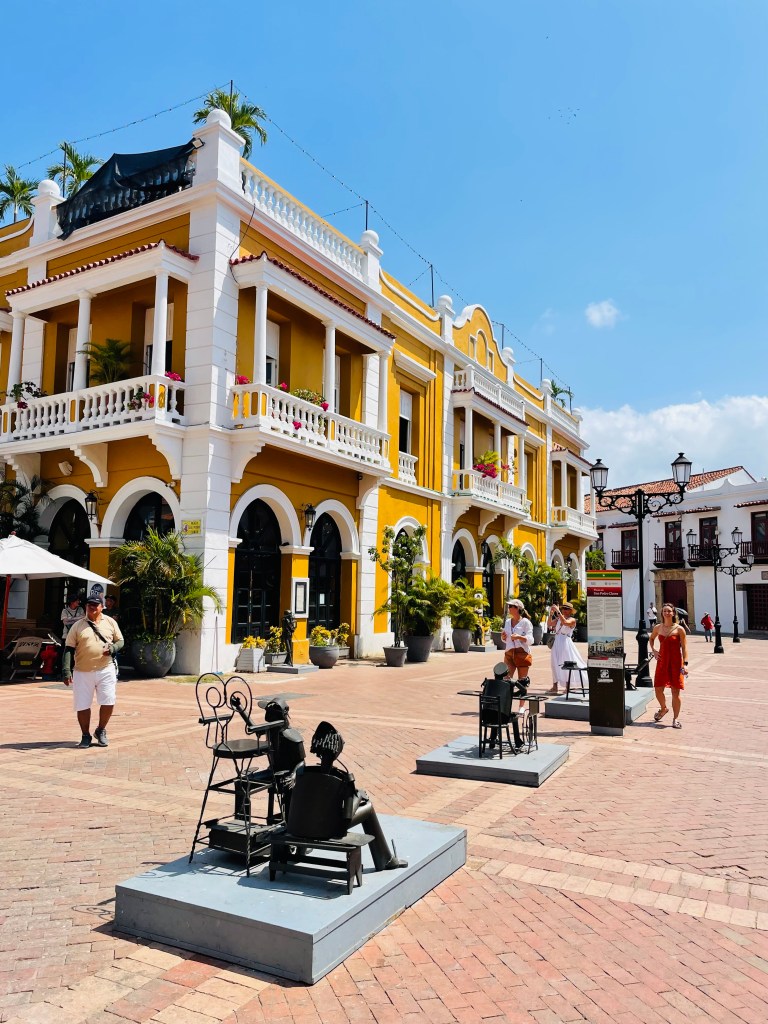
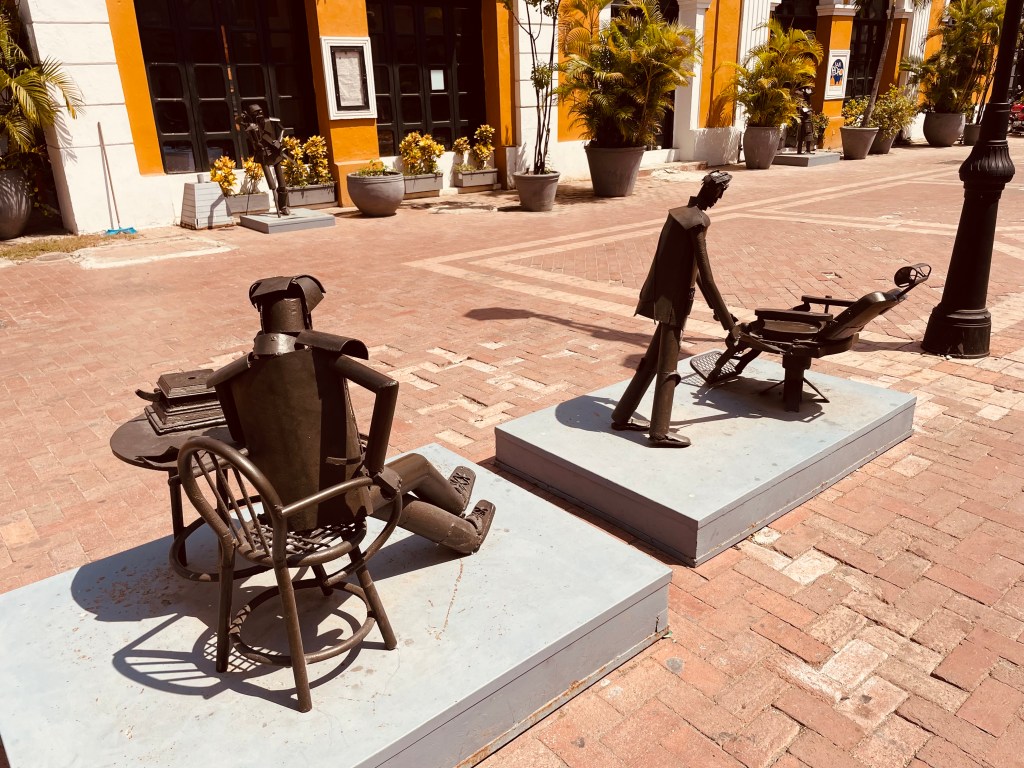
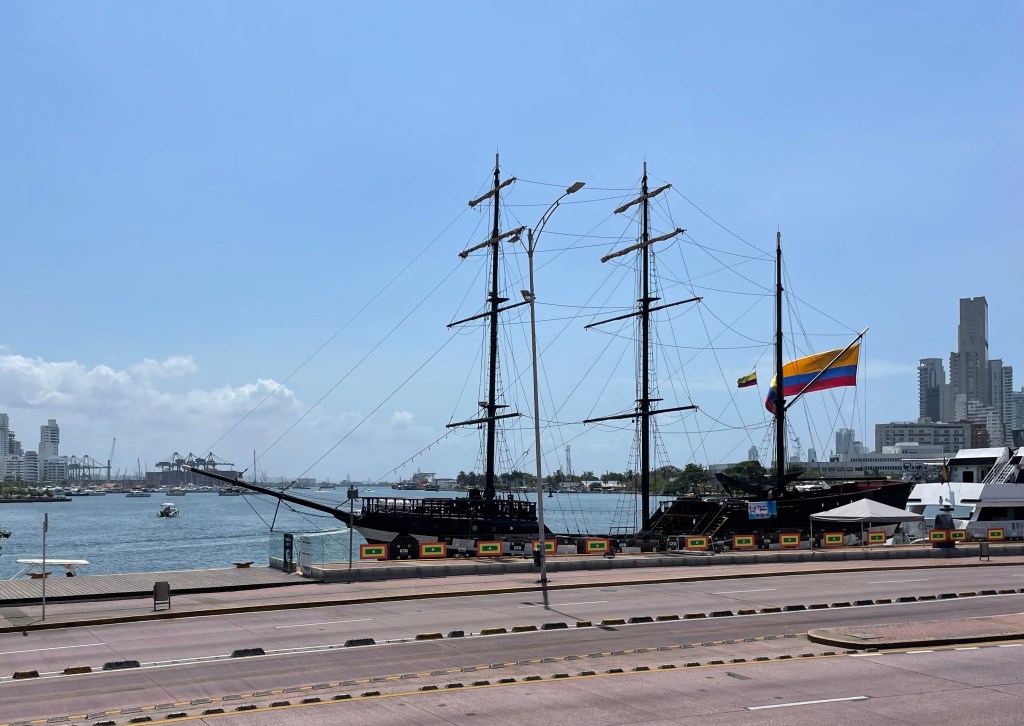
The tour guide introduced us to a local beer seller up on the city walls, which was nice whilst we looked at an old ship:
Back around the town, despite being constantly offered tat and drugs, it was a beautiful place to behold:
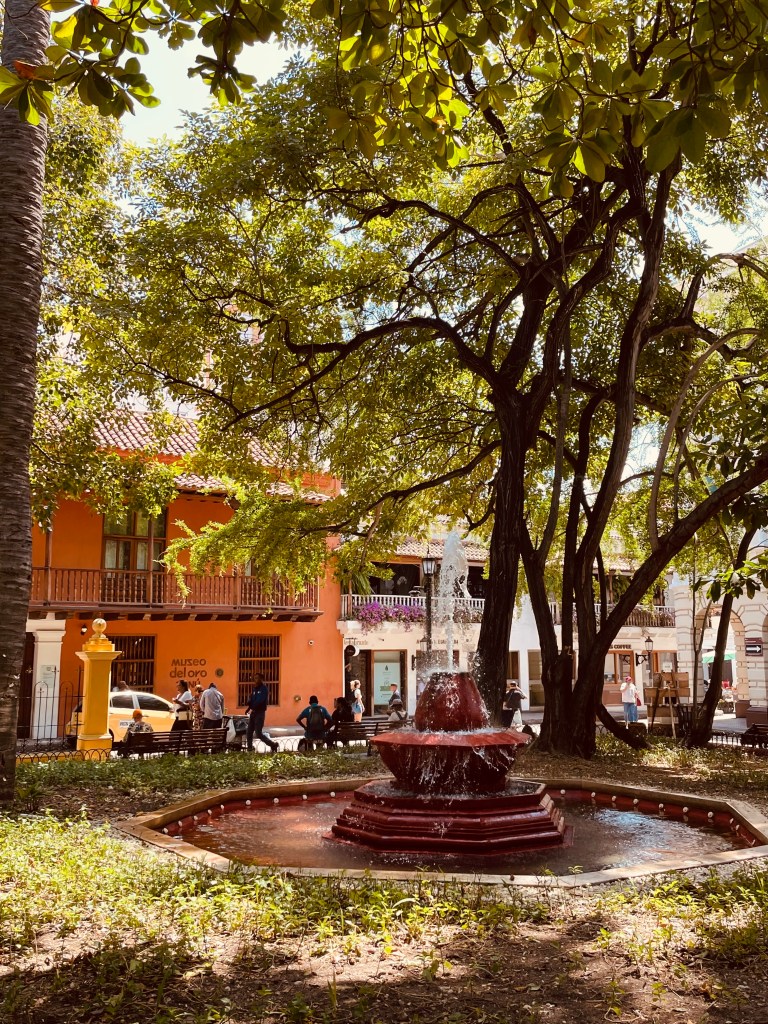
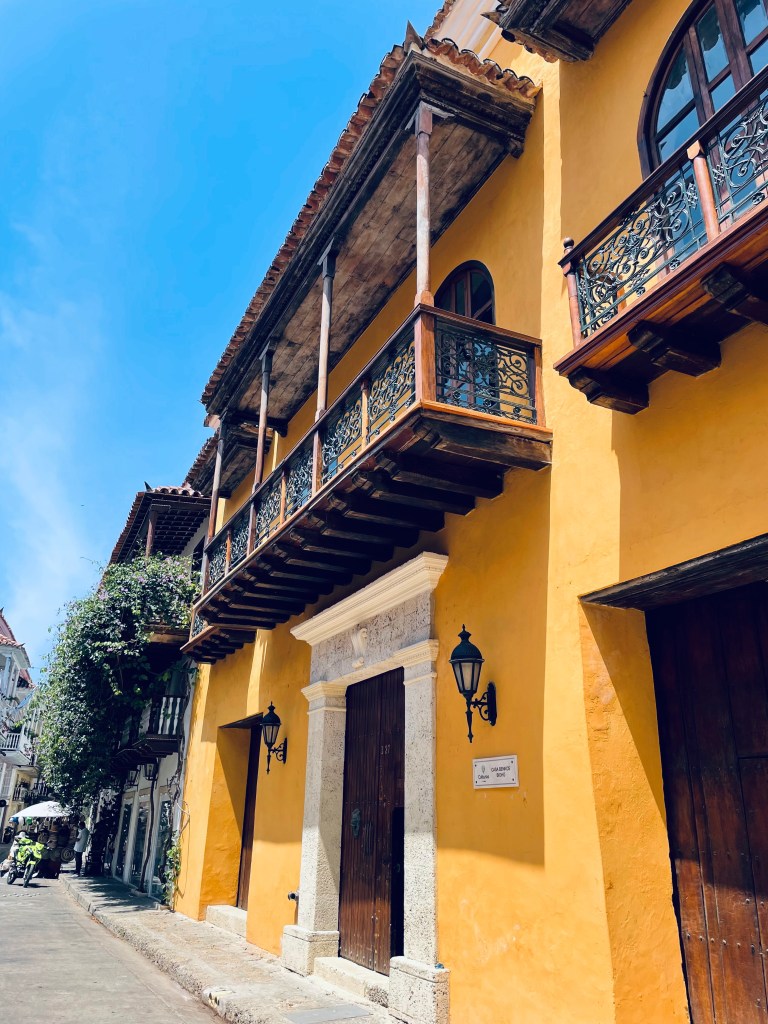
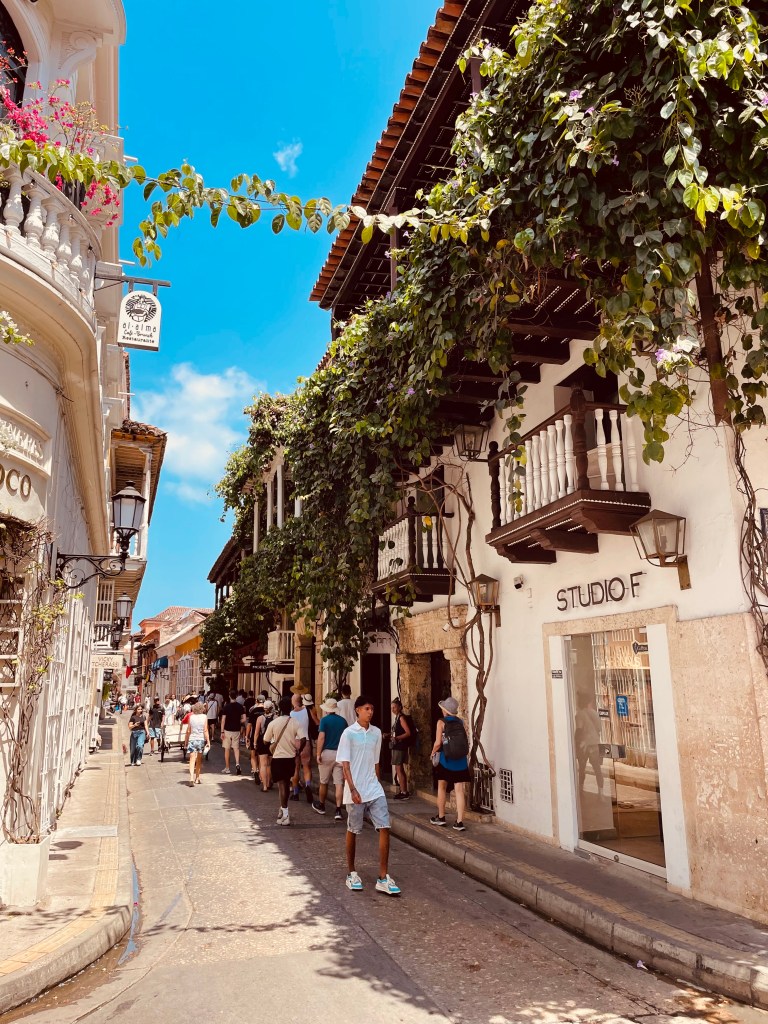
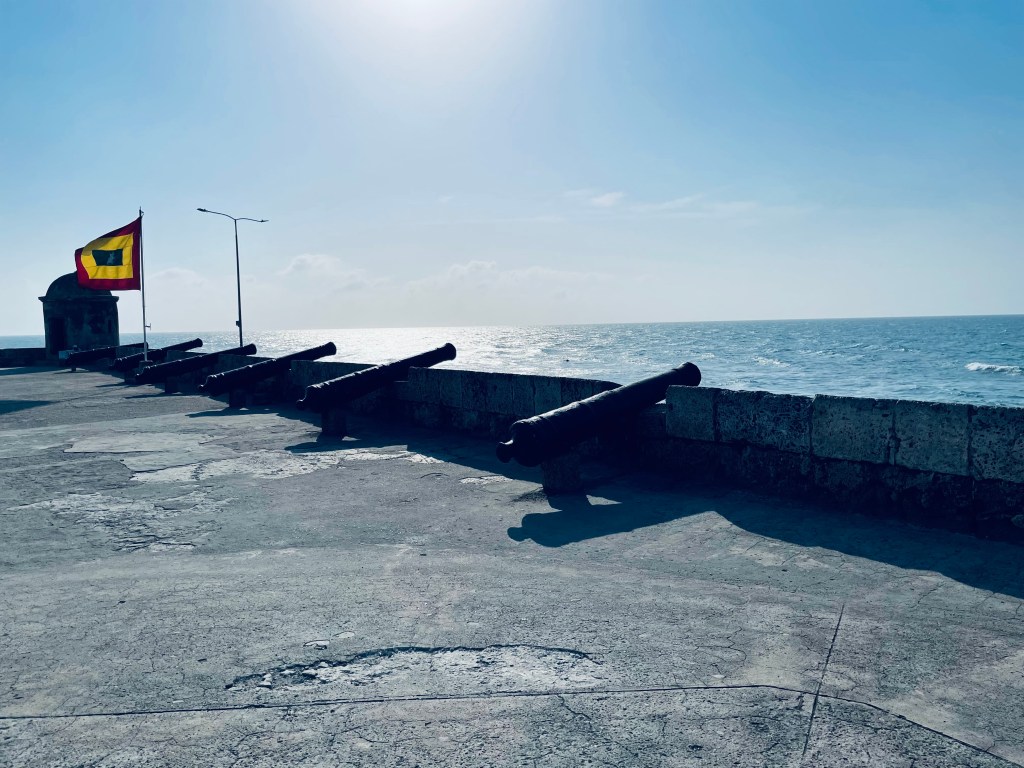
With the tour complete, I headed back to the city wall to walk the remainder of it before dinner:
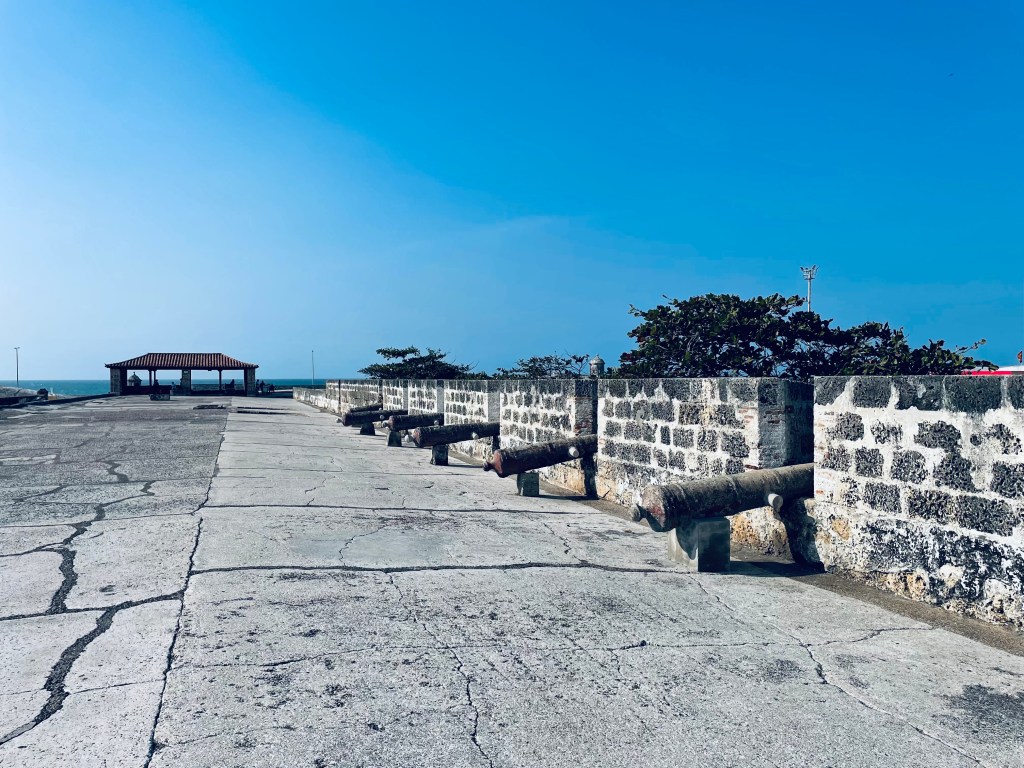
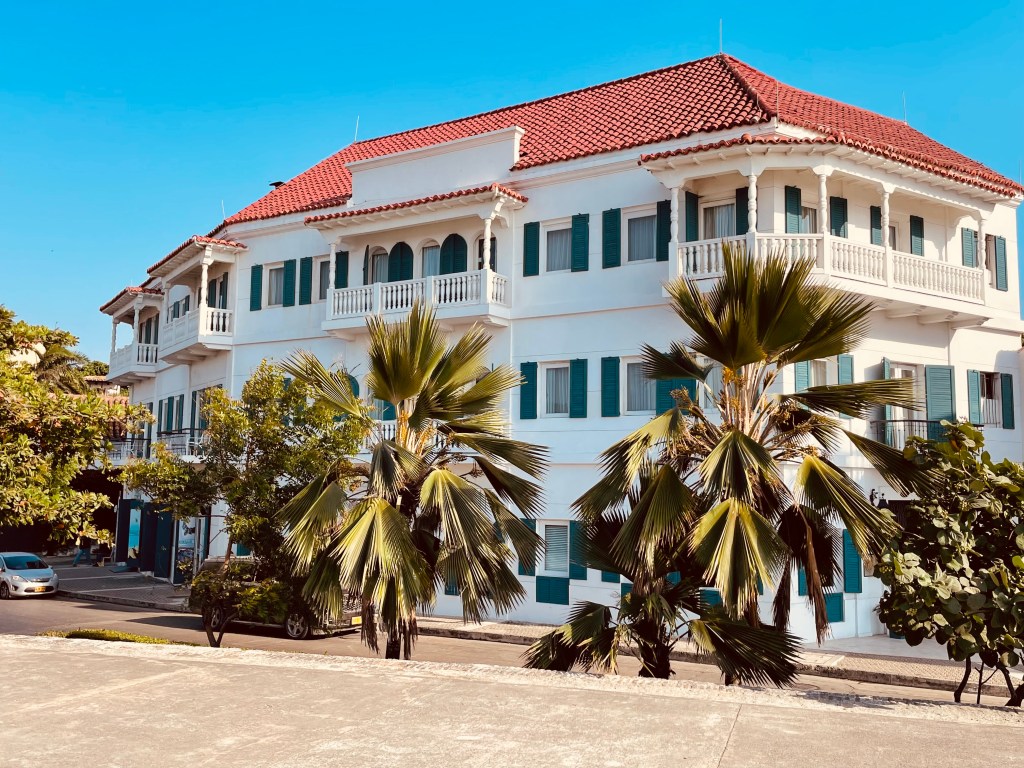
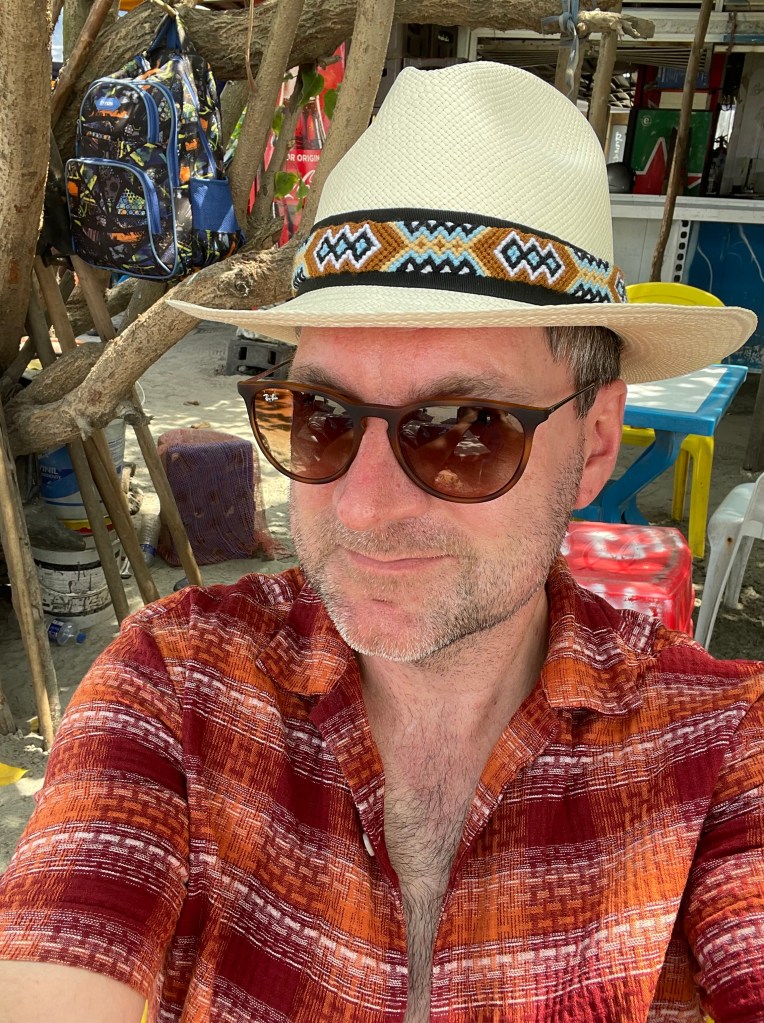
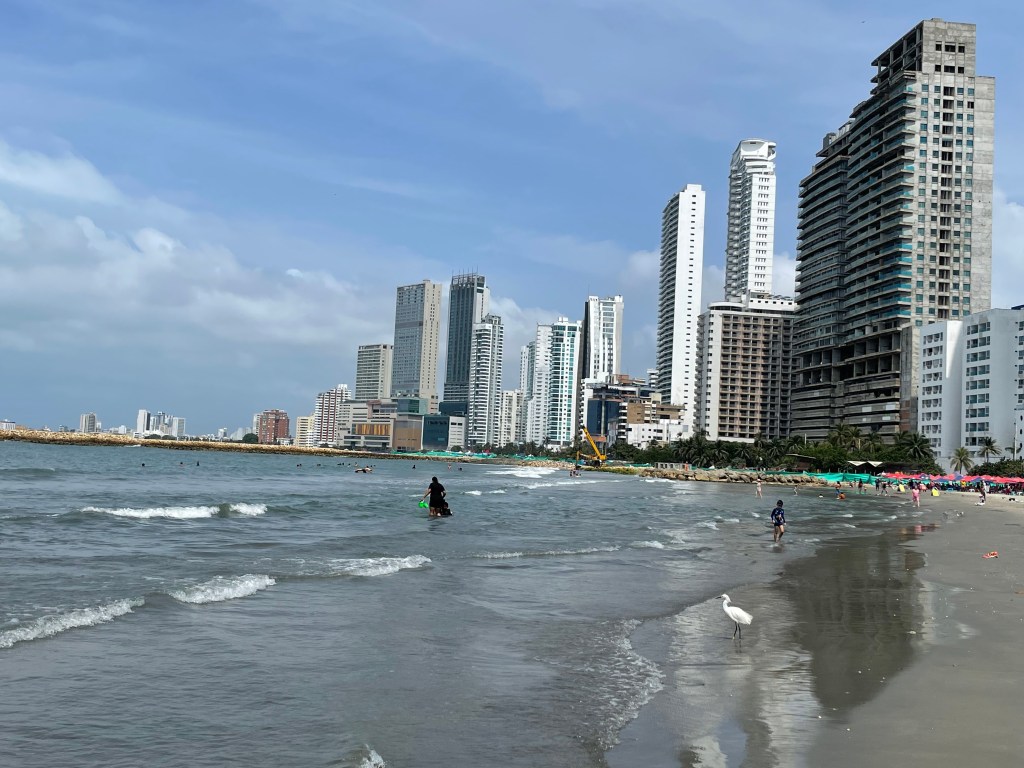
My final day was one for relaxing on the beach and finally dipping a toe in the Caribbean, but not before I finally replaced my tacky £5 Panama hat with a proper one:
I spent my last day walking the beaches, listening to podcasts and keeping an eye on the local birds:
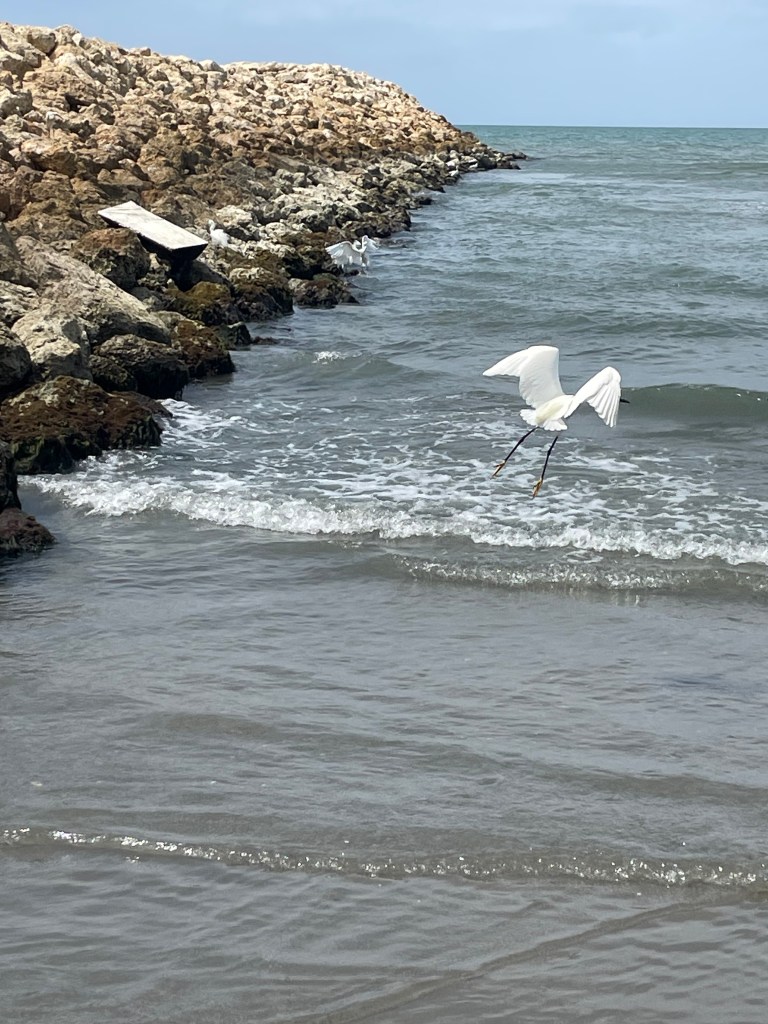
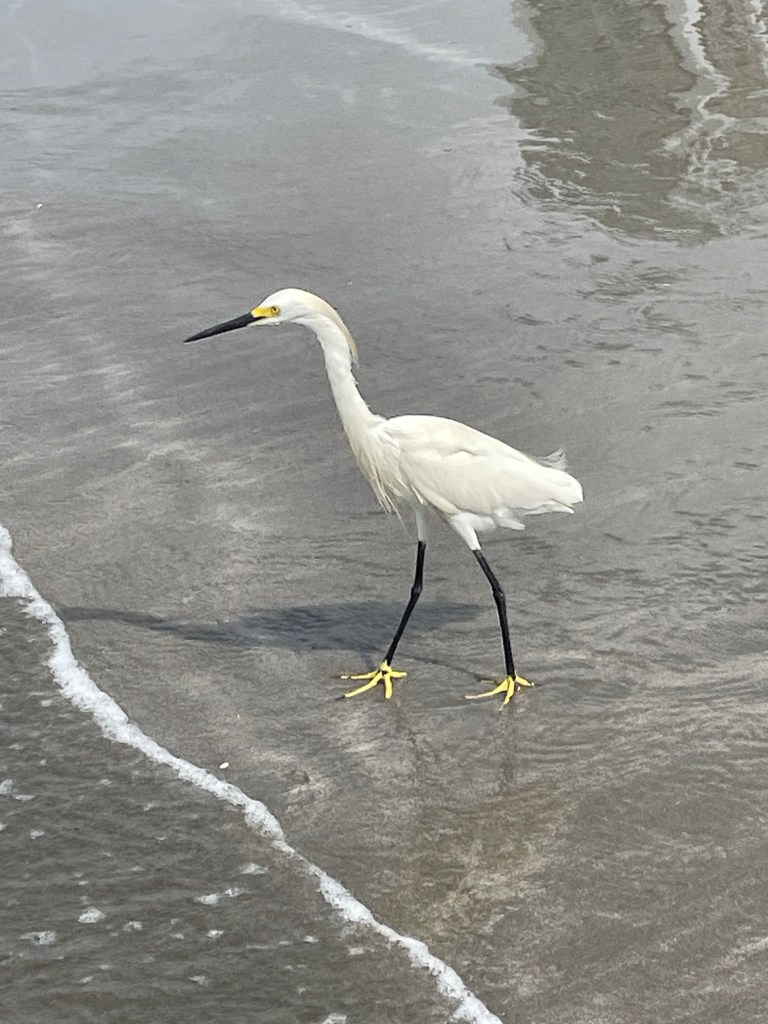
Tenby it isn’t:
The next morning, before heading to the airport I had time to checkout Parque Centenario which is home to iguanas, monkeys and sloths – not that I could get a decent picture of any of them!
Colombia was fascinating. Cool, laid-back Bogotá eased me into the country, Medellín had me on edge to the point I opted not to try an evening of salsa bars (much to my retrospective annoyance and regret), while Cartagena was a riot of beautiful colour – if somewhat overrun by locals offering often illegal goods and services. But it was charming Salento, the nearby Cocora Valley and my time spent on a coffee farm that will perhaps be my abiding memory of this brilliant trip.
 Notes From The Road